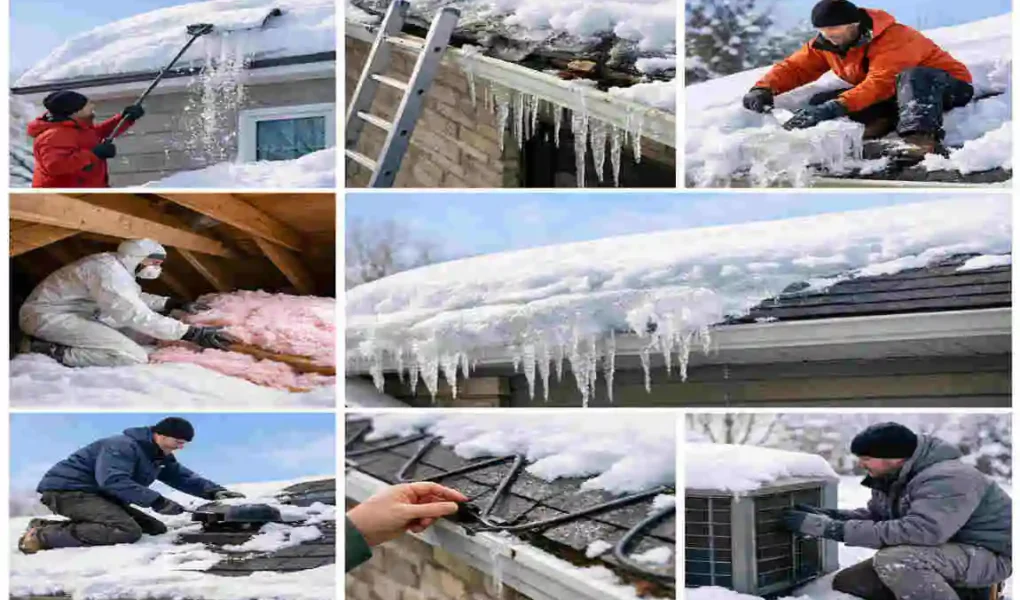
Let us set a scene that is all too familiar for those of us living in the Midwest. It is the middle of January. You wake up, look out your frosted bedroom window, and realize that overnight, a massive lake-effect snowstorm has completely buried your neighborhood. Your yard is gone, your car is a white mound, and worst of all, your home’s roof is currently sitting under three heavy feet of wet, freezing snow. Sound familiar?
If you live in this area, you already know that our winters are not just cold; they are aggressively unpredictable. This extreme weather is exactly why winter roof maintenance in Chicagoland is not just a suggestion—it is a critical necessity for every single homeowner. Our local climate subjects our homes to a brutal combination of rapid freeze-thaw cycles, back-breaking heavy snow loads, and biting wind gusts that regularly reach 50 miles per hour off Lake Michigan.
According to local weather data, the Chicago area averages 36 inches of snowfall per year. That is a massive amount of frozen moisture sitting directly above your living room. If your roof is not properly prepared to handle that kind of environmental stress, you are leaving your biggest financial investment completely vulnerable to the elements.
Why Winter Roof Maintenance in Chicagoland Matters for Homeowners
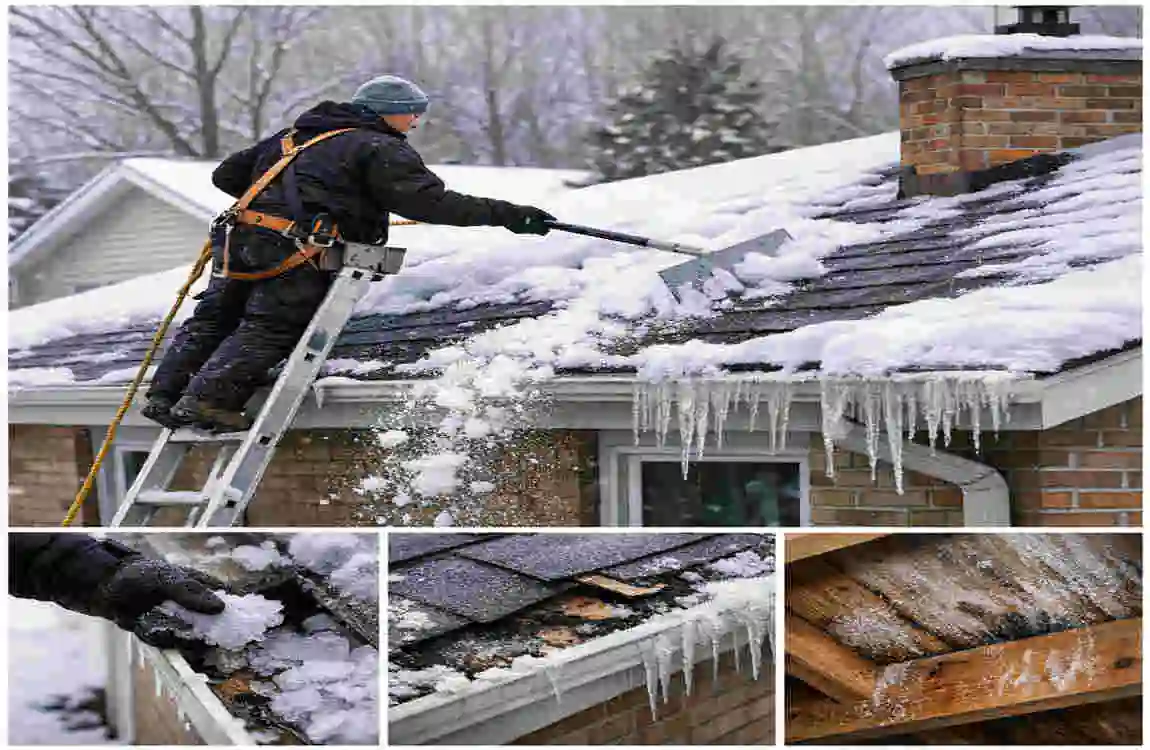
When we talk about the harsh realities of Illinois winters, we are not just complaining about scraping our windshields. We are talking about severe, structural threats to your property. Proper Chicagoland roof winter prep is the only thing standing between your cozy living room and the bitter elements outside.
The Threat of Sub-Zero Temperatures
Our region is famous for its drastic temperature swings. In a single 24-hour period, we can experience a sunny, 40-degree afternoon followed by a plummet into sub-zero, bone-chilling night temperatures. This creates a relentless freeze-thaw cycle. When snow melts during the day, water seeps into tiny cracks in your roofing materials. When the sun goes down and the temperature drops, that water freezes and expands. Over time, this constant expansion literally pries your shingles apart, widening cracks and destroying the integrity of your roof.
The Danger of Ice Dams and High Winds
Beyond the cold, we have to battle the infamous “Hawk” wind. High winds can easily rip loose shingles from your roof, leaving the delicate underlayment exposed to driving snow. Furthermore, poor Chicago home roof care often leads to the dreaded creation of ice dams—massive, heavy ridges of solid ice that form at the edge of your roof and prevent melting snow from properly draining into your gutters.
The Financial Risks of Ignoring Your Roof
The financial risks of ignoring these winter threats are staggering. When water backs up under your shingles due to an ice dam, it eventually leaks into your attic, ruining your insulation, damaging your drywall, and causing hazardous mold growth.
According to data from the Independent Insurance Agents & Brokers of America (IIABA), there is typically a 20% rise in home insurance roof claims during severe winter months. You do not want to be part of that statistic. Emergency winter repairs are incredibly expensive because roofers have to work in dangerous, icy conditions.
The Long-Term Benefits of Being Proactive
On the flip side, the benefits of staying on top of your maintenance are massive. By dedicating just a little time and effort to winter roof maintenance in Chicagoland, you can easily extend your roof’s lifespan by 5 to 10 years. Not only does this save you money on a premature replacement, but a well-maintained, healthy roof significantly boosts your home’s overall curb appeal and resale value.
Inspect Your Roof Before the First Snowfall
The absolute best time to fix a roof problem is long before the first snowflake falls. Conducting a thorough pre-winter inspection is your first line of defense against the brutal months ahead.
Your Pre-Winter Inspection Checklist
You do not need to be a certified contractor to spot the obvious signs of wear and tear. Start by walking around the perimeter of your house on a clear, sunny autumn day.
- Check the Gutters: Are they firmly attached to the fascia board, or are they starting to pull away and sag?
- Examine the Shingles: Look for shingles that are curling at the edges, cracking down the middle, or missing entirely.
- Inspect the Flashing: Flashing is the metal stripping around your chimney, skylights, and vent pipes. If this metal is rusted, bent, or pulling away, water will absolutely find its way inside.
The Tools You Need (And How to Stay Safe)
If you are comfortable with heights, a sturdy extension ladder and a good pair of binoculars are your best friends. Use the ladder to safely get a closer look at the edge of your roof, and use the binoculars to scan the higher peaks without actually having to climb up there.
However, safety should always be your number one priority. If you own a modern camera drone, this is the perfect time to use it! Flying a drone over your property lets you record high-definition video of your shingles and chimney without ever leaving the ground.
Identifying the Major Red Flags
When you are looking at your roof, keep an eye out for missing granules. Asphalt shingles are covered in tiny, sand-like granules that protect the material from UV rays and weather. If you see large “bald spots” on your shingles, or if your gutters are suddenly filled with a heavy, sand-like sludge, your roof is rapidly deteriorating. You should also look for any noticeable sagging along the roofline, which indicates structural wood rot beneath the surface.
Clean Gutters and Downspouts Thoroughly
It might seem like a tedious, annoying weekend chore, but grabbing a ladder and scooping out decaying leaves is one of the most important things you can do for your home. Chicagoland gutter cleaning for winter is absolutely non-negotiable.
Why Clean Gutters Prevent Winter Disasters
Your gutter system has one very specific job: to catch water and channel it safely away from your home’s foundation. During a typical Illinois winter, we experience heavy, wet snow. When the sun comes out, that snow melts and runs down your roof.
If your gutters are packed solid with autumn leaves, pine needles, and twigs, that melting water has absolutely nowhere to go. It pools in the gutter and quickly freezes solid as soon as the sun goes down. This is exactly how ice dams are born. As the ice builds up, it pushes back under your shingles and literally tears your roof apart from the edge inward.
Your Essential Fall Cleaning Guide
To prevent this, you need to establish a strict seasonal schedule. Do not clean your gutters in early October while the trees are still full of leaves. Wait until late November, right after the final leaves have fallen from the oak and maple trees in your yard, but before the first major freeze sets in.
Wear thick, heavy-duty waterproof gloves. Use a small plastic scoop to remove the debris, and always flush the gutters with a garden hose afterward. Watching the water flow will confirm that your downspouts are completely clear of hidden blockages.
DIY vs. Professional Cleaning
If you live in a single-story ranch home, cleaning your gutters is a relatively safe and simple DIY project, provided you have a sturdy ladder and someone to hold it for you.
However, we must issue a serious safety warning for homeowners with two-story or three-story homes. Climbing 20 to 30 feet in the air on a chilly, windy autumn afternoon is incredibly dangerous. A sudden gust of wind or a slippery ladder rung can lead to a devastating fall. For taller homes, it is always safer and more cost-effective to hire a professional gutter cleaning service.
install Proper Roof Ventilation
When most homeowners think about winter roof maintenance in Chicagoland, they focus on the roof’s exterior. However, what is happening inside your attic is actually just as important. Proper roof ventilation is the unsung hero of home maintenance.
Understanding the Science of Attic Moisture
During the winter, you run your central heating constantly to keep your family warm. Activities like taking hot showers, cooking dinner, and doing laundry generate a massive amount of warm, moist air. Because heat naturally rises, this humid air floats up through your ceilings and directly into your attic.
If your attic is not properly ventilated, that warm, moist air hits the cold underside of your roof deck. When hot meets cold, condensation occurs. Frost literally begins to form on the wooden rafters inside your attic. When that frost melts, it drips down onto your insulation, rendering it useless, and eventually causes the wooden structure of your roof to rot from the inside out.
The Best Ventilation Types for Chicago Climates
To combat this, your attic needs to breathe. It needs a system that constantly pulls in cold, dry air from the outside and pushes out warm, moist air.
There are two main components to a healthy ventilation system:
- Soffit Vents: These are installed under the eaves (the overhang) of your roof. They act as the intake valves, allowing fresh, crisp winter air to enter the lower part of the attic.
- Ridge Vents: These run along the very highest peak of your roof. They act as the exhaust valves. As warm, moist air rises, it naturally flows out through the ridge vents.
When to Call the Experts
If you go into your attic on a cold January day and it feels warm and humid, or if you can actually see dark mold spots on the wood, your ventilation is failing. Installing soffit and ridge vents requires cutting into the actual structure of your home, which means this is a job best left to the experts.
A Real-Life Energy Saving Case Study
Consider a recent case study from a local family in Naperville. They were experiencing massive ice dams every single winter, and their upstairs bedrooms were always freezing. An inspection revealed their attic vents were completely blocked by old insulation.
After a professional cleared the soffit vents and installed a new, continuous ridge vent, the results were immediate. Not only did the ice dams stop forming completely, but their attic insulation finally stayed dry, improving the house’s insulation. The family actually saw their winter heating bills drop by 15% the very next year!
Seal Cracks and Prevent Ice Dams
We have mentioned them a few times already, but we need to dive deeper into the biggest enemy of your roof: the ice dam. Understanding how to fight these icy monsters is a crucial part of Illinois winter roof care.
The True Danger of Ice Dams in Chicagoland
If you remember the record-breaking, brutal freezes we experienced in early 2023, you likely recall seeing homes across the suburbs with massive, beautiful, yet highly destructive icicles hanging from gutters. While they look like a winter wonderland, those icicles are the visual evidence of an ice dam.
When a dam forms, the water melting higher up on the roof gets trapped behind the wall of ice at the edge. Because roofs are designed to shed water downward, not hold it like a swimming pool, that trapped water is forced to travel upward, seeping beneath the shingles and dripping directly into your home’s interior walls.
Effective Solutions and Prevention
If you notice an ice dam forming, you need to act quickly, but you must act smartly. Never climb onto a snowy roof with a hammer or a hatchet to chip the ice away. You will almost certainly destroy your shingles in the process, and you risk a fatal fall.
Instead, rely on these proven solutions:
- Calcium Chloride Logs: These are special, chemical ice-melt products shaped like large socks or tubes. You carefully place them vertically across the ice dam. The calcium chloride safely melts a channel through the ice, allowing the trapped water to drain out. Do not use standard driveway rock salt, as the corrosive sodium will permanently stain and ruin your asphalt shingles.
- Heated Roof Cables: For a long-term preventative solution, you can have electric heat cables installed in a zigzag pattern along the lower edge of your roof and inside your gutters. When a storm approaches, you plug them in, and they provide just enough warmth to prevent ice from forming in the first place.
Sealing Vulnerable Cracks
Prevention also means sealing up vulnerabilities before the snow arrives. Use high-quality roofing cement to seal any tiny, visible cracks around your chimney flashing, vent pipes, or skylights.
Application Steps:
- Wait for a dry, relatively mild autumn day (above 45 degrees).
- Clean the area around the crack thoroughly with a wire brush to remove dirt and loose debris.
- Apply a generous bead of specialized, waterproof roofing cement using a standard caulking gun.
- Use a putty knife to smooth the cement flat, ensuring it completely covers the vulnerability and creates a watertight seal.
Trim Overhanging Branches Near Your Home
When preparing your property for the deep freeze, it is all too easy to focus solely on the house and completely ignore the surrounding nature. However, the large, beautiful trees shading your home can quickly become a massive liability during a winter storm.
The Wind and Snow Load Risks
During the spring and summer, tree branches are flexible and sway easily in the breeze. However, winter changes the physics of your trees entirely. When branches become coated in a thick, heavy layer of ice and freezing rain, they become incredibly stiff and shockingly heavy.
When one of our famous 50 mph Chicago wind gusts hits an ice-laden tree branch that is hanging directly over your home, the results can be catastrophic. The branch can easily snap under the extreme weight and wind pressure, crashing down through your roof deck, shattering a window, or ripping your gutters completely off the fascia board.
Your Essential Trimming Guide
To prevent this, you need to create a safe perimeter around your home.
- When to Trim: The late fall, right after the leaves have dropped but before the first major ice storm, is the absolute best time to trim. The trees are entering their dormant phase, making them healthier to prune.
- How to Trim: You want to ensure that no branches are hanging directly over your roof, and you want to maintain a minimum clearance of at least 10 feet between any tree limbs and your home’s exterior walls.
- Tools to Use: For small, lower branches, a standard pole saw or a pair of long-handled loppers will do the trick. Always make clean cuts to help the tree heal quickly.
Knowing When to Call a Local Professional
If you have massive, thick oak branches hanging 30 feet directly above your chimney, this is not the time to play lumberjack. Trimming large, overhanging branches is highly dangerous work that requires specialized rigging equipment and safety harnesses.
We recommend reaching out to certified, local tree services in Chicagoland to handle the heavy lifting. A professional arborist can safely remove the hazardous branches without dropping them onto your roof in the process, giving you total peace of mind before the winter storms roll in.
Choose the Right Snow Removal Techniques
So, you have done all the prep work, but Mother Nature still decides to dump two feet of heavy, wet snow directly onto your home. Leaving that much extreme weight on your roof for weeks at a time can cause structural bowing or even a catastrophic roof collapse. You need to remove the snow, but you must do it correctly.
The Safe Method: Use a Roof Rake
The safest and most effective way to remove snow from your home is to use a specialized tool called a roof rake.
A roof rake is a wide, flat piece of aluminum or sturdy plastic attached to a very long, telescoping pole. While standing safely on the ground, you extend the pole up to the roof, drop the blade lightly into the snow, and gently pull the snow down off the edge.
You do not need to scrape the roof completely bare. Your goal is to relieve the massive weight burden and clear the bottom three or four feet of the roof to prevent ice dams from forming. Leaving a thin, half-inch layer of snow on the shingles is actually perfectly fine. It protects the granules from being scraped off.
What You Should Never Do
When panic sets in after a massive blizzard, homeowners often make terrible, costly mistakes. Here is a quick table outlining the right and wrong tools for the job:
Snow Removal Tool Verdict: Why?
The telescoping roof rake keeps you on the ground, is gentle on shingles, and is highly effective.
Standard Metal Shovel Never Use The sharp metal edge will violently rip the protective granules right off your shingles.
Rock Salt / De-icer: Never Use. The harsh chemicals will aggressively corrode your metal flashing and permanently stain asphalt.
Hot Water Hose Never Use The water will instantly freeze into a solid sheet of dangerous ice, making the problem infinitely worse.
The Right Frequency for Chicago Winters
You do not need to run outside with your roof rake every time we get a light dusting of snow. As a general rule of thumb for Chicagoland homeowners, you should aim to clear your roof after we receive 6 or more inches of accumulation, or immediately after a severe, heavy ice storm.
Schedule Professional Winter Roof Maintenance in Chicagoland
There is a profound sense of pride in maintaining your own home. Cleaning your gutters, raking the snow, and doing visual inspections are all fantastic habits. However, a roof is a highly complex, interconnected architectural system. Eventually, you will hit the absolute limits of DIY maintenance.
When DIY Isn’t Enough
If your roof is over 15 years old, you have experienced severe interior leaks, or you do not feel safe climbing a ladder, it is time to call in the cavalry.
A professional roofing contractor has the trained eyes necessary to spot microscopic issues that the average homeowner will easily miss. They can identify failing flashing hidden under layers of sealant, spot the early signs of attic mold, and safely navigate steep roof pitches that are far too dangerous for a DIY enthusiast.
Why You Should Work With Us
When it comes to winter roof maintenance in Chicagoland, you need a team that intimately understands the brutal local climate. That is exactly what we provide. Our expert team offers comprehensive, full-system inspections tailored to Midwestern homes.
We will climb onto the roof, go deep into your attic, and provide you with a fully transparent, highly detailed health report on your home’s most vital shield. Do not just take our word for it—our customer testimonials speak volumes about our commitment to honesty, punctuality, and flawless craftsmanship. If we find an issue, we provide clear, upfront, and competitive free quotes with absolutely no hidden fees.
The Ultimate Cost Savings
Think of a professional inspection as an incredibly cheap insurance policy. Paying a few hundred dollars for a comprehensive inspection and minor preventative repairs in November is vastly superior to paying $15,000 for an emergency, full-roof replacement in the middle of a freezing February blizzard. Preventive maintenance is an investment that always pays massive dividends.
Common Mistakes in Chicagoland Winter Roof Care
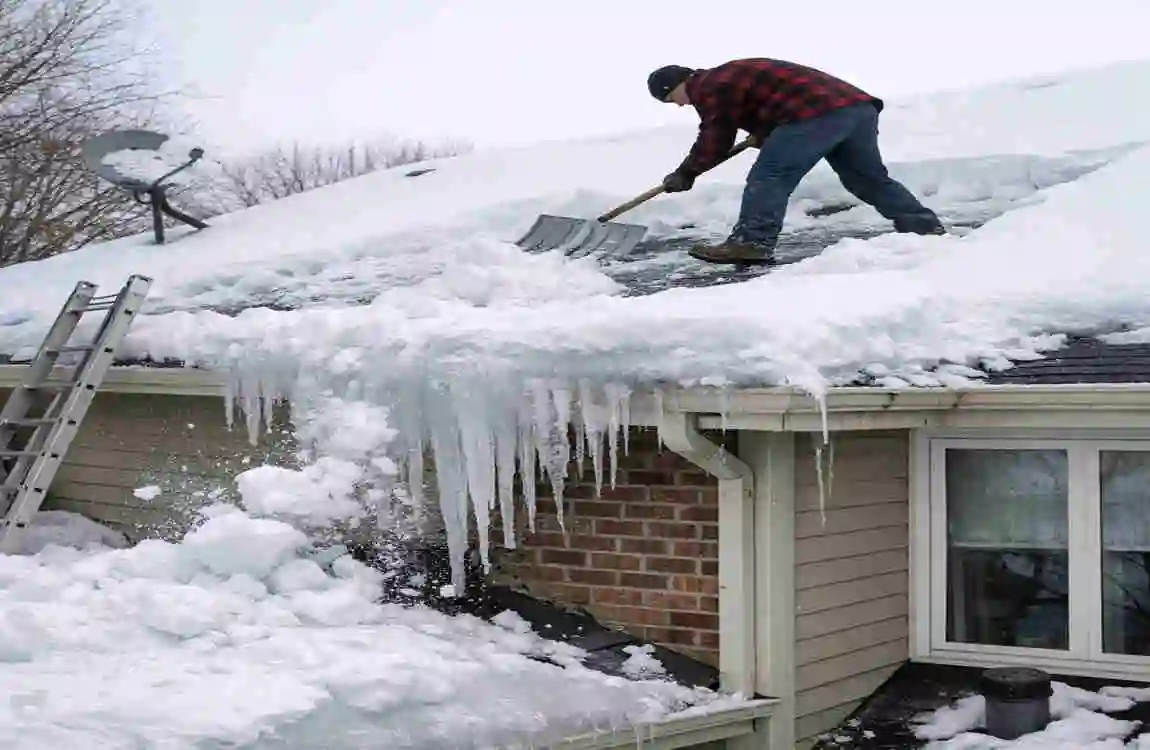
Even with the best intentions, homeowners often stumble into a few classic traps when trying to protect their homes. Here are the most common, costly mistakes you absolutely must avoid this winter season:
- Ignoring Minor, “Small” Leaks: If you see a tiny, faint brown water stain on your upstairs ceiling, do not ignore it! A water stain the size of a golf ball inside means there is likely a massive, spreading pool of water trapped above your drywall. Winter weather will only make it exponentially worse.
- Skipping the Attic Insulation: Many people think insulation is just for keeping the house warm. As we discussed earlier, poor insulation allows heat to escape into the attic, which is the exact trigger for destructive ice dams. Do not treat your roof and your attic as separate entities; they are one unified system.
- Suffering from DIY Overload: We love a good DIY spirit, but your roof is not the place to learn how to use a nail gun. Attempting complex flashing repairs or shingle replacements in freezing weather without proper training often voids your manufacturer’s warranty and creates significant safety hazards.
- Applying Sealants in Freezing Temps: Most caulks and roofing cements require temperatures above 40 degrees to cure and seal properly. Slapping sealant on a freezing, wet roof is a complete waste of time and money—it will just peel right off.
FAQs on Winter Roof Maintenance in Chicagoland
How often should I schedule a professional roof inspection? For homeowners in the Chicagoland area, we highly recommend scheduling a professional inspection at least once every two years. However, if your roof is older than 15 years or if we have just experienced a particularly brutal hail and severe wind season, an annual inspection is the safest bet.
When is the absolute best time to start my winter roof prep? Do not wait for the snow to fly! The ideal window for winter preparation is during the late fall—specifically late October through mid-November. The weather is still mild enough to perform repairs safely, and the majority of the autumn leaves have already fallen, making gutter cleaning highly effective.
Are ice icicles hanging from my gutters a bad sign? While a few tiny icicles are normal, large, thick, heavy icicles are a massive red flag. They are the primary visual indicator that a destructive ice dam has formed, meaning water is likely backing up under your shingles and threatening your home’s interior.
Can I use standard rock salt to melt ice on my roof? Absolutely not. You must never put standard driveway rock salt on your roof. The harsh sodium chemicals will aggressively eat away at your metal flashing, corrode your gutters, and permanently ruin the protective granules on your asphalt shingles. Always use specialized calcium chloride roof melts instead.
Does my homeowner’s insurance cover damage from winter roof leaks? It depends entirely on the cause. Most standard policies cover sudden, accidental damage (like a tree branch falling during a blizzard). However, if the insurance adjuster determines the leak was caused by long-term neglect and a lack of basic maintenance, they will likely deny your claim.