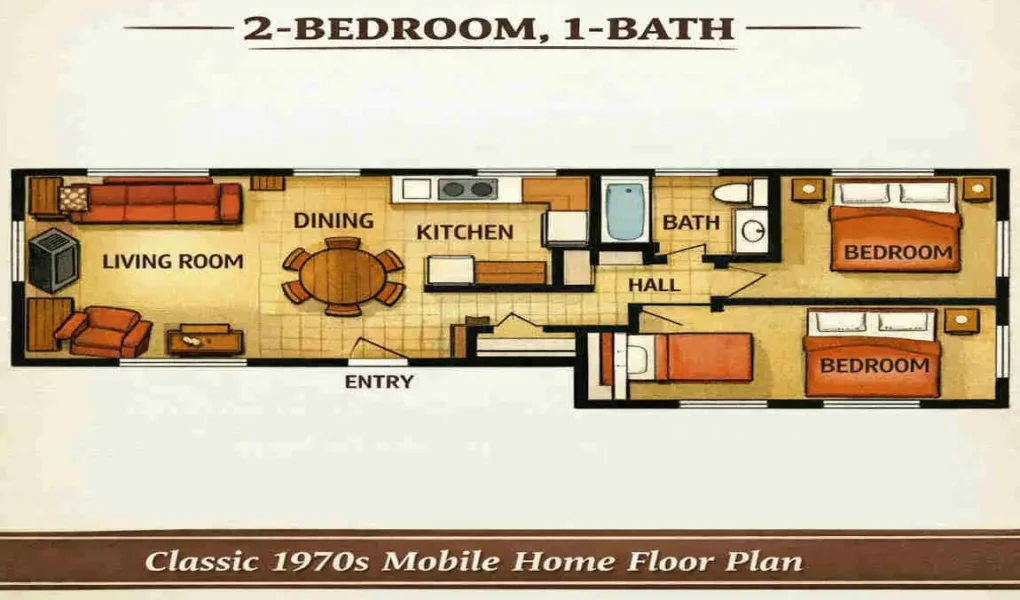
1970s mobile home floor plans still interest many buyers today because they offer simple layouts, practical use of space, and budget-friendly living. These homes were built during a time when affordable housing was in high demand, so the designs focused on comfort and function rather than fancy extras.
If you are looking at vintage mobile home layouts, you will notice a few common patterns. Many homes have long hallways, compact kitchens, large living rooms, and simple bedroom setups. Some are small and cozy, while others feel surprisingly open for their size.
Understanding 1970s Mobile Home Floor Plans
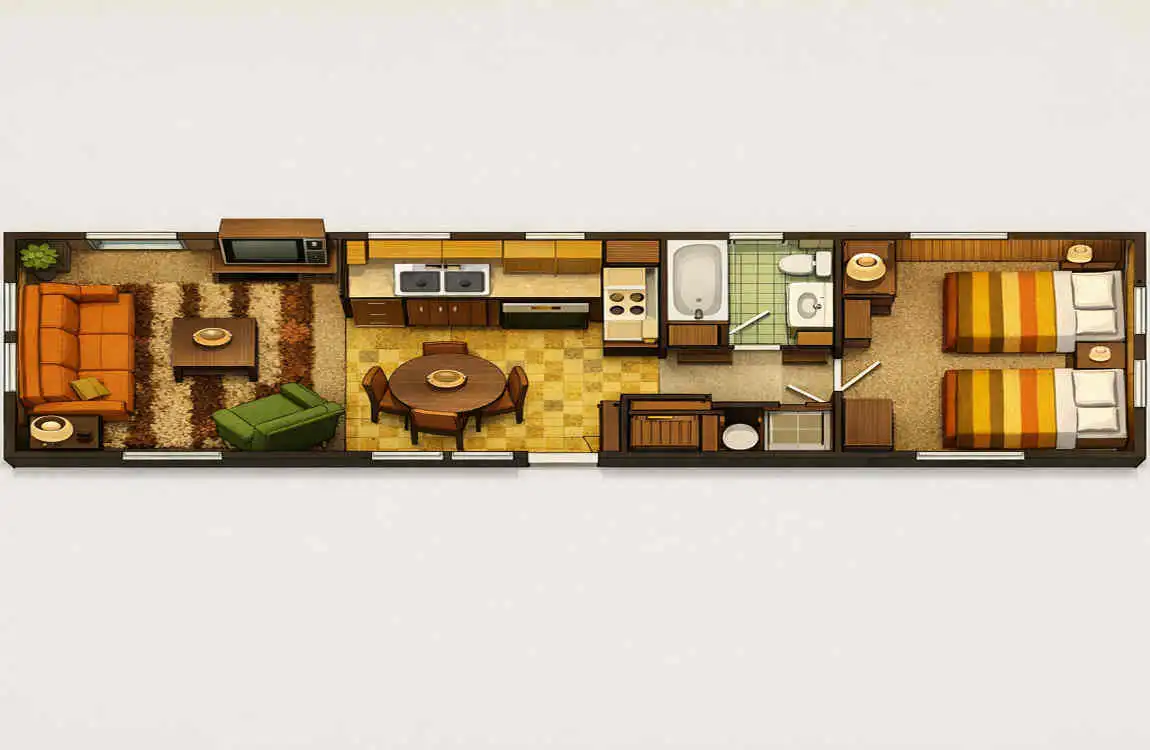
What Made 1970s Mobile Homes Unique?
The 1970s were a big decade for manufactured housing. Many families wanted affordable homes, and mobile homes offered a faster and cheaper way to own one. As a result, 1970s manufactured homes became very common across the country.
These homes were built with function in mind. The layouts were usually straightforward, and the rooms were arranged to make the best use of limited space. You often see:
- Simple rectangular shapes
- Practical room placement
- Basic but useful storage
- Small footprints with efficient flow
Unlike larger site-built homes, these homes were designed to be moved and installed quickly. That helped keep costs lower, which is one reason they remain attractive today.
Standard Sizes
Most manufactured home floor plans from the 1970s fall into two main groups:
- Single-wide mobile home plans
- These were narrow homes, usually around 12 to 14 feet wide. They were often between 40 and 80 feet long.
- Double-wide mobile home layouts
- These were wider, giving homeowners more room. They often ranged from about 24 to 28 feet wide, with more flexible layouts.
Typical floor plans included:
- 1 to 3 bedrooms
- 1 or 2 bathrooms
- A combined living and dining area
- A kitchen placed near the centre or one end of the home
Quick Size Comparison
Home TypeTypical WidthCommon LayoutBest For
Single-wide 12–14 feet Narrow, linear rooms Singles, couples, small families.
Double-wide 24–28 feet Wider, more open layouts Families, retirees, larger households
Most Popular 1970s Mobile Home Floor Plans
Two-Bedroom Floor Plans
Two-bedroom layouts were among the most common classic mobile home layouts. They worked well for couples, small families, and retirees who wanted enough space without too much maintenance.
These floor plans usually included:
- One bedroom at each end of the home
- A shared bathroom in the middle
- A living room at the front
- A kitchen and dining area nearby
This setup provided privacy while keeping the layout easy to navigate. For many people, this was the ideal balance between comfort and affordability.
Three-Bedroom Layouts
Three-bedroom homes were popular with larger households. They gave families more flexibility and space for kids, guests, or even a home office.
These layouts often featured:
- A main bedroom
- Two smaller bedrooms
- One or two bathrooms
- A central living space
- Extra hallway storage
If you are looking at vintage trailer home designs or older family homes, this type is often the best choice for daily living because it feels practical and familiar.
Open vs. Traditional Floor Plans
Some 1970s homes had more open layouts, while others followed a very traditional style. The difference matters a lot if you want to remodel.
Traditional layouts usually have:
- Separate kitchen and living areas
- Closed-off dining rooms
- Longer hallways
- More privacy
Open layouts usually have:
- Connected kitchen, dining, and living areas
- Fewer walls
- Better sight lines
- A more spacious feel
Many homeowners today prefer open-plan layouts, but traditional layouts can still feel cosy and organised. The best option depends on how you live.
Common 1970s Layout Types
- Small two-bedroom single-wide
- Three-bedroom family home
- Double-wide with central living room
- Long hallway ranch-style layout
- Separate kitchen and dining setup
Common Features of 1970s Mobile Home Floor Plans
Galley Kitchens
Many homes from this era used a galley kitchen. This means the kitchen was narrow, with counters and cabinets on both sides. It was a smart way to save space.
These kitchens were efficient, but they could feel tight. Today, many homeowners remodel them to make the room feel brighter and more open.
Compact Bathrooms
Bathrooms in these homes were usually small. You often found one full bath, or sometimes one full bath and a half bath in larger layouts. The space was basic but useful.
Large Living Rooms
One thing many people love about 1970s mobile home floor plans is the size of the living room. Even in smaller homes, the living room often felt generous compared to the rest of the house.
Built-In Storage
Storage was important in older manufactured luxury homes. You may see:
- Built-in cabinets
- Hall closets
- Bedroom wardrobes
- Overhead storage areas
Other Typical Features
Here are a few more details often found in old mobile home floor plans:
- Wood panel walls
- Low-pitched roofs
- Narrow hallways
- Simple trim and finishes
- Functional room shapes
These features may seem plain today, but they helped keep the homes affordable and easy to build.
Pros and Cons of 1970s Mobile Home Floor Plans
Advantages
There are many reasons people still like these homes:
- Affordable: They usually cost less than newer homes.
- Functional: The layouts are simple and easy to use.
- Remodel-friendly: Many are good candidates for updates.
- Spacious in the right areas: Living rooms and bedrooms can feel roomy.
Disadvantages
There are also some common drawbacks:
- Older materials may need replacement
- Less insulation can lead to heating and cooling problems
- Smaller bathrooms may feel cramped
- Energy efficiency is often lower than modern homes
If you are buying one, it helps to consider both the charm and the work it may require.
How to Modernise a 1970s Mobile Home Floor plan
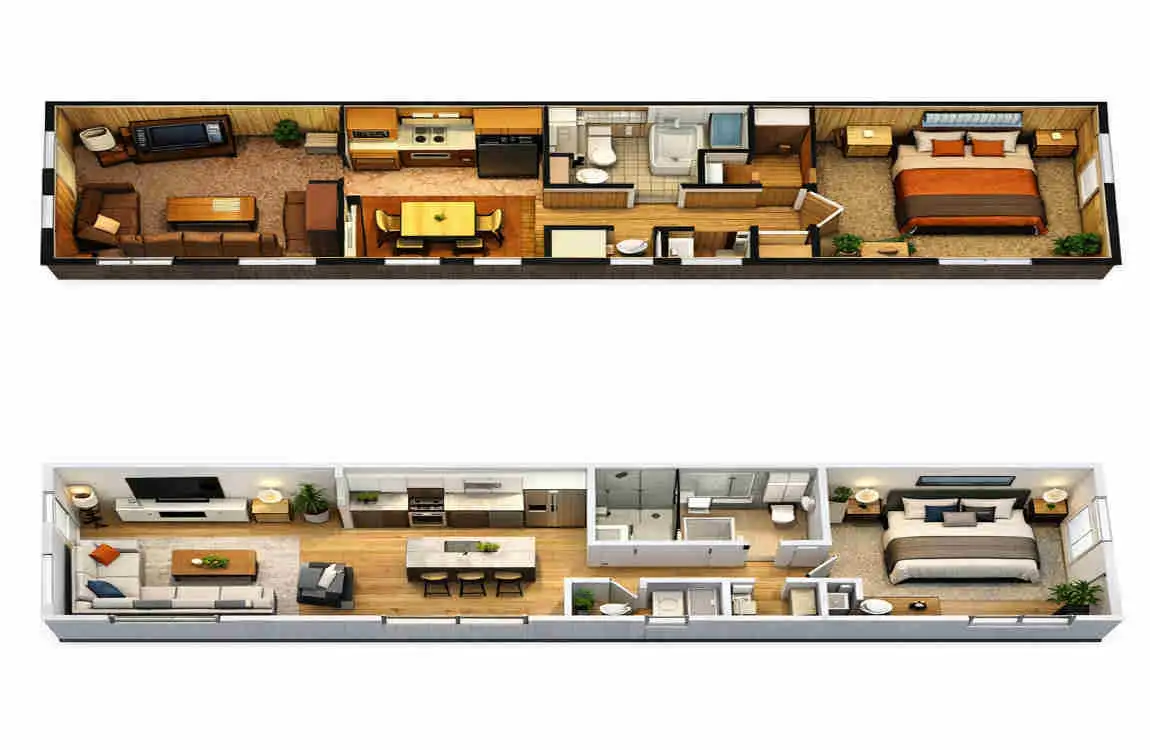
Kitchen Upgrades
A kitchen update can completely change the feel of the home. You can replace old cabinets, improve lighting, add new counters, and use lighter colours to make the space feel larger.
Bathroom Renovations
Bathroom updates often make a big difference. Even small changes like a new vanity, better storage, and brighter tile can create a fresher look.
Open-Concept Remodelling
If your home has a closed-off layout, removing a non-load-bearing wall can help create an open feel. This works well in many mobile home remodelling ideas.
Flooring Replacement
Old flooring can make the home look dated. New vinyl plank, laminate, or other durable flooring can give the space a clean, modern look.
Energy-Efficient Improvements
To improve comfort, consider:
- Better insulation
- New windows
- Updated HVAC systems
- Energy-saving lighting
Storage Solutions
Because older homes can lack storage, smart solutions matter. Use:
- Tall cabinets
- Under-bed storage
- Wall shelves
- Built-in organizers
These updates can make a big difference without changing the whole structure.
Buying a 1970s Mobile Home Today
Before you buy, inspect the modern home carefully. Look at the following:
- Structure condition
- Plumbing
- Electrical system
- Roof
- Foundation
- HUD compliance, if applicable
It is also smart to check for water damage, soft floors, and signs of poor repairs. A good-looking home can still hide serious problems.
If you are comparing vintage mobile home layouts, always think about repair costs as well as the purchase price.
Are 1970s Mobile Home Floor Plans Still Worth It?
Yes, they can be. For the right buyer, these luxury homes offer strong value. They are often cheaper than newer options, and many have layouts that still work well for daily life.
They can be a good choice for:
- First-time buyers
- Retirees
- Investors
- DIY renovators
- People looking for affordable housing
If you find a solid home with a good layout, it can be worth the investment. The key is to compare condition, price, and renovation needs before making a decision.
Frequently Asked Questions
What were the most common 1970s mobile home floor plans?
The most common layouts were two-bedroom and three-bedroom designs, often in single-wide or double-wide formats.
How large was a typical 1970s mobile home?
Many were between 600 and 1,400 square feet, depending on whether they were single-wide or double-wide.
Can a 1970s mobile home be remodelled into an open floor plan?
Yes, many can be remodelled, especially if the walls are not load-bearing.
Are 1970s mobile homes safe to live in today?
They can be safe if they are well-maintained and up to date, especially in plumbing, wiring, and structural integrity.
What is the difference between a single-wide and double-wide mobile home?
A single-wide is narrow and one section wide, while a double-wide is made from two joined sections and usually offers more space.
| Floor Plan Type | Typical Size | Bedrooms/Bathrooms | Key Features | Best For |
|---|---|---|---|---|
| Single-Wide 2-Bedroom | 600–900 sq. ft. | 2 Bed / 1 Bath | Compact layout, open living room, efficient kitchen | Small families, couples |
| Single-Wide 3-Bedroom | 800–1,000 sq. ft. | 3 Bed / 1–2 Bath | Extra bedroom, central hallway, practical design | Growing families |
| Double-Wide Ranch | 1,000–1,500 sq. ft. | 3 Bed / 2 Bath | Spacious living area, separate dining room, larger kitchen | Medium to large families |
| Open-Concept Double-Wide | 1,200–1,600 sq. ft. | 3–4 Bed / 2 Bath | Combined living and dining space, improved natural light | Modern renovations |
| Split-Bedroom Layout | 1,100–1,500 sq. ft. | 3 Bed / 2 Bath | Primary bedroom separated for added privacy | Families and guests |
| Family-Friendly Layout | 1,200–1,700 sq. ft. | 4 Bed / 2 Bath | Multiple bedrooms, large common area, extra storage | Large households |
| Compact Starter Home | 500–700 sq. ft. | 1–2 Bed / 1 Bath | Budget-friendly, easy maintenance, efficient floor plan | First-time buyers, retirees |
| Expanded Double-Wide | 1,400–1,800 sq. ft. | 3–4 Bed / 2 Bath | Large kitchen, utility room, generous living spaces | Long-term family living |