Finding tiny black dots on the tile floor can be frustrating. One day your floor looks fine, and the next you notice small dark spots that seem to appear out of nowhere.
These dots may come from mold, mildew, dirt, soap residue, grout buildup, grease, or even moisture damage. The important thing is to figure out the cause first, because the best cleaning method depends on what is actually causing the spots.
What Are the Tiny Black Dots on Tile Floor?
Common Causes of Black Dots
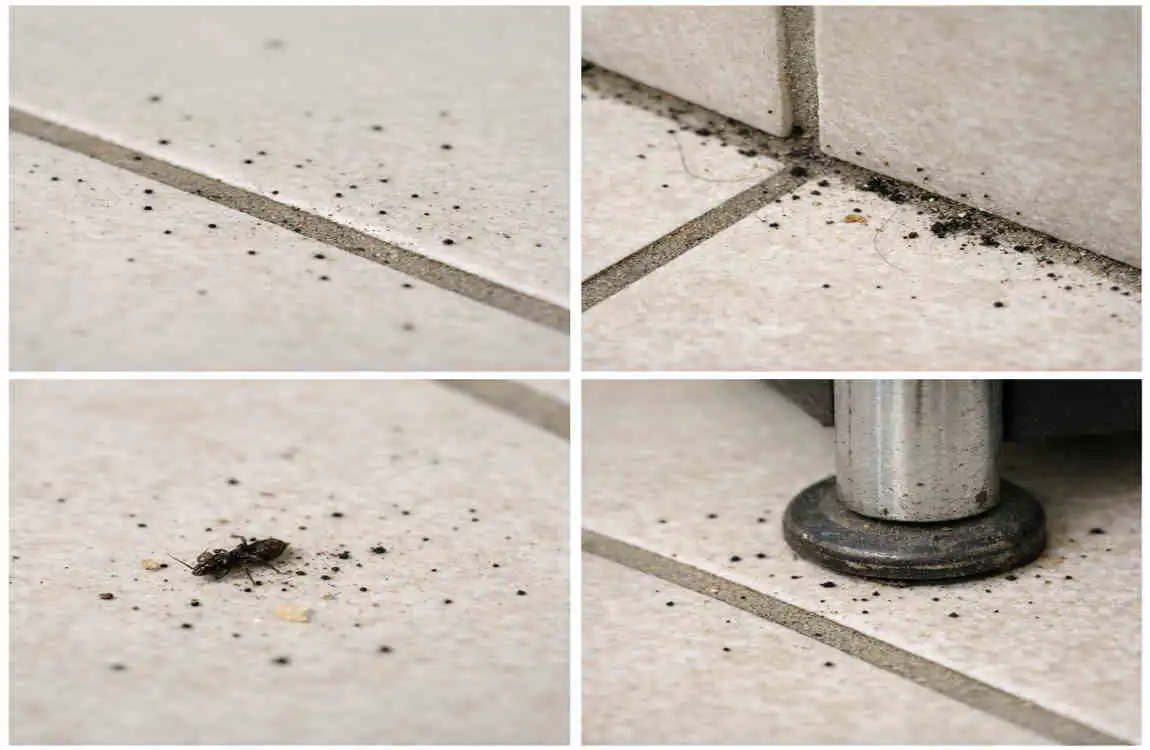
The small black spots on your tile may come from several different sources. Some are harmless surface stains, while others point to moisture problems.
Common causes include:
- Mold and mildew caused by dampness
- Dirt and grime trapped in textured tile or grout
- Soap residue and mineral buildup
- Food or grease splashes
- Stains in grout that stay wet too long
If the dots are on the tile surface, they may be easier to clean. If they are in the grout lines, they may need more focused scrubbing.
Where These Spots Commonly Appear
Black dots often appear in areas where water or dirt accumulates more easily.
You may notice them in:
- Bathrooms floor
- Kitchens
- Entryways
- Mudrooms
- Around sinks, tubs, and showers
- Dark or poorly ventilated spaces
These areas usually get more moisture and more foot traffic, so they need extra care.
When Black Dots May Indicate a Bigger Problem
Sometimes the dots are only a surface issue. Other times, they are a sign that something deeper is going on.
Watch for signs like:
- Spots that come back after cleaning
- Musty smells
- Damp grout that never seems to dry
- Cracked or soft grout
- Water leakage under or near the tile
If you see these signs, cleaning alone may not solve the problem.
How to Clean Tiny Black Dots on Tile Floor
Start With Basic Cleaning
Before using stronger cleaners, start with simple ones.
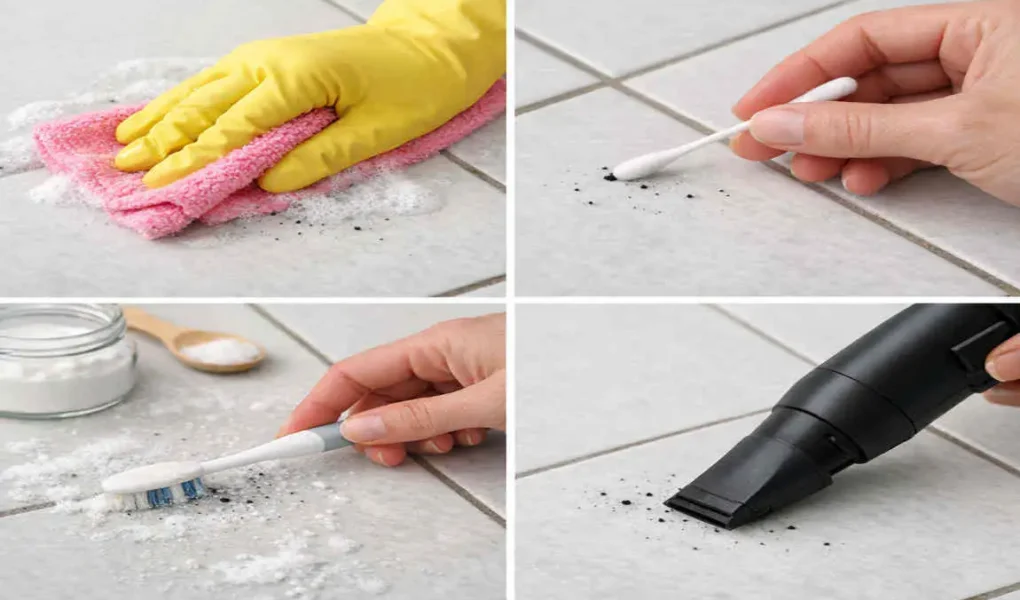
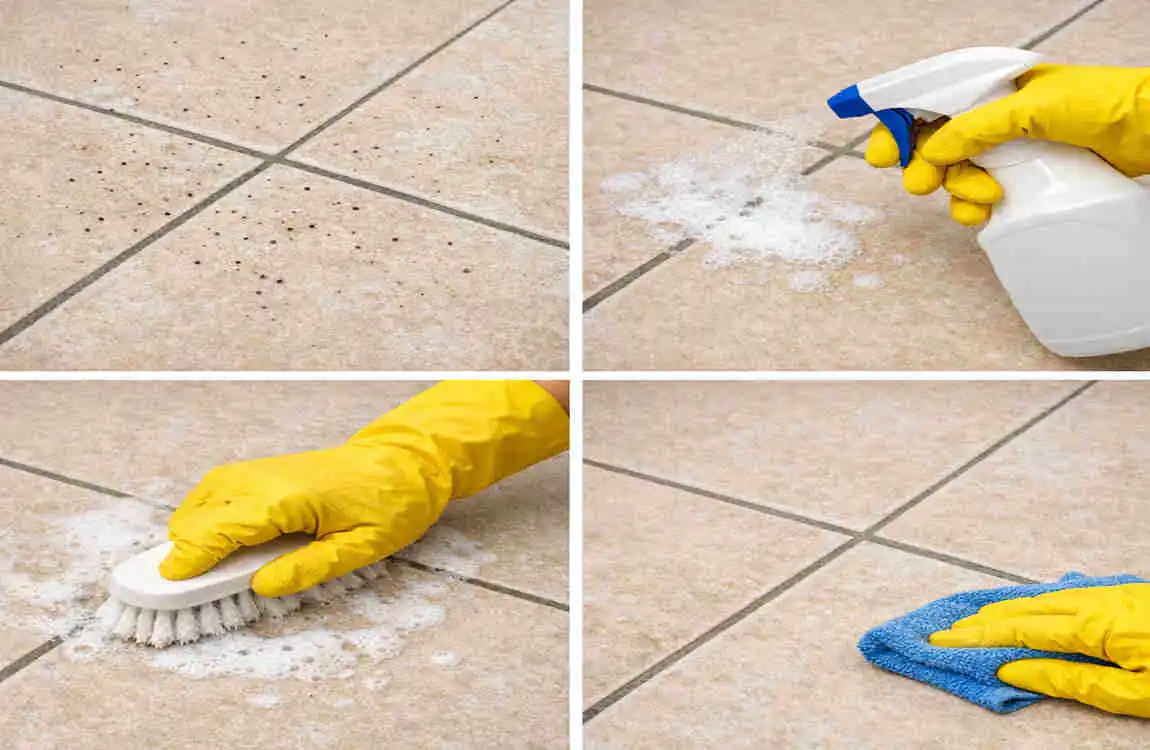
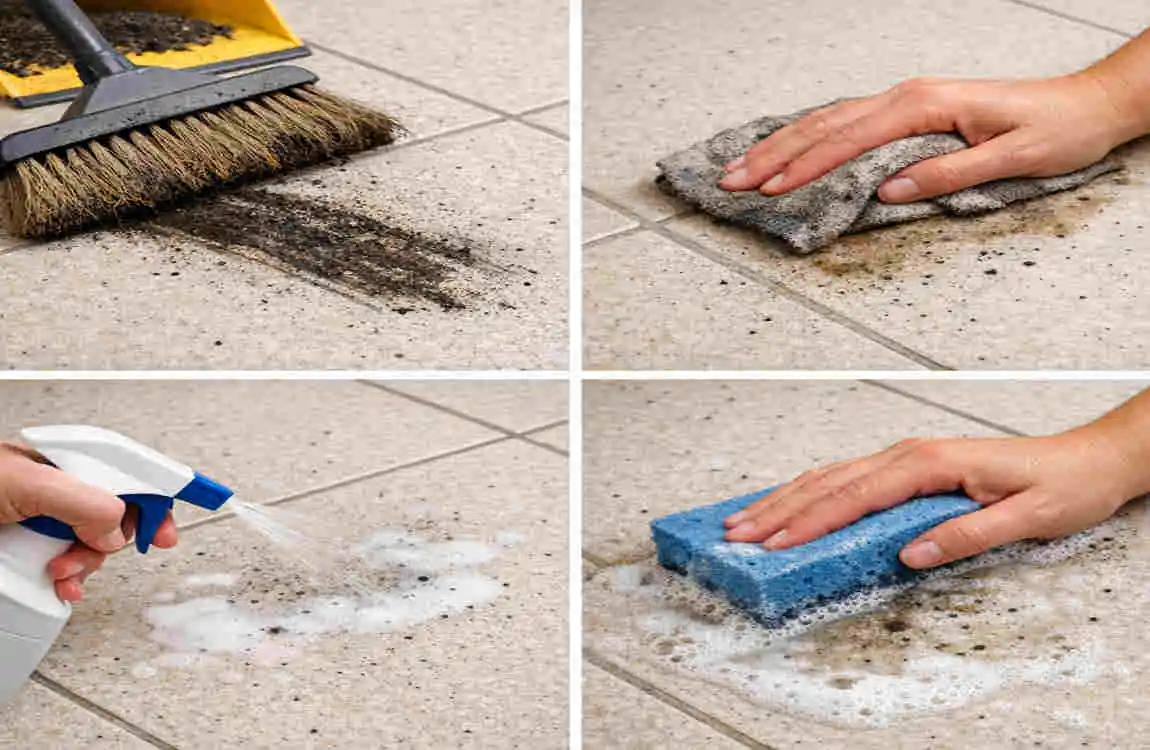
Sweep or vacuum the floor first to remove loose dirt. Then mop with warm water and a tile-safe cleaner. This often removes surface buildup right away.
If the dots remain, use a soft-bristled brush to scrub around the affected area gently. Avoid scrubbing too hard at first. You want to lift the grime without damaging the tile or grout.
Try a Baking Soda Cleaning Solution
Baking soda is a gentle cleaning option that can help loosen dirt and surface stains.
You can make a simple paste by mixing baking soda with a little water. Apply it to the black spots, let it sit briefly, then scrub lightly with a soft brush or sponge.
This works best when the problem is surface grime, not deep staining. Baking soda is useful because it is mild, so it is less likely to harm the tile.
Use Vinegar Carefully
Diluted vinegar can help break down some buildup, but it is not safe for every tile type.
It should not be used on natural stone like marble, travertine, or limestone because it can damage or dull the surface. Before using vinegar, check the tile manufacturer’s care instructions.
If the tile allows it, use a diluted mix, apply it lightly, and rinse well afterward. Never assume vinegar works for all floors.
Use Hydrogen Peroxide for Suitable Surfaces
Hydrogen peroxide may help with certain organic stains and light mildew marks. It can be useful in bathrooms or grout lines where moisture has caused staining.
Before using it, test a small hidden area first. That helps make sure it does not affect the finish or color.
Also, make sure the room is well-ventilated. Use it carefully and avoid mixing it with other cleaners.
Clean the Grout Separately
Grout often traps more dirt than the tile itself. That is why black dots sometimes seem to stay in the same place even after mopping.
Use a grout brush or a soft toothbrush to scrub the lines directly. Work gently, rinse the area, and dry it thoroughly when done.
Here is a simple approach you can follow:
- Sweep or vacuum the floor.
- Apply a gentle cleaner to the spots.
- Scrub with a soft brush.
- Rinse the area.
- Dry the floor completely.
That last step matters a lot because leftover moisture can bring the spots back.
How to Prevent Tiny Black Dots From Coming Back
Control Moisture
Moisture is one of the biggest reasons black spots return.
You can help prevent that by:
- Fixing leaks quickly
- Running bathroom fans
- Drying wet floors after use
- Avoiding standing water around sinks or tubs
If water sits on the floor, mold and mildew can return quickly.
Keep Tile and Grout Clean
Regular cleaning makes a big difference.
Sweep often so dirt does not settle into the grout. Mop the floor on a routine that matches the manufacturer’s recommendations. Wipe spills as soon as they happen.
Clean floors are less likely to develop stubborn spots.
Improve Airflow and Drying
Good airflow helps tile and grout dry faster. That makes it harder for mildew to grow.
Try to:
- Use exhaust fans in bathrooms
- Open windows when possible
- Keep damp areas ventilated
- Let floors dry fully after cleaning
A dry floor is much less likely to develop repeated black dots.
Inspect Grout and Caulking
Cracks and gaps give moisture a place to hide.
Check the grout and caulking around wet areas. If you see damage, repair it as soon as you can. Fresh grout or caulk can help seal out water and protect the floor.
Cleaning Mistakes to Avoid
Using Too Much Water
More water is not always better. In fact, too much moisture can worsen mold and mildew.
Use only the amount needed to clean the floor, and dry the area afterward.
Scrubbing Too Aggressively
Harsh brushes and rough pads can damage tile, scratch the surface, or wear down grout.
A gentle tool is usually enough. Start mild and increase only if needed.
Mixing Cleaning Chemicals
Never mix household cleaners unless the label says it is safe.
This is especially important with:
- Bleach and acid-based cleaners
- Ammonia and bleach
- Strong chemical combinations in general
Mixing cleaners can create dangerous fumes or harmful reactions.
Ignoring the Source of Moisture
If black dots keep returning, the real issue may be moisture underneath the floor or inside the grout.
Cleaning the surface repeatedly will not fix a leak. You need to find the cause.
Using the Wrong Product for the Tile
Not all tile is the same. Natural stone and specialty tiles often need special care.
Before using any strong cleaner, check the tile type and manufacturer instructions. That helps you avoid permanent damage.
When Should You Call a Professional?
Sometimes the problem is bigger than a simple cleaning job.
You should consider professional help if:
- The black dots keep coming back
- You smell mold or mildew
- The grout stays damp
- There may be a leak under the floor
- The affected area is large
- The floor looks damaged or soft
A professional can help determine whether the spots are only surface stains or a sign of a deeper moisture problem.
That matters because if the root cause is hidden water damage, cleaning will only solve the problem temporarily.
FAQs About Tiny Black Dots on Tile Floor
Why are there tiny black dots on my tile floor?
They are often caused by dirt, mildew, mold, grout staining, soap residue, or moisture buildup.
Are tiny black dots on tile always mold?
No. Black spots are not always mold. They may be dirt or staining, so appearance alone is not enough to tell.
How do I remove tiny black dots from tile?
Start by cleaning the floor, then gently scrub the affected area, rinse it, and dry it completely.
Can baking soda remove black spots from tile?
Yes, baking soda can help with light grime and surface stains. It works best when the problem is not too deep.
Can vinegar damage tile floors?
Yes, it can damage or dull certain stone surfaces. Always check the tile type before using vinegar.
Why do black dots keep coming back after cleaning?
They may return because of moisture, poor ventilation, dirty grout, or a hidden leak.
How can I prevent black spots from appearing on tile?
Keep the floor clean, dry it well, improve airflow, and maintain the grout and caulking.
When should I get professional help?
Call a professional if the spots keep returning, if you suspect a leak, or if the affected area is large or damaged.
| Problem | Easy Cleaning Method | Helpful Tip |
|---|---|---|
| Tiny black dots on tiles | Sweep or vacuum first | Remove loose dirt before wet cleaning |
| Dirt or grime | Use warm water + mild dish soap | Scrub gently with a soft brush |
| Mold or mildew | Use a suitable tile-safe cleaner | Keep the area well ventilated |
| Grout stains | Apply baking soda paste | Avoid harsh scrubbing that can damage grout |
| Greasy spots | Use diluted dish soap | Rinse thoroughly afterward |
| Persistent black dots | Use a tile-safe grout cleaner | Test the cleaner on a hidden area first |
| Preventing new spots | Keep floors dry and clean regularly | Address moisture quickly to reduce buildup |