If you are planning a floor system, 2×4 floor joist spacing is a topic you should understand before you build. Floor joists carry the weight of people, furniture, and everything else inside a room. When the spacing is off, the floor can feel weak, bounce excessively, or even sag over time.
In simple terms, floor joists are the bones of the floor. They support the surface you walk on and help keep the whole structure stable. While 2×4 lumber is cheap and easy to find, it is usually too small for main-floor joists in a house. That is why spacing, load, and building code rules matter so much.
What Are Floor Joists?

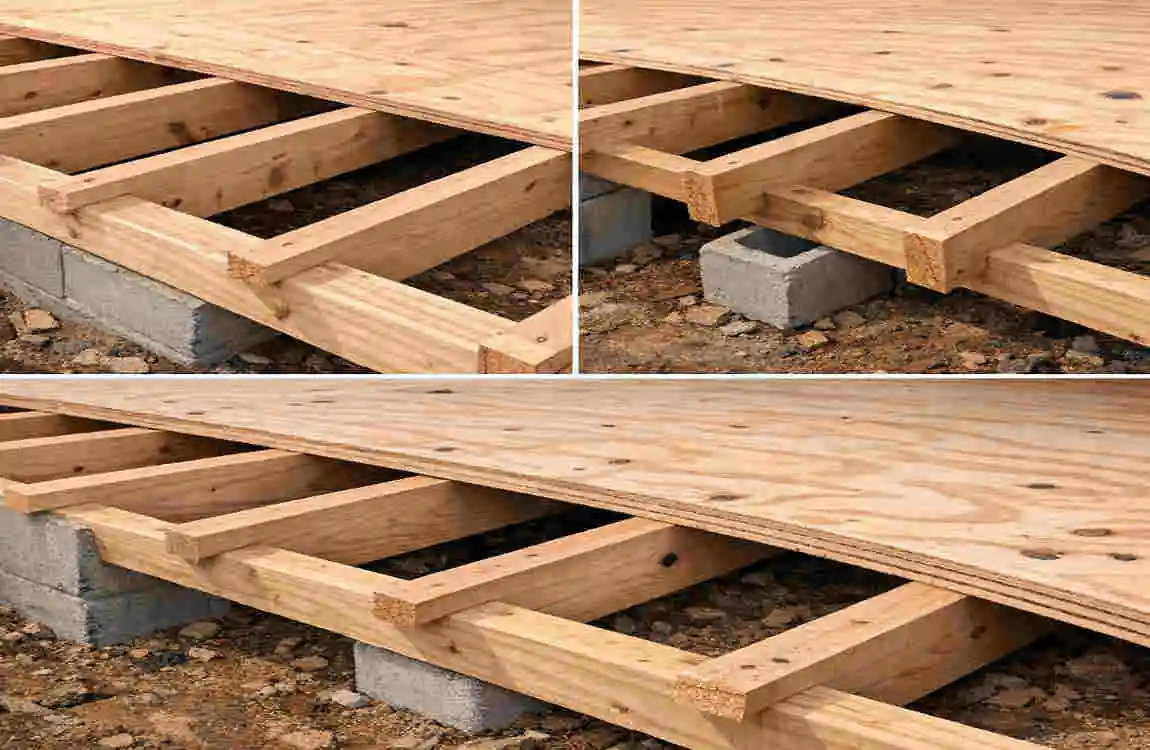
Floor joists are horizontal framing members that span a room and support the floor above them. They spread weight from the floor surface down to beams, walls, or foundations.
Why They Matter
A strong floor depends on the right joist size, the right spacing, and proper installation. If any of these are weak, the floor can flex or fail early.
Common Materials
Joists are usually made from:
- Solid wood
- Engineered wood
- Steel
For most homes, stronger joists like 2×6, 2×8, or engineered joists are preferred over 2x4s.
Can You Use 2×4 for Floor Joists?
In most homes, 2x4s are not a good choice for main-floor joists. They do not carry heavy loads as well as larger lumber. Even if you reduce the spacing, a 2×4 floor system may still not meet safe structural needs.
Where 2x4s May Work
2x4s may be acceptable for:
- Small sheds
- Temporary platforms
- Very light-duty structures
They are not usually recommended for full living spaces.
Standard 2×4 Floor Joist Spacing
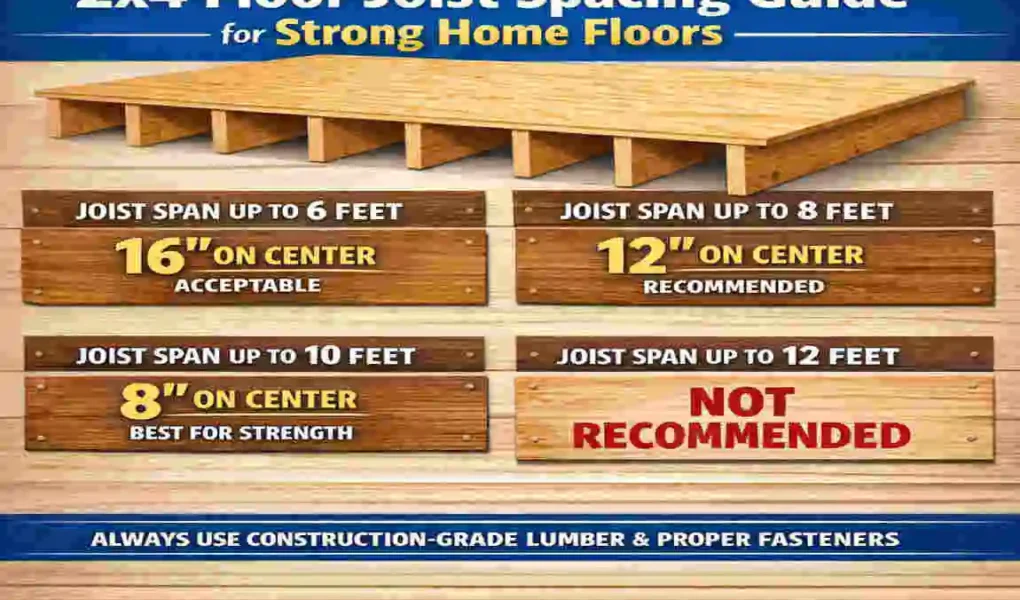
The most common joist spacing is 16 inches on-centre, but some builds use 12 inches or 24 inches on-centre, depending on the design and load.
Simple Spacing Guide
SpacingTypical UseStrength Level
12 inches OC Heavier support needs Stronger
16 inches OC Most common standard Balanced
24 inches OC Light-duty use only Weaker
With 2×4 floor joist spacing, tighter spacing can help a little, but it does not fully solve the strength problem. Smaller lumber still bends more easily than larger joists.
Why Spacing Matters So Much
Spacing affects how well the floor spreads weight. When joists are too far apart, the floor can feel soft or uneven. When they are too close, you may improve stiffness, but only up to a point.
Load Capacity and Safety
A floor must handle two main types of weight:
- Dead load: the weight of the materials themselves
- Live load: people, furniture, and moving items
If the joists are too small or too far apart, the floor may develop:
- Sagging
- Bouncing
- Cracks in walls
- Structural damage
That is why joist size matters just as much as spacing.
Building Code Notes
Most residential building codes do not recommend 2x4s for main-floor joists. Local codes often require stronger lumber or engineered systems for safe support.
What to Do
Before building, always:
- Check local building rules
- Confirm the span requirements
- Ask for inspection approval if needed
If the plan is unusual, an engineer may need to review it.
Best Practices for Strong Floors
If you want a floor that lasts, use the right materials from the start.
Better Choices
- 2×6 or 2×8 joists
- Engineered wood joists
- Proper blocking and bridging
- Good subfloor thickness
- Moisture protection
These choices help reduce flex, improve strength, and extend the life of the floor.
Common Mistakes to Avoid
Many floor problems stem from simple planning errors.
- Using 2x4s for long spans
- Widening spacing to save money
- Ignoring load needs
- Installing joists unevenly
Even a small mistake can create a weak floor later.
Better Alternatives
If you need more strength, consider these options:
- Engineered I-joists
- LVL beams
- Sistering joists
- Adding extra support beams
These methods give better support than relying on 2x4s alone.
FAQ
What is the standard spacing for floor joists?
The most common spacing is 16 inches on centre, though 12 and 24 inches are also used in some cases.
Can I use 2×4 for floor joists in a house?
Usually no. Most houses need stronger joists for safety and durability.
What happens if joist spacing is too wide?
The floor may sag, bounce, or feel unstable.
What is the safest joist size for floors?
For many projects, 2×6, 2×8, or engineered joists are safer choices.
Are 2×4 joists ever acceptable?
Yes, but mostly for light-duty or temporary structures, not standard home floors.
| Joist Spacing | Recommended Span (2×4) | Best Use Case | Notes |
|---|---|---|---|
| 12 inches O.C. | Up to ~6–7 ft | Light residential floors, small rooms | Strongest option for 2×4 joists |
| 16 inches O.C. | Up to ~5–6 ft | Light-duty flooring, sheds | Common spacing, but limited span |
| 24 inches O.C. | Up to ~4–5 ft | Temporary floors, very light loads | Not ideal for standard homes |
| 12–16 inches O.C. (reinforced) | Up to ~7 ft (max) | Short spans with blocking support | Requires strong subfloor sheathing |