70s linoleum flooring has a look that many people remember right away. It often brings to mind bold colors, warm earth tones, and playful patterns that made kitchens and hallways feel full of personality.
Today, this flooring style is making a comeback. Homeowners and design lovers are once again drawn to its retro charm, practical use, and nostalgic feel.
What Is 70’s Linoleum Flooring?
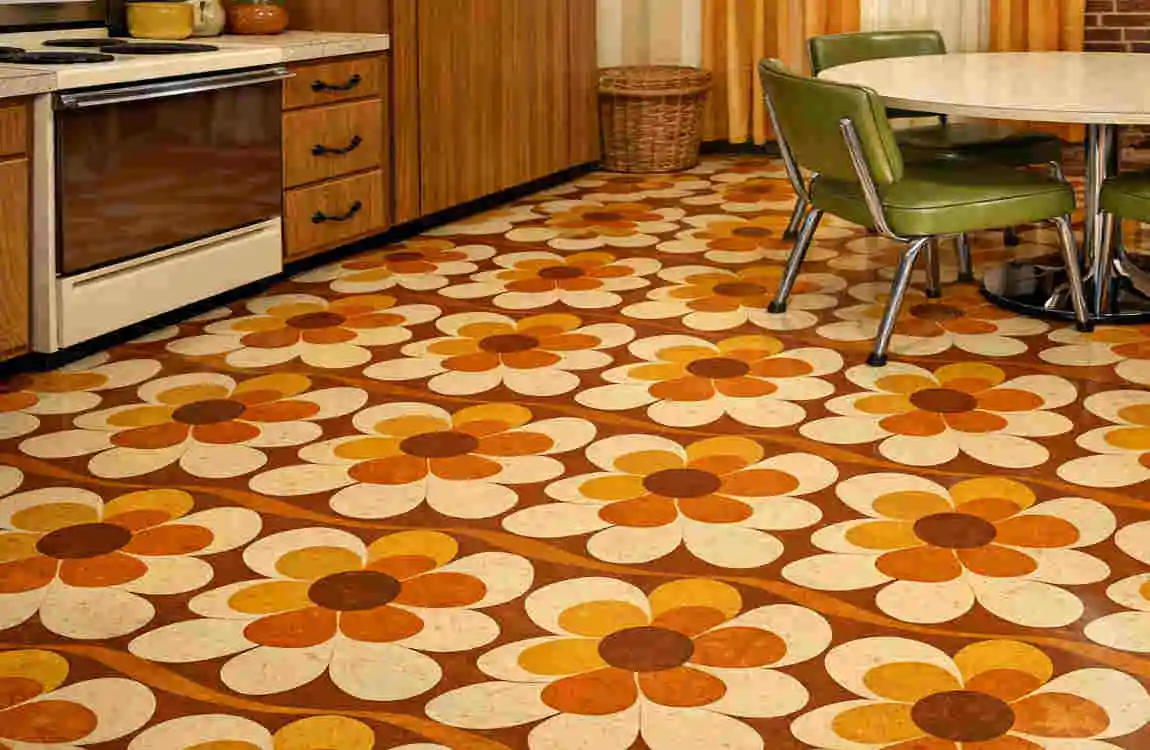
70’s linoleum flooring is a type of floor covering that became especially popular in the 1970s. It is known for its bright, earthy, and sometimes bold designs.
Definition and History
Linoleum is made from natural materials such as linseed oil, cork dust, wood flour, limestone, and pigments. These materials are pressed onto a backing, often jute. That gives the floor its flexible but durable surface.
It has been around for much longer than the 1970s, but the decade helped define its most recognizable style. In many homes, linoleum became a practical and decorative choice for kitchens, bathrooms, and entryways.
How It Became Popular in the 1970s
The 1970s were all about warm colors, creative patterns, and a relaxed home style. People wanted floors that felt less plain and more expressive.
Linoleum fit that mood perfectly. It was affordable, easy to clean, and available in many designs. That made it a favorite for busy families.
Linoleum vs Vinyl Flooring
Many people confuse linoleum with vinyl, but they are not the same.
- Linoleum is made from natural materials.
- Vinyl is made from synthetic materials.
This difference matters because linoleum has a more classic, eco-friendly reputation. Vinyl may be more common today, but vintage linoleum still has its own special appeal.
Popular 70’s Linoleum Flooring Designs
The 1970s flooring style had a strong personality. It did not try to hide in the background.
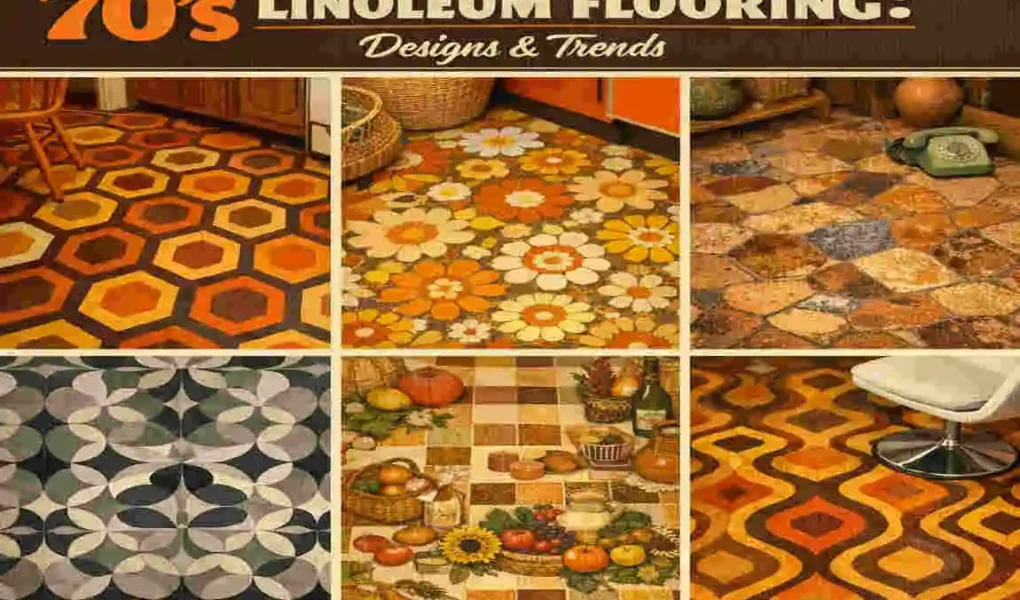
Bold Geometric Patterns
Geometric shapes were a big trend. Circles, squares, diamonds, and repeated shapes gave floors a lively and modern feel.
These patterns worked well in kitchens and dining rooms because they added energy without needing extra decoration.
Floral Prints
Some linoleum floors had floral designs that looked soft, cheerful, and slightly artistic. These patterns often matched the overall home style of the time, which blended comfort with personality.
Checkerboard Styles
Checkerboard floors were also popular. Black and white was the classic version, but many homes used softer or warmer color combinations.
This style still feels timeless because it is simple, bold, and easy to pair with other décor.
Earth-Tone Color Palettes
A huge part of 70’s style was the use of earth tones. These colors made homes feel warm and cozy.
Think of shades like brown, rust, gold, green, and beige. These colors often appeared in both solid floors and patterned designs.
Retro Kitchen Designs
Kitchens were the heart of 70s linoleum flooring. Many homeowners chose bright or patterned floors to match colored cabinets, appliances, and wall finishes.
This created a cheerful space that felt practical and stylish at the same time.
Common Colors Used in 70’s Linoleum Flooring
The color choices in the 1970s were bold but comforting. They reflected the design mood of the decade very well.
ColorPopular RoomsStyle
Avocado Green Kitchen Retro
Harvest Gold Dining Room Vintage
Brown Living Room Earth Tone
Orange Kitchen Bold
Beige Hallway Neutral
Some of the most common colors included:
- Orange
- Avocado green
- Harvest gold
- Brown
- Beige
- Rust red
These shades may seem dated to some people, but they are a major part of the flooring’s charm. In the right space, they can still feel warm and stylish.
Why 70’s Linoleum Flooring Became So Popular
There were good reasons this flooring style became a home favorite.
Affordable Flooring Option
Linoleum was usually less expensive than many other flooring types. That made it a smart choice for families who wanted style without spending too much.
Easy Maintenance
It was also easy to care for. A quick sweep and simple mop were often enough to keep it looking clean.
Durable Surface
When installed well and cared for properly, linoleum could last a long time. That made it appealing for busy homes.
Stylish Designs for Every Home
People liked that linoleum was not boring. It came in many patterns and colors, so homeowners could make their spaces feel more personal.
Pros and Cons of 70’s Linoleum Flooring
Like any flooring, it has strengths and limits.
ProsCons
Durable Can fade over time
Eco-friendly Older floors may contain adhesives requiring care
Comfortable underfoot Pattern may look outdated to some
Easy to clean Can scratch
The pros make it attractive for vintage homes and restoration projects. The cons are mostly about age, wear, and changing style preferences.
Is 70’s Linoleum Flooring Still in Style?
Yes, it can be. The answer depends on the home and how it is used.
Modern Vintage Interior Trends
Vintage style is popular again. Many homeowners like mixing old and new pieces to create a cozy, lived-in look.
Retro Home Renovations
People restoring older houses often try to keep original details, including flooring. If the linoleum is in good shape, it can become a special feature instead of something to remove.
Mid-Century and 70s-Inspired Decor
If your home uses warm wood, simple shapes, and retro colors, 70s linoleum flooring can fit beautifully. It works especially well in spaces that celebrate vintage design.
How to Identify Original 70’s Linoleum Flooring
If you think your home has original linoleum, look closely at the design and material.
Pattern Recognition
Many original floors show bold colors, repeated shapes, or retro floral designs. These patterns can be a strong clue.
Material Characteristics
Real linoleum often feels a little different from vinyl. It may have a more natural look and an older backing material.
Signs of Age
Look for fading, curling edges, cracks, or worn spots. These are common in older flooring.
When to Consult a Professional
If you are not sure what you are looking at, a flooring professional can help identify the material safely.
Restoring Old 70’s Linoleum Flooring
Not every old floor needs to be replaced. In many cases, restoration is possible.
Cleaning Techniques
Start with a gentle cleaner and warm water. Use a soft mop or cloth, not anything rough.
Removing Stains
For stubborn marks, use mild cleaning products made for delicate flooring. Avoid harsh scrubbing.
Repairing Minor Damage
Small curls, loose edges, or tiny cracks can sometimes be fixed before they get worse.
Polishing and Protecting
Once the floor is clean, polish it lightly if needed and keep it protected from too much wear.
Decorating Around 70’s Linoleum Flooring
A vintage floor can guide the rest of your room design.
Matching Wall Colors
Soft white, warm cream, muted green, and dusty beige usually work well. These shades help the flooring stand out without clashing.
Best Cabinet Styles
Simple wooden cabinets, painted retro cabinets, or clean flat-panel styles often pair nicely with this flooring.
Furniture Ideas
Choose furniture that feels balanced, not too heavy. Wood tones, simple shapes, and vintage accents work especially well.
Lighting Tips
Warm lighting brings out the cozy side of 70’s flooring. Natural light also helps the colors feel brighter and softer.
Should You Keep or Replace 70’s Linoleum Flooring?
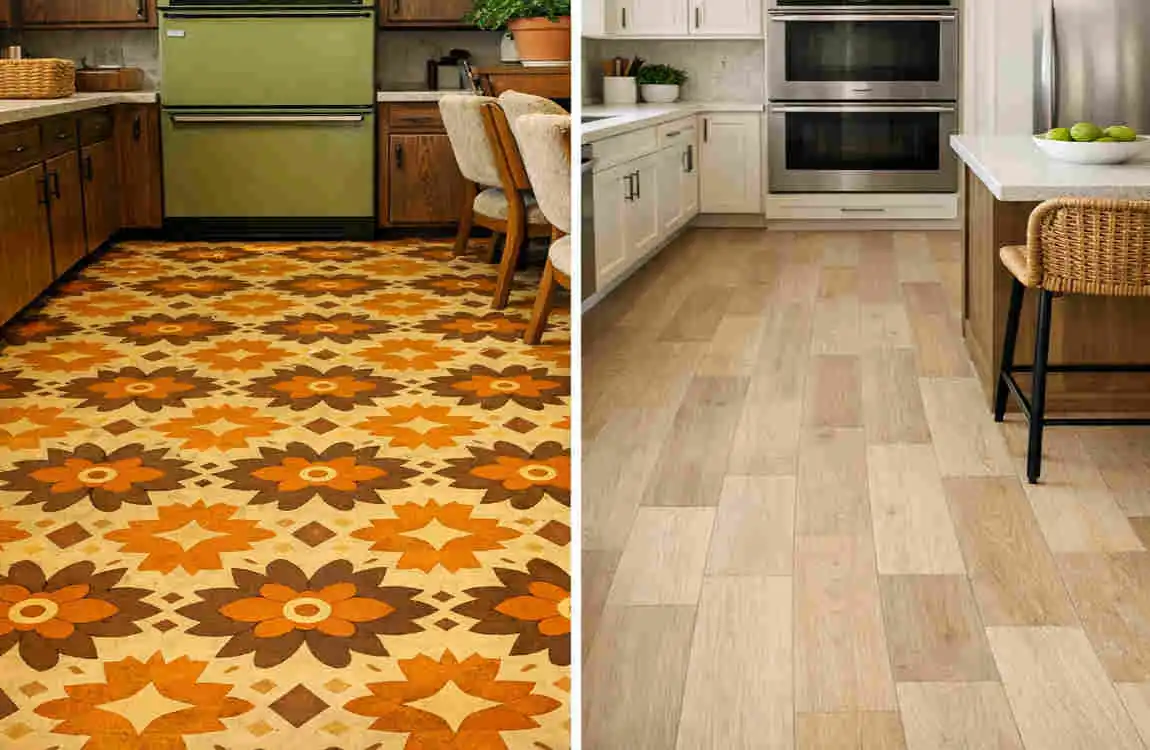
This is one of the biggest questions homeowners face.
When Restoration Makes Sense
Keep the floor if it is still solid, safe, and visually appealing. Original flooring can add charm and value in the right home.
When Replacement Is the Better Choice
Replacement may be smarter if the floor has major damage, unsafe adhesives, or deep wear that cannot be fixed.
Budget Considerations
Restoring a floor is often cheaper than replacing it. But if repairs are extensive, a new floor may be the better long-term choice.
Maintenance Tips
A little care goes a long way.
- Sweep regularly
- Mop with mild cleaner
- Avoid harsh chemicals
- Protect from heavy furniture
- Use floor mats
These simple habits help the floor last longer and keep it looking better.
Common Mistakes to Avoid
It is easy to damage old flooring if you are not careful.
- Using abrasive cleaners
- Excessive water exposure
- Ignoring cracks or curling edges
- Dragging heavy furniture
If you avoid these mistakes, you give the floor a much better chance of lasting.
Frequently Asked Questions
What is 70’s linoleum flooring made of?
It is traditionally made from linseed oil, cork dust, wood flour, limestone, pigments, and jute backing.
Is 70’s linoleum flooring the same as vinyl?
No. Linoleum is natural, while vinyl is synthetic.
Is 70’s linoleum flooring valuable?
Original, well-kept vintage linoleum can be appealing to collectors and homeowners who love retro style.
Can old linoleum flooring be restored?
Yes. Many floors can be cleaned, repaired, and polished if they are still in decent shape.
Is vintage linoleum safe?
The linoleum itself is usually safe, but old adhesives or nearby materials may need careful checking.
| Feature | Details |
|---|---|
| Era | Popular throughout the 1970s in homes, apartments, and commercial spaces. |
| Material | Made from natural materials such as linseed oil, cork dust, wood flour, limestone, and jute backing. |
| Common Colors | Avocado green, harvest gold, burnt orange, mustard yellow, brown, and beige. |
| Popular Patterns | Geometric shapes, floral prints, checkerboard, swirls, and faux stone or tile designs. |
| Style | Bold, colorful, retro, and inspired by mid-century and disco-era décor. |
| Finish | Mostly matte or low-gloss with durable wear surfaces. |
| Benefits | Long-lasting, easy to clean, comfortable underfoot, and eco-friendly. |
| Common Rooms | Kitchens, bathrooms, laundry rooms, basements, and hallways. |
| Current Trend | Vintage-inspired linoleum patterns are making a comeback in modern retro and farmhouse interiors. |
| Best For | Homeowners looking to recreate an authentic 1970s aesthetic with durable flooring. |