
Floor trim may seem like a small detail, but it makes a big difference in how a room looks and feels. It gives your walls a clean finish, hides gaps at the edge of the flooring, and helps protect the lower part of your walls from scuffs and damage.
If you are wondering what to use for floor trim, the answer depends on the room, moisture levels, your budget, and the style you want. A trim that works well in a bedroom may not be the best choice for a bathroom or basement.
What Is Floor Trim?
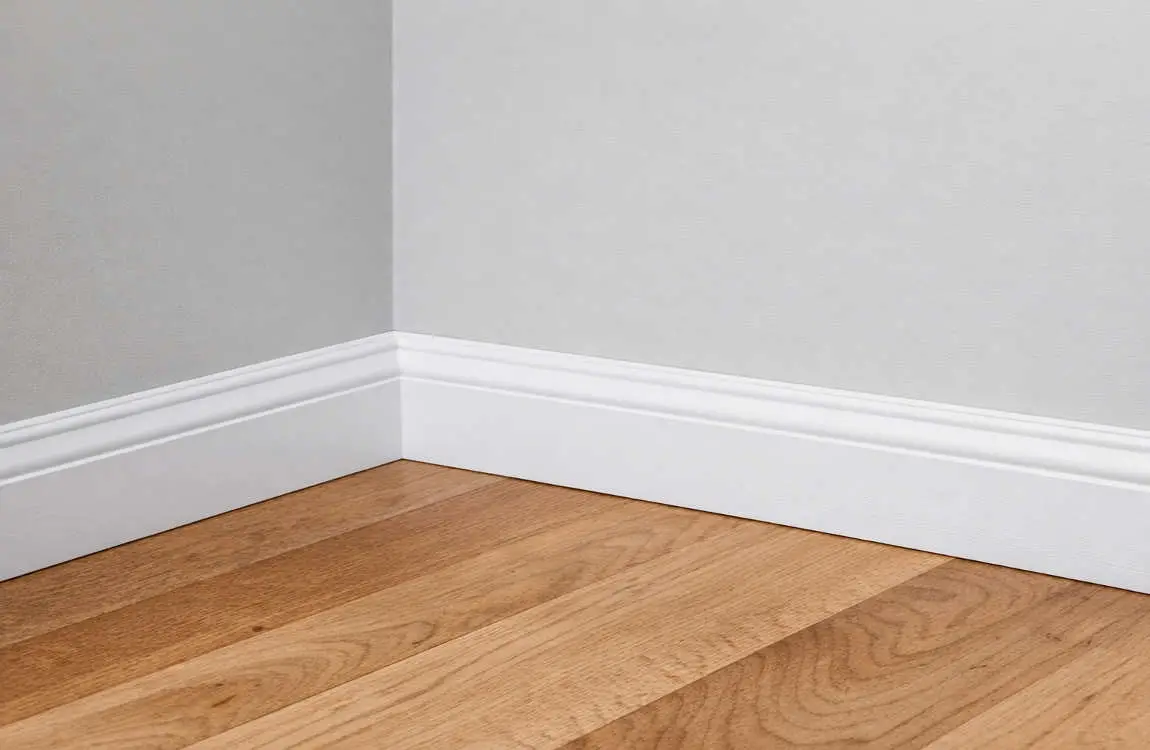
Floor trim is the decorative strip installed where the wall meets the floor. Most people know it as baseboard, but the term can also include pieces like quarter round and shoe molding.
Its main job is to create a finished look. It also covers the small gap that flooring needs to accommodate expansion and contraction. Without trim, that gap would be visible, and the room would look incomplete.
Floor trim vs. baseboards, quarter round, and shoe molding
- Baseboards are the main trim pieces along the bottom of the wall.
- Quarter round is a small, curved piece often used to cover gaps in flooring.
- Shoe molding is similar to quarter round but usually flatter and more subtle.
Today, floor trim is available in materials such as MDF, solid wood, PVC, pine, and composite. Each one has its own strengths.
Why Floor Trim Matters in Every Room
Floor trim is not just about appearance. It also plays a practical role in everyday living.
It helps protect drywall from vacuum bumps, shoe marks, and furniture scrapes. It also hides the small expansion gap left around most flooring types. That means your floors can move naturally without ruining the room’s look.
Trim also improves the overall design of your home. Even a simple room can look polished once the right trim is installed. In many cases, trim can even help increase home value because buyers notice clean finishing details.
Another benefit is cleaning. With trim in place, dust and dirt are easier to manage because the wall edge has a smooth, finished transition.
What to Use for Floor Trim Based on Material
MDF Floor Trim
MDF stands for medium-density fiberboard. It is one of the most common choices for floor trim because it is affordable and easy to paint.
Best for: bedrooms, living rooms, hallways, and other dry areas.
Advantages:
- Budget-friendly
- Smooth surface for paint
- Easy to cut and install
Drawbacks:
- Not good in wet areas
- Can swell if exposed to water
Solid Wood Trim
Solid wood trim gives a classic, high-end look. Popular choices include oak, pine, maple, and poplar.
Best for: living rooms, hallways, offices, and formal spaces.
Advantages:
- Strong and durable
- Can be stained or painted
- Long-lasting when cared for properly
Drawbacks:
- More expensive than MDF
- Can move with humidity changes
PVC Floor Trim
PVC trim is made of plastic and is known for its water resistance. This makes it ideal for rooms that deal with moisture.
Best for: bathrooms, basements, laundry rooms, and kitchens.
Advantages:
- Waterproof
- Easy to clean
- Resists mold and rot
Drawbacks:
- Can look less traditional than wood
- May cost more than MDF
Finger-Jointed Pine
Finger-jointed pine is a budget-friendly wood product made by joining smaller pieces together. It is often sold ready for paint.
Best for: bedrooms, living rooms, and DIY projects.
Advantages:
- Affordable
- Paints well
- Lightweight and easy to work with
Drawbacks:
- Less durable than solid wood
- Not ideal for wet spaces
Composite Floor Trim
Composite trim is made from a mix of wood fibers and synthetic materials. It offers a good balance of strength and moisture resistance.
Best for: kitchens, basements, laundry rooms, and high-use areas.
Advantages:
- Durable
- Moisture resistant
- Long lifespan
Drawbacks:
- Usually costs more than MDF
- Fewer style options in some areas
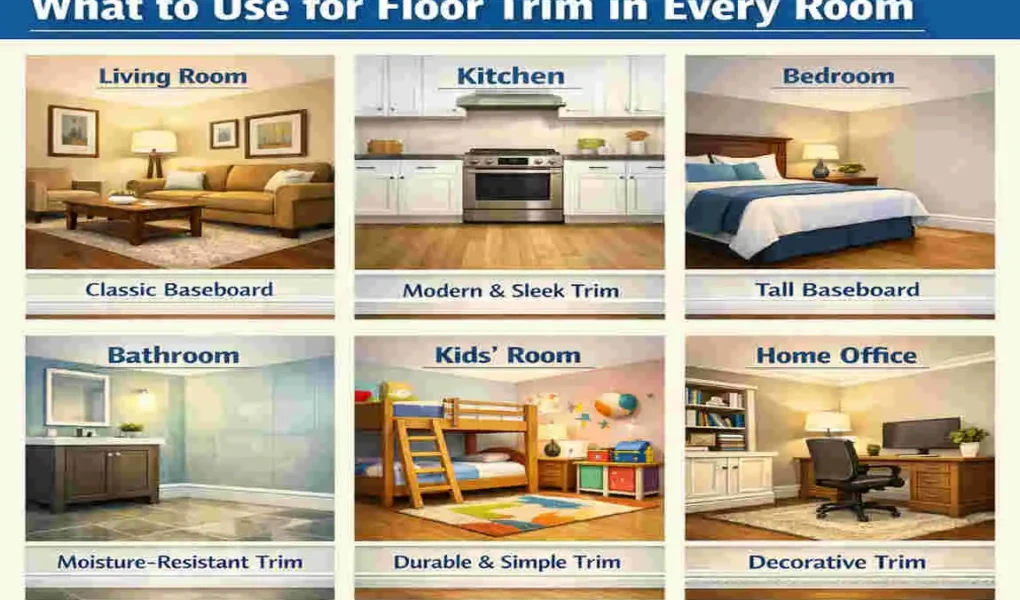
What to Use for Floor Trim in Every Room
Living Room
The living room is often where style matters most. Tall baseboards or decorative trim can make the space feel more finished and elegant. Hardwood trim or painted MDF both work well here, depending on your budget.
Bedroom
Bedrooms usually look best with medium-height trim and simple profiles. Painted MDF is a smart choice because it is affordable and gives a neat, calm look. If you want a softer style, keep the trim simple and clean.
Kitchen
Kitchens need trim that can handle spills, steam, and cleaning. PVC or composite trim is a good option because it withstands moisture better. Avoid materials that absorb water easily.
Bathroom
Bathrooms need the most protection from water. PVC baseboards are usually the best choice because they are waterproof and easy to maintain. If you want a cleaner long-term solution, choose mold-resistant trim materials.
Laundry Room
Laundry rooms can deal with humidity and occasional leaks. A water-resistant material is the safest option here. PVC or composite trim is practical and easy to wipe down.
Basement
Basements often have moisture concerns, even when they seem dry. For that reason, PVC or composite trim is usually the best pick. These materials handle damp conditions better than wood or MDF.
Hallways
Hallways see heavy traffic, so durability matters. Solid wood trim with a scuff-resistant finish works very well. It gives a strong look and holds up better against bumps and contact.
Home Office
A home office usually benefits from a neat, modern appearance. Painted wood trim or smooth MDF trim works well for a clean, professional finish.
Best Floor Trim Styles
Different trim styles create different moods. Here are some of the most common options:
- Colonial: Traditional and formal
- Modern square edge: Clean and simple
- Ranch style: Low and understated
- Craftsman: Slightly detailed, warm, and classic
- Victorian: Decorative and elegant
- Minimalist flat trim: Simple and modern
If your home already has a style, choose trim that matches it. A modern home usually looks best with simple trim, while older homes often suit more detailed profiles.
Choosing the Right Floor Trim Height
Trim height changes the look of the room. Taller trim feels more dramatic, while shorter trim looks subtle and modern.
Ceiling Height Recommended Trim Height
8 ft 3–5 inches
9 ft 5–7 inches
10 ft+ 7–10 inches
A good rule is to keep the trim proportional to the room. Larger rooms and higher ceilings can accommodate wider trim, while smaller rooms usually look better with more modest trim.
Best Floor Trim Colors
Color can change the whole feel of a room.
Popular choices include:
- White trim for a clean, classic look
- Matching wall color for a smooth, blended effect
- Matching flooring for a seamless style
- Black trim for a bold, modern touch
- Natural wood finish for warmth and texture
- Two-tone combinations for contrast and personality
White is still the most popular choice because it works with almost any wall or floor color.
How to Match Floor Trim with Flooring
The best trim is the one that works with your flooring rather than fighting it.
Hardwood floors
Wood trim or painted white trim both look good with hardwood. If you want a classic feel, match the wood tone. If you want contrast, go with white.
Laminate flooring
Laminate often looks best with simple painted trim. MDF is a common choice here because it is affordable and easy to finish.
Vinyl plank flooring
Vinyl plank floors pair well with PVC or composite trim, especially in areas where moisture may be an issue.
Tile floors
Tile is common in kitchens, bathrooms, and laundry rooms. Since these areas can get wet, use water-resistant trim.
Carpet
Carpet usually works well with taller baseboards because the trim helps create a clean edge where the carpet meets the wall.
Engineered wood
Engineered wood gives you some flexibility. You can choose matching trim for a natural look or white trim for a brighter finish.
Floor Trim Installation Tips
A good installation makes all the difference. Even the best trim can look messy if it is not installed carefully.
- Measure accurately before cutting.
- Use quality nails or adhesive based on the material.
- Cut corners carefully so joints fit well.
- Caulk small gaps for a smooth finish.
- Paint before installation when possible.
- Touch up after installation to cover nail holes and edges.
Common Floor Trim Mistakes to Avoid
Many trim problems happen before the installation is even finished.
- Choosing a material that does not match the room
- Using wood or MDF in wet areas
- Installing uneven pieces
- Picking trim that is too tall or too short
- Making poor corner joints
- Skipping caulk and paint
If you avoid these mistakes, your trim will look cleaner and last longer.
Maintenance Tips for Floor Trim
Floor trim does not need much care, but a little attention goes a long way.
- Dust it regularly
- Clean it gently with a soft cloth
- Touch up paint when needed
- Repair dents early
- Check for signs of moisture damage
Taking care of the trim helps keep it neat and prevents small issues from becoming bigger repairs.
Cost of Floor Trim
Price depends on the material, style, and room size.
Material Average Cost (per linear foot)
MDF $1–$3
Pine $2–$5
Oak $4–$10
PVC $3–$8
Composite $4–$9
If you are working with a tight budget, MDF and pine are usually the most affordable. For moisture-prone rooms, PVC and composite are often worth the extra cost.
Is DIY Floor Trim Installation Worth It?
DIY installation can save money, but it is not always the easiest project.
Pros
- Lower installation costs
- More control over the finish
- Satisfying for hands-on homeowners
Cons
- Needs careful measuring
- May require special tools
- Can take a lot of time
If you enjoy home projects and have patience, DIY can be a good choice. If your walls are uneven or your corners are tricky, hiring a professional may save time and stress.
Expert Tips for Choosing the Best Floor Trim
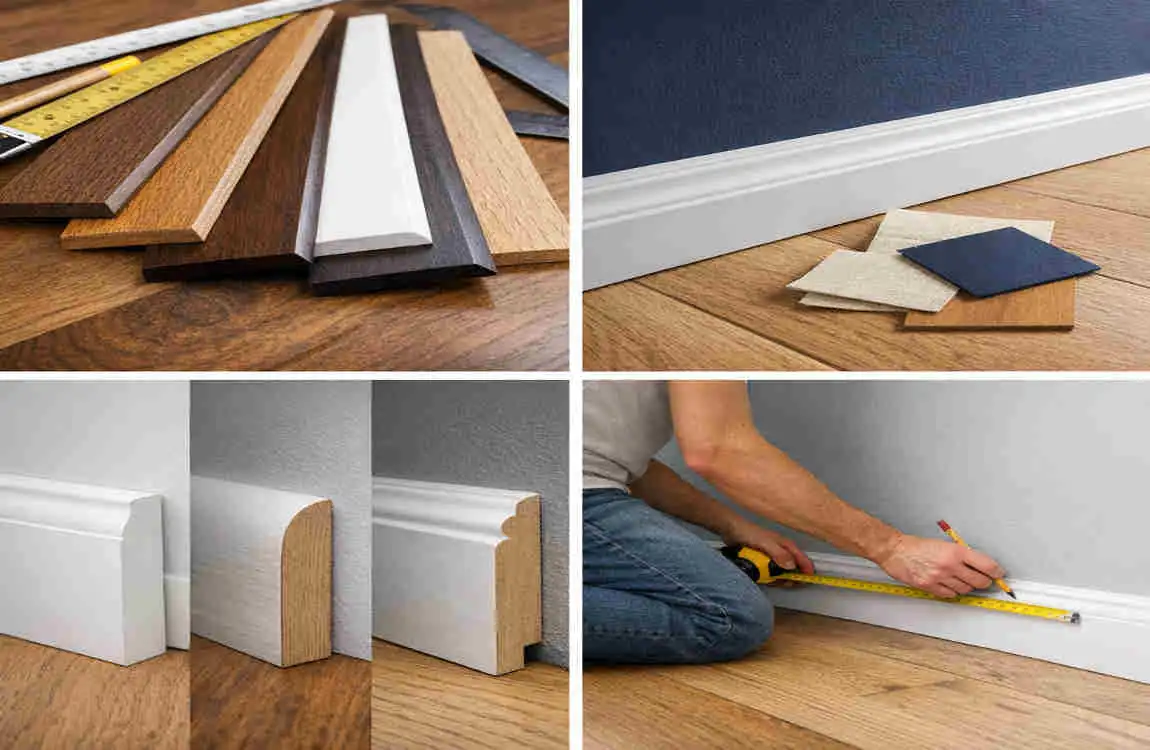
Here are a few simple tips to help you choose well:
- Match trim to your home’s overall style
- Use moisture-resistant materials in wet rooms
- Choose stronger trim for hallways and busy spaces
- Keep trim styles fairly consistent throughout the home
- Invest in better materials if you want long-term value
The best choice is not always the fanciest one. It is the one that fits your room, your flooring, and your daily life.
Frequently Asked Questions
What to use for bathroom floor trim?
PVC or composite trim is the best choice because it is waterproof and mold-resistant.
What is the best material for floor trim?
Solid wood offers Premium durability, while MDF provides an affordable option for dry rooms.
Should floor trim match the flooring?
Not always. Many homeowners prefer white trim for contrast, while others match the trim to the flooring for a seamless look.
What size floor trim should I use?
Most homes use baseboards between 3 and 5 inches tall, with taller trim suited to rooms with higher ceilings.
Is PVC floor trim better than wood?
PVC is better for moisture-prone areas, while wood offers a more traditional appearance for living spaces.
Can I install floor trim myself?
Yes. With accurate measurements, proper tools, and patience, DIY installation is possible for many homeowners.
| Room | Best Floor Trim | Recommended Material | Why It’s a Good Choice |
|---|---|---|---|
| Living Room | Baseboards | MDF, Wood, PVC | Adds a clean, elegant finish and protects walls. |
| Bedroom | Baseboards & Quarter Round | Wood, MDF | Creates a cozy look while covering flooring gaps. |
| Kitchen | Waterproof Baseboards | PVC, Vinyl | Resists moisture, stains, and frequent cleaning. |
| Bathroom | Waterproof Baseboards | PVC, Composite | Prevents water damage and mold growth. |
| Dining Room | Decorative Baseboards | Hardwood, MDF | Enhances the room’s style and complements décor. |
| Hallway | Durable Baseboards | Solid Wood, PVC | Withstands heavy foot traffic and protects walls. |
| Laundry Room | Vinyl Baseboards | PVC, Vinyl | Moisture-resistant and easy to maintain. |
| Home Office | Simple Baseboards | MDF, Wood | Offers a professional, polished appearance. |
| Basement | Waterproof Trim | PVC, Composite | Ideal for damp environments and long-lasting durability. |
| Garage | Heavy-Duty Baseboards | PVC, Rubber | Resists impacts, moisture, and dirt. |