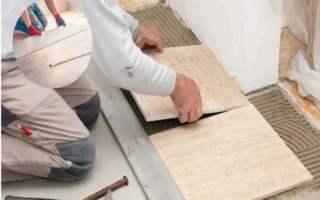
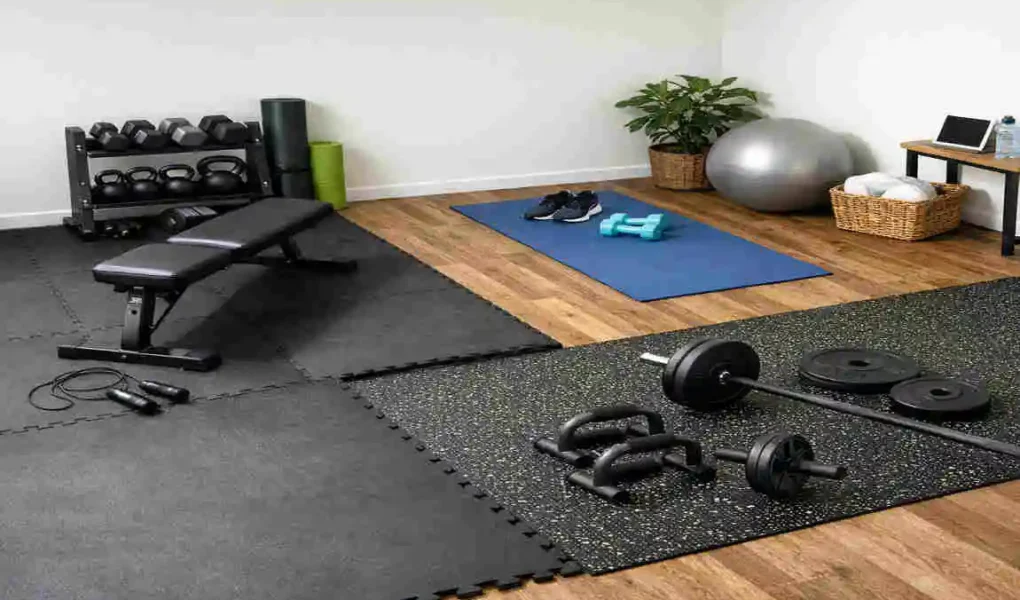
A good home gym floor can make a huge difference in how your workout space feels and functions. It helps protect your existing floor, reduces noise, adds comfort, and provides a safer surface to move on.
The best part? You do not need a costly professional setup to build a useful home gym floor. Many homeowners can create a practical workout area with rubber mats, foam tiles, carpet tiles, or even a small protective mat under equipment.
Why a Gym Floor at Home Matters
Protecting Your Existing Floor
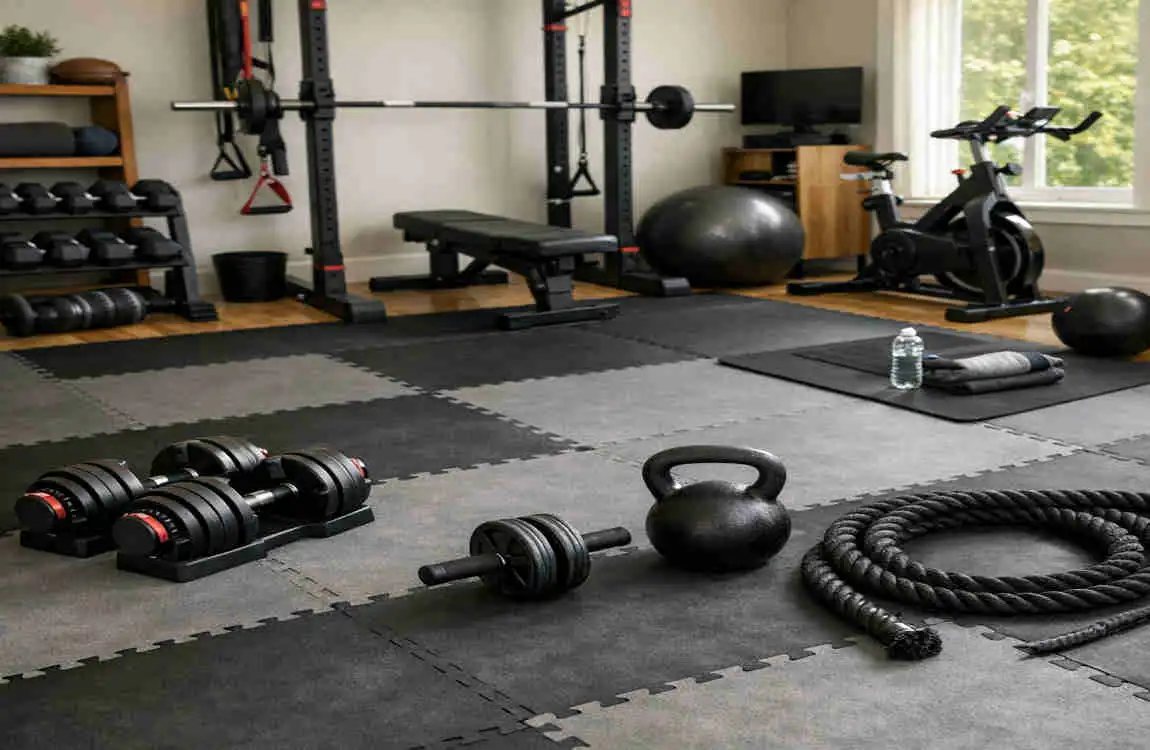
Exercise can be rough on floors. Heavy weights, moving benches, bikes, and even repeated jumping can leave scratches, dents, and marks.
If you work out on hardwood, laminate, tile, or concrete, a protective layer helps keep the surface in better shape for longer.
Improving Workout Safety and Comfort
A gym floor should do more than look nice. It should also help you feel steady and safe.
The right flooring gives you:
- better traction
- more cushioning
- less impact on joints
- a more stable surface for lifting and cardio
That matters whether you are doing yoga, strength training, HIIT, or simple bodyweight exercises.
Reducing Noise and Vibration
If your gym is in an upstairs room, garage, or shared space, flooring becomes even more important. Materials like rubber can reduce the sound of footsteps, dropped weights, and equipment movement.
That means less noise for you and less disturbance for everyone else in the home.
Making a Home Gym More Practical
A workout floor also helps define the space. It makes the room feel like a real gym, even if you are only using one corner.
It also makes cleaning easier. Sweat, dust, and small debris are simpler to manage on the right surface.
Affordable Gym Floor at Home Ideas
Rubber Gym Flooring
Rubber flooring is one of the best choices for a home gym, especially if you lift weights or use heavy equipment.
It comes in:
- rubber tiles
- rubber rolls
- rubber mats
Rubber is durable, absorbs impact well, and is easy to clean. It works especially well in garages and basements.
If you want a long-lasting home gym floor, rubber is often worth the extra cost.
Foam Exercise Mats
Foam tiles and interlocking foam mats are among the most budget-friendly options.
They are light, easy to install, and comfortable for floor exercises. They work well for stretching, yoga, Pilates, and light cardio.
The downside is that foam is not the best choice for heavy weights or large machines. It can dent or wear faster under pressure.
Interlocking Floor Tiles
These puzzle-style tiles are popular because they are easy to assemble. You can install them yourself without special tools.
They are also flexible. You can cover the whole room or just the workout zone to save money.
This makes them a smart choice for anyone who wants DIY gym flooring on a budget.
Vinyl Flooring With Exercise Mats
Vinyl can work as a base floor for a lighter home gym. It is easy to clean and looks neat, but it usually needs help during exercise.
For best results, place exercise mats or protective pads under weights, benches, and machines.
This option works best in rooms where you want a cleaner look but still need some workout protection.
Carpet Tiles
Carpet tiles can work for light exercise areas. They feel softer underfoot and add warmth to the room.
They are good for stretching, mobility work, and low-impact movement. Still, they are not ideal for heavy lifting or wet spaces.
If comfort matters more than impact protection, carpet tiles can be a reasonable option.
Budget-Friendly Gym Rugs and Protective Mats
Sometimes you do not need to floor the entire room. A large mat or gym rug may be enough.
This is a smart choice for:
- treadmills
- bikes
- weight benches
- small dumbbell areas
- yoga corners
This approach keeps costs down while still protecting the floor where it matters most.
Choosing the Best Gym Floor for Different Rooms
Garage Home Gym
A garage is one of the most common places for a home gym. The floor is often concrete, so rubber flooring is usually a strong choice.
It handles heavy equipment well and withstands rough use. Just keep in mind that garages can have moisture and temperature changes, so durable materials are best.
Basement Gym
Basements can be great workout spaces, but moisture is a big concern. Before installing flooring, make sure the area is dry.
Rubber tiles and moisture-resistant mats are useful here because they protect the floor and hold up better in cooler spaces.
Bedroom or Spare Room Gym
For a bedroom or spare room, you may want a lighter and more removable option. Foam tiles, portable mats, or small rubber sections can work well.
These choices help protect hardwood, laminate, or even carpet without permanently changing the room.
Living Room Workout Area
If your workout space is part of the living room, portability matters. A foldable exercise mat or a small set of interlocking tiles can be enough.
This keeps the room flexible while still giving you a safe spot to exercise.
Home Office or Multi-Purpose Room
In a multi-use room, modular flooring is the best idea. You can create a workout zone and remove it when not in use.
That makes the room useful for both work and exercise without taking over the whole space.
How to Choose the Right Gym Floor at Home
Consider Your Workout Type
Different workouts need different flooring.
- Yoga and stretching: foam or exercise mats
- Cardio: cushioned mats or vinyl with protection
- Strength training: rubber flooring
- HIIT: thicker, shock-absorbing surfaces
The harder your workouts are on the body and the floor, the stronger your flooring should be.
Think About Floor Protection
Look at what is already under your feet. Hardwood, carpet, tile, and concrete all need different protection.
If your current floor is delicate, use a protective layer that prevents dents, scratches, or moisture issues.
Check Thickness and Durability
Thickness matters because it affects comfort and protection. Thicker flooring usually gives more support and absorbs more impact.
If you use heavy equipment, do not choose something too thin. It may wear out faster or fail to protect the surface below.
Consider Installation and Removal
If you rent your home or want a flexible setup, choose flooring that is easy to remove.
Loose mats, foam tiles, and interlocking pieces are usually better than permanent flooring in that case.
Consider Cleaning and Maintenance
Home gym floors must deal with sweat, dust, and daily use. Pick something easy to sweep, wipe, and dry.
A hard-to-clean floor can quickly become annoying to use.
How to Install a Gym Floor at Home
Prepare the Existing Floor
Before installing anything, clean the area well. Make sure the floor is dry, level, and free from debris.
If you notice moisture, cracks, or damage, fix those issues first. That will help your flooring last longer.
Measure the Workout Area
Measure the exact space you want to cover. You may not need the full room.
Sometimes the smartest choice is to cover only the workout zone instead of paying for flooring everywhere.
Install Interlocking Tiles or Mats
Interlocking tiles usually snap together by hand. Start from one corner and work across the space.
If needed, trim the edge pieces so the flooring fits cleanly around walls or furniture.
Add Extra Protection Under Heavy Equipment
If you have a bench, rack, treadmill, or bike, place an extra mat underneath.
This layered setup provides greater protection and helps prevent dents and wear.
Gym Floor Maintenance and Common Mistakes
Cleaning Your Home Gym Floor
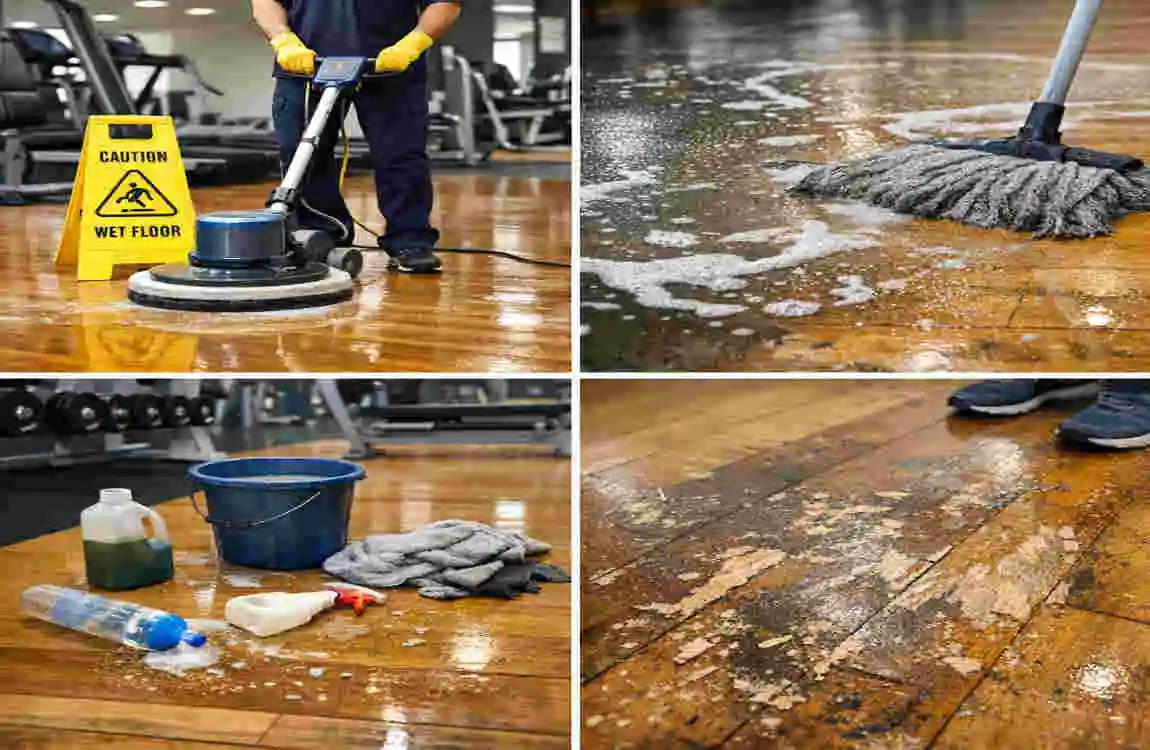
A simple cleaning routine is enough for most home gym floors. Sweep regularly and use a damp mop or cloth when needed.
Always follow the cleaning instructions for your specific flooring type.
Preventing Odors and Moisture Problems
Sweat and moisture can create odor if the floor is not allowed to dry properly. Good airflow helps a lot.
Wipe up spills quickly and do not leave wet towels or equipment sitting on the floor.
Avoiding Common Flooring Mistakes
Here are a few mistakes to avoid:
- choosing flooring that is too thin
- installing over a dirty or damp floor
- using harsh cleaning chemicals
- covering more space than needed
- ignoring noise if you live upstairs
A little planning saves money and frustration later.
Frequently Asked Questions
What is the cheapest at-home gym floor option?
Foam tiles and basic exercise mats are usually the cheapest options for light workouts.
What is the best flooring for a home gym?
Rubber flooring is often the best overall choice because it is durable, protective, and easy to maintain. Still, the best option depends on your workout style and room type.
Can I put a home gym on carpet?
Yes, but only for light exercise. If you are using weights or equipment, a protective mat is usually better.
Is rubber flooring good for a home gym?
Yes. Rubber is strong, absorbs impact well, and works especially well for strength training and high-use workout areas.
Can I put gym flooring over hardwood?
Yes, as long as you use a protective, non-damaging mat or flooring system that is safe for hardwood.
How thick should a gym floor at home be?
It depends on the workout. Light exercise can use thinner material, while weightlifting and heavy equipment need thicker protection.
Do I need to cover the entire room with gym flooring?
No. In many cases, covering only the workout zone is the most affordable and practical option.
| Gym Flooring Idea | Best For | Key Benefit |
|---|---|---|
| Rubber Mats | Weight training | Durable and shock-absorbing |
| Foam Tiles | Light workouts | Soft, affordable, and easy to install |
| Interlocking Rubber Tiles | Home gyms | Easy to replace and customize |
| Vinyl Flooring | Multi-purpose rooms | Easy to clean and water-resistant |
| Carpet Tiles | Low-impact workouts | Comfortable and budget-friendly |
| Plywood + Rubber Mats | DIY gyms | Affordable and highly customizable |
| Exercise Mat | Yoga and stretching | Portable and space-saving |