Choosing the right floor affects more than just how your home looks. It also changes how comfortable your space feels, how much you clean each week, and how much you may spend over time. That is why low-maintenance flooring has become such a popular choice for busy homes.
Low-maintenance flooring is any floor that is easy to clean, durable enough for daily use, and able to handle spills, scratches, and heavy traffic with minimal effort. The best choice depends on your room, lifestyle, budget, pets, children, and the amount of moisture the space gets.
What Is Low-Maintenance Flooring?
Key Characteristics of Low-Maintenance Floors
Low-maintenance flooring usually has a few important traits. It is easy to sweep or mop, resists stains, and does not require constant sealing or refinishing.
It should also withstand scratches, wear, and moisture. In simple terms, it should look good without requiring too much work from you.
Why Choose Low-Maintenance Flooring?
The biggest reason is convenience. You save time because cleaning is easier and faster.
It can also save money in the long run. A strong floor that lasts longer and needs fewer repairs often gives better value over time. That is especially helpful for busy families, pet owners, and rental properties.
Best Types of Low-Maintenance Flooring
Luxury Vinyl Flooring
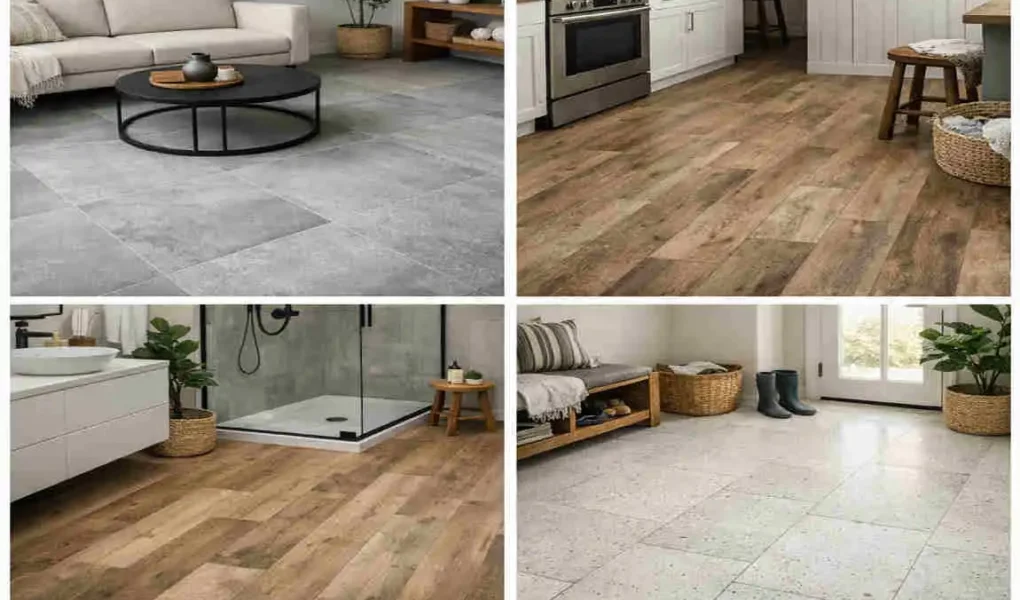
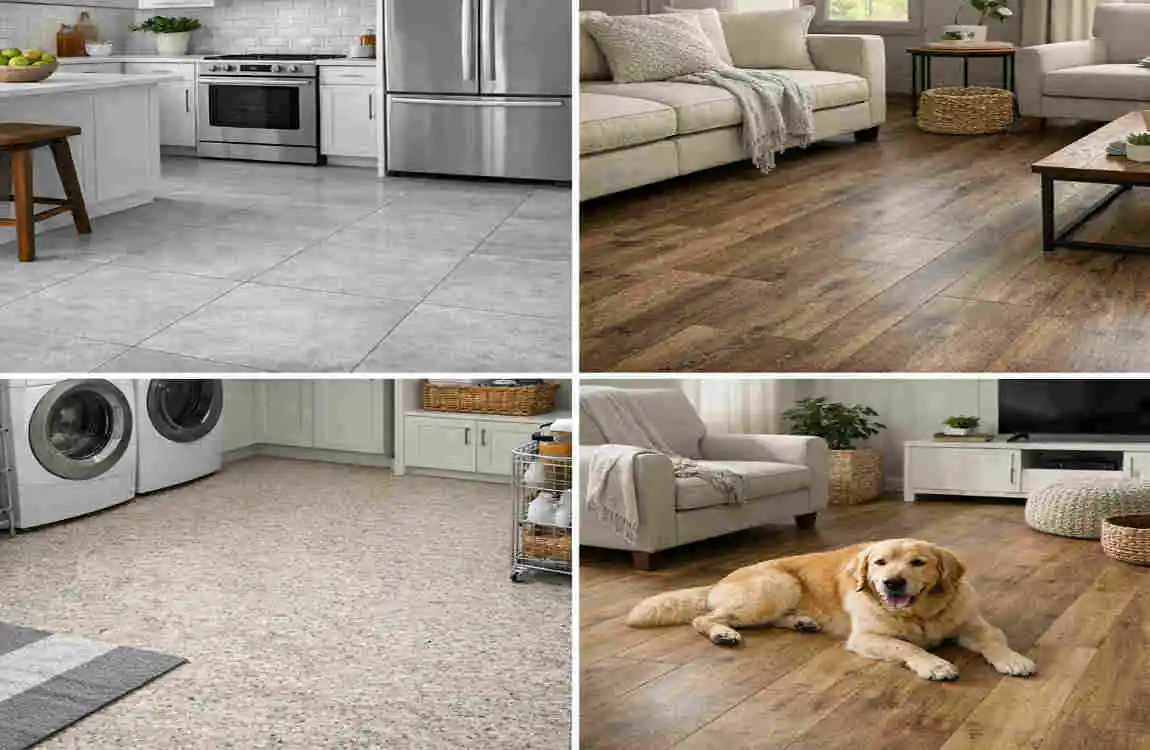
Luxury vinyl is one of the most popular low-maintenance flooring choices today. It is easy to sweep, vacuum, and mop, and many options are water-resistant or even waterproof.
It also comes in many styles, including wood-look and stone-look designs. That makes it a good fit for kitchens, bathrooms, laundry rooms, and family spaces.
Laminate Flooring
Laminate is another affordable and easy-care option. It cleans up well with routine sweeping and light mopping.
Many modern laminate floors are scratch-resistant, making them suitable for active homes. However, moisture can still be a concern, so it is not the best pick for very wet areas unless the product is made for that purpose.
Porcelain and Ceramic Tile
Tile is one of the most durable flooring choices you can get. It handles water very well and is easy to wipe clean.
It works especially well in kitchens, bathrooms, and entryways. The only extra care it usually needs is cleaning the grout lines, since they can collect dirt over time.
Natural Stone Flooring
Natural stone looks beautiful and lasts a long time. It can also give your home a high-end feel.
Still, stone usually needs more care than vinyl or tile. Some types must be sealed, and different stones react differently to stains and moisture. If you want stone, make sure you understand its care needs first.
Concrete Flooring
Concrete is extremely strong and works well in modern or industrial-style homes. It needs very little daily care and can be a smart choice for basements or open living spaces.
When sealed properly, it also performs very well against moisture. It may feel hard underfoot, so comfort and design should be part of your decision.
Engineered Hardwood
Engineered hardwood gives you the look of real wood with slightly easier care than traditional solid hardwood. It is a good choice for living rooms and bedrooms.
It still needs protection from excess moisture and heavy scratches, but it can be a beautiful middle-ground option if you want natural style with simpler upkeep.
How to Choose the Best Low-Maintenance Flooring for Your Home
Consider Your Room
Different rooms need different flooring.
- Kitchen: choose something water-resistant and easy to clean.
- Bathroom: look for strong moisture protection.
- Living room: focus on comfort, style, and scratch resistance.
- Bedroom: comfort and appearance may matter more than heavy-duty durability.
- Basement: moisture resistance is important.
- Entryway: pick a floor that can handle dirt and frequent foot traffic.
Think About Foot Traffic
A quiet bedroom does not need the same flooring as a busy hallway or family room. If people walk across a space all day, the floor should be tough and easy to clean.
For high-traffic areas, luxury vinyl, porcelain tile, and concrete often work very well.
Consider Moisture Exposure
If a room gets a lot of water, your floor needs to withstand it without damage. That is why bathrooms, kitchens, laundry rooms, and basements need special attention.
In these rooms, moisture resistance matters as much as appearance.
Consider Pets and Children
Pets and children can be hard on floors. Spills, scratches, dropped toys, and muddy paws can add up quickly.
If this sounds like your home, look for a floor that is stain-resistant, easy to wipe clean, and durable enough for daily use.
Set a Realistic Budget
Your budget should include more than just the material cost. Think about installation, underlayment, ongoing cleaning needs, repairs, and how long the floor will last.
A cheaper floor is not always the better deal. Sometimes a slightly more expensive floor saves more money later because it lasts longer.
Low-Maintenance Flooring Comparison Table
Flooring Type Daily Care Water Resistance Durability Best For
Luxury Vinyl Very Easy Excellent High Busy homes
Laminate Easy Moderate High Living areas
Porcelain Tile Easy Excellent Very High Kitchens & bathrooms
Natural Stone Moderate Varies Very High Premium interiors
Concrete Very Easy Excellent when sealed Very High Modern spaces
Engineered Hardwood Moderate Moderate High Living rooms & bedrooms
How to Maintain Low-Maintenance Flooring
Sweep or Vacuum Regularly
Dust, grit, and small bits of dirt can scratch your floor over time. Regular sweeping or vacuuming helps protect the surface and keeps the room looking cleaner.
Clean Spills Quickly
Even easy-care floors can stain if spills sit too long. Wipe up water, food, and other messes right away so they do not leave marks or cause damage.
Use the Right Cleaning Products
Always follow the manufacturer’s advice. Harsh cleaners can damage the finish, and excessive water can damage certain types of flooring.
A mild cleaner and a soft mop are usually the safest choice.
Protect Floors From Furniture
Use pads under chairs, tables, and heavy furniture. Lift items when moving them instead of dragging them across the floor.
Rugs can also help in busy areas like hallways and entryways.
Common Mistakes That Increase Flooring Maintenance
- Using too much water
- Picking flooring without thinking about the room
- Ignoring care instructions
- Using rough cleaning tools
- Dragging heavy furniture
- Delaying small repairs
- Choosing looks over practical use
What Is the Easiest Flooring to Maintain?
If your main goal is simple cleaning, luxury vinyl and porcelain tile are often top choices. They are easy to wipe, moisture-resistant, and built for busy homes.
Sealed concrete can also be very easy to care for. The best choice, though, depends on the room and your daily routine.
Is Low-Maintenance Flooring Worth the Cost?
In many cases, yes. A floor that is easy to clean and built to last can save time, stress, and repair costs.
You may pay more upfront, but you may spend less on upkeep later. That makes low-maintenance flooring a smart long-term choice for many homeowners.
Low-Maintenance Flooring for Different Lifestyles
Best for Busy Families
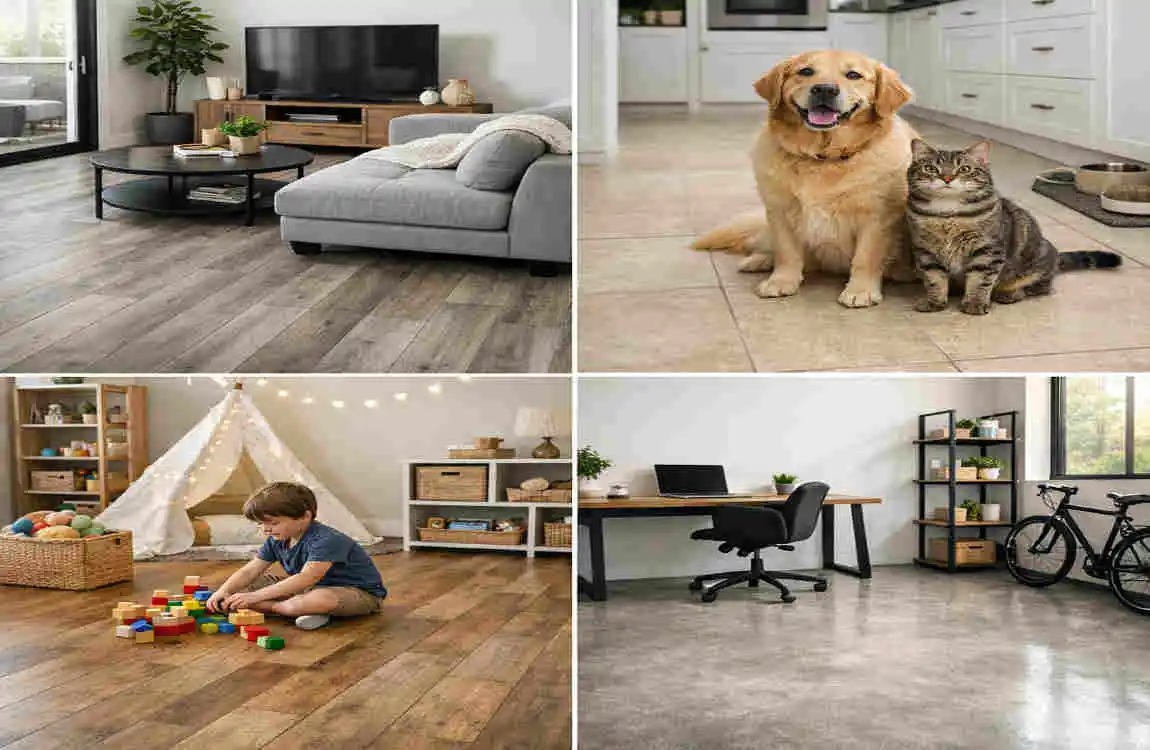
Luxury vinyl and porcelain tile are great for homes with lots of activity. They handle spills, traffic, and frequent cleaning well.
Best for Homes With Pets
Choose flooring that resists scratches, stains, and moisture. Vinyl and tile are usually strong options.
Best for Rental Properties
Durable, easy-care flooring helps keep maintenance costs down. Vinyl, laminate, and tile are commonly used.
Best for High-Traffic Areas
Hallways, kitchens, and entryways need flooring that can withstand heavy use. Tile, vinyl, and concrete are excellent picks.
Best for Moisture-Prone Rooms
Bathrooms, basements, and laundry rooms do best with water-resistant flooring. Tile and waterproof vinyl are usually strong choices.
Best for Modern Homes
Concrete, wide-plank vinyl, and sleek tile can all support a clean, modern look while still being easy to care for.
How to Make Your Flooring Last Longer
A few simple habits can help any floor stay in better shape.
- Use entrance mats to catch dirt
- Clean regularly
- Control moisture
- Use furniture pads
- Fix small damage early
- Follow the recommended care routine
Frequently Asked Questions About Low-Maintenance Flooring
What is the most low-maintenance flooring?
Luxury vinyl, porcelain tile, and sealed concrete are often the easiest to care for.
Is vinyl flooring easy to maintain?
Yes. It is simple to clean and works well in moisture-prone areas.
Which flooring requires the least cleaning?
Smooth, nonporous floors usually need the least effort. Vinyl, tile, and sealed concrete are good examples.
Is laminate flooring low maintenance?
Yes, but it should be protected from excess moisture.
What flooring is best for homes with pets?
Vinyl and tile are often the best choices because they are easy to clean and resist scratches well.
What flooring is best for a busy household?
Luxury vinyl and porcelain tile are strong options for busy homes.
Does low-maintenance flooring mean maintenance-free flooring?
No. Every floor needs some care. The difference is that low-maintenance floors need less effort.
| Flooring Type | Maintenance Level | Key Benefits | Best For |
|---|---|---|---|
| Luxury Vinyl Plank (LVP) | Very Low | Water-resistant, easy to clean, durable | Kitchens, bathrooms, busy homes |
| Laminate | Low | Affordable, scratch-resistant, simple upkeep | Living rooms, bedrooms |
| Porcelain Tile | Very Low | Highly durable, moisture-resistant | Bathrooms, kitchens, entryways |
| Ceramic Tile | Low | Easy to clean, long-lasting | Kitchens and bathrooms |
| Engineered Hardwood | Moderate | Attractive, more stable than solid wood | Living areas and bedrooms |
| Concrete | Very Low | Extremely durable, minimal maintenance | Modern homes, basements |
| Best Overall | Very Low | Easy cleaning + durability | Most busy households |