
If you have hardwood floors, you probably want them to stay clean, shiny, and damage-free for as long as possible. That is why many people ask: Are steam mops bad for hardwood floors?
The short answer is yes, they can be risky for many hardwood floors. Steam mops use heat and moisture, and hardwood usually doesn’t respond well to too much of either. Some floors may handle a small amount of steam for a while, but repeated use can lead to problems over time.
Are Steam Mops Bad for Hardwood Floors?

The Direct Answer
Yes, steam mops can harm hardwood floors, especially if the floor is older, unsealed, damaged, or not built to handle moisture. Hardwood is a natural material, and natural materials can react to water and heat.
Why Steam Is a Problem
Steam cleaning may push moisture into small gaps in the wood. Even if the floor looks sealed, tiny seams can still let water in. When that happens, the wood may swell, warp, or lose its finish.
Solid Hardwood vs. Engineered Wood
Not all wood floors are the same.
- Solid hardwood is made from one thick piece of wood and can be more sensitive to moisture.
- Engineered hardwood has layers, which may make it a little more stable, but it still may not be safe for steam cleaning.
So, even if a floor seems strong, that doesn’t always mean it is steam-mop safe.
When Steam Cleaning Can Cause Damage
Steam mops are more likely to cause damage when:
- the floor has gaps or cracks
- the finish is worn out
- the wood is older
- the mop is left in one spot too long
- steam cleaning is done often
How Steam Mops Work on Hardwood Flooring
How Steam Mops Clean
Steam mops heat water and turn it into steam. That steam is released onto the floor to loosen dirt and grime. This works well on surfaces like tile, but hardwood is different.
Why Hardwood Reacts Differently
Wood can absorb moisture. Even a small amount of water vapour can get into seams, edges, or weak spots in the finish. Over time, that can change how the floor looks and feels.
Common Mistakes People Make
A few common mistakes can make the risk even worse:
- using too much steam
- cleaning the same area again and again
- using a steam mop on a floor that is not fully sealed
- assuming “slightly damp” means “safe”
- not checking the manufacturer’s instructions
Potential Problems Caused by Steam Mops
Moisture Damage and Swelling
When wood takes in moisture, it can expand. This may make boards look raised or uneven.
Warping and Cupping
Too much heat and moisture may cause boards to bend or curve. This is called warping or cupping, and it can be expensive to fix.
Finish Damage
Steam can also wear down the protective finish on hardwood floors. Once that layer weakens, the floor becomes more open to dirt and damage.
Discolouration and Cloudy Surfaces
Some floors may develop dull spots, cloudy patches, or discolouration after repeated steam cleaning.
Cracks or Gaps
In some cases, the opposite problem happens. As the wood expands and dries, it may leave gaps between boards.
Long-Term Effects
A single cleaning may not ruin a floor, but repeated steam use can slowly wear it down and shorten its life.
Can You Safely Use a Steam Mop on Hardwood Floors?
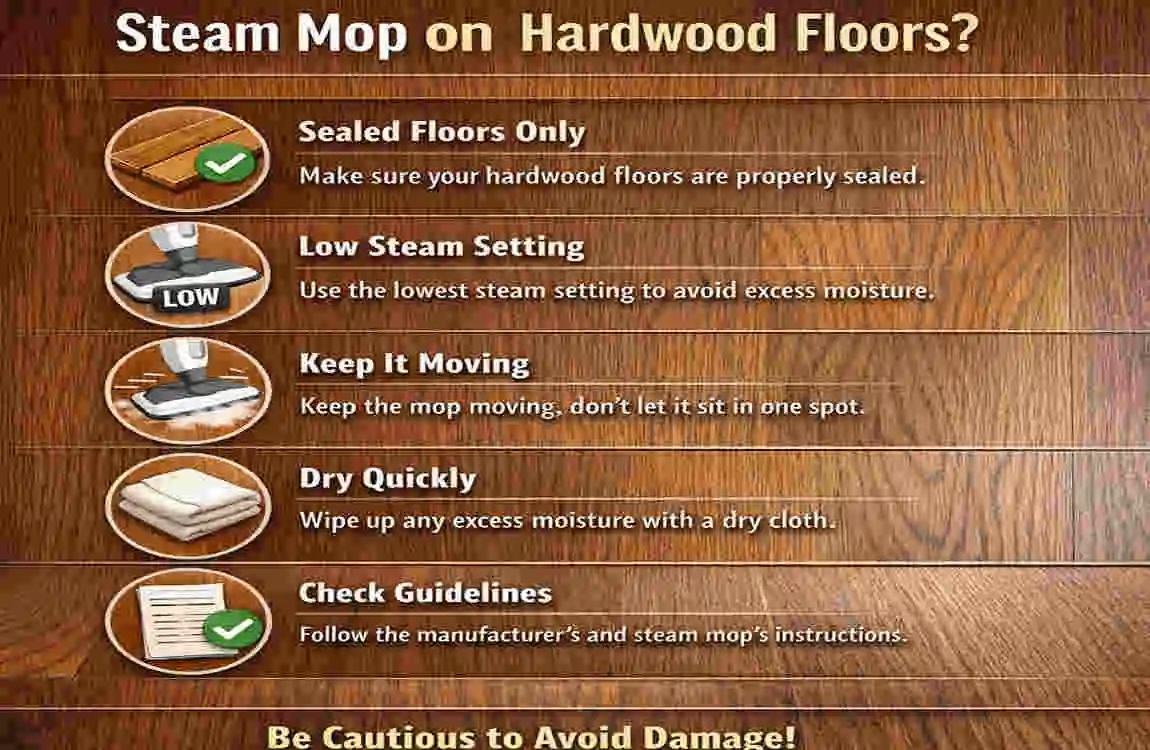
Check the Manufacturer’s Instructions First
This is the most important step. If the flooring maker says not to use steam, then don’t use steam. Their advice matters because they know how the floor was made.
Finished vs. Unfinished Floors
- Finished hardwood has a protective coating, but that does not always make it steam-safe.
- Unfinished hardwood should never be steam mopped.
Sealed vs. Unsealed Floors
A sealed floor is better protected, but it is still not fully safe from steam in many cases. If the seal is worn down, the risk increases.
Engineered Hardwood
Some engineered hardwood floors may be stronger against moisture than solid wood, but that does not mean steam is okay. Always check the product guide.
Signs Your Floor Should Not Be Steam Cleaned
Avoid steam mops if you notice:
- fading or dull spots
- squeaky boards
- visible gaps
- lifted edges
- old finish or worn sealant
- water stains
Safer Ways to Clean Hardwood Floors
Dry Dusting and Vacuuming
The safest first step is to remove dust and dirt without water. Use a soft broom, a dry microfiber mop, or a vacuum made for hard floors.
Slightly Damp Microfiber Mop
If you need more than dusting, use a microfiber mop that is only slightly damp. It should not leave puddles or wet streaks behind.
Hardwood-Safe Cleaners
Use a cleaner made for hardwood floors. These products are usually designed to clean without harming the finish.
How Much Water to Use
For hardwood, less is always better. The mop should feel barely damp, not wet.
Cleaning Frequency
A simple routine is usually enough:
- Dust or vacuum a few times a week
- Use a damp mop when needed
- Clean spills right away
Steam Mop Alternatives: Pros and Cons
Better Options for Hardwood
Here is a simple comparison of common cleaning methods:
Cleaning MethodMoisture LevelHardwood SafetyBest Use
Steam mop High heat/moisture Often risky Non-wood surfaces
Damp microfiber mop Low Generally safer Routine cleaning
Dry microfiber mop Very low Very safe Dust and debris
Hardwood cleaner Low Depends on product Deep cleaning
What This Means for You
If you want to protect your floors, low-moisture cleaning is usually the best choice. Steam may clean fast, but it also brings more risk than most hardwood floors need.
Best Practices for Protecting Hardwood Floors

Keep Water to a Minimum
Never soak hardwood floors. Even a small puddle can cause trouble if it sits too long.
Clean Spills Immediately
If something spills, wipe it up right away. Quick action can prevent stains and swelling.
Use Furniture Pads and Mats
Place pads under furniture legs and mats at entry points. This helps reduce scratches and dirt.
Control Indoor Humidity
Wood floors do best when indoor humidity stays stable. Very dry or very damp air can both affect the wood.
Watch for Early Warning Signs
Look for:
- cupping
- dullness
- soft spots
- board gaps
- lifted edges
If you see these signs, stop using moisture-heavy cleaning methods.
Simple Weekly Routine
A good routine is easy:
- Daily or every few days: dry dust or vacuum
- Weekly: lightly damp mop if needed
- As needed: clean spills and sticky spots right away
FAQ About Steam Mops and Hardwood Floors
Are steam mops bad for hardwood floors?
Yes, they can be. Steam and moisture may damage many hardwood floors, especially if they are old, unsealed, or already worn.
Can steam mops damage sealed hardwood floors?
Yes. Even sealed floors can be harmed if steam gets into seams or weak spots in the finish.
Is it safe to steam mop engineered hardwood?
Not usually. Some engineered floors may handle moisture better than solid wood, but many still should not be steam cleaned.
What is the best way to clean hardwood floors?
The best method is usually dry dusting, vacuuming, and using a slightly damp microfiber mop with a hardwood-safe cleaner.
How often should hardwood floors be mopped?
Only when needed. For many homes, light damp mopping once a week or less is enough.
Can steam remove stains from hardwood floors?
It may loosen some dirt, but it can also damage the wood. A hardwood-safe cleaner is a safer choice.
What happens if you steam mop hardwood floors regularly?
Regular steam cleaning can lead to swelling, warping, finish damage, and gaps between boards over time.
Can I use a damp microfiber mop instead of a steam mop?
Yes, and that is usually the safer option. A damp microfiber mop uses far less moisture and is much gentler on hardwood.
| Topic | Short Information |
|---|---|
| Can You Use a Steam Mop? | Generally, steam mops are not recommended for hardwood floors. |
| Main Risk | Excess moisture and heat can damage wood flooring. |
| Possible Damage | Steam may cause warping, swelling, discoloration, or finish damage. |
| Engineered Hardwood | Some products may tolerate steam, but only if the manufacturer approves it. |
| Best Cleaning Method | Use a microfiber mop with a small amount of wood-floor-safe cleaner. |