Basements are different from the rest of the house. They sit below ground, which means they can handle dampness, temperature fluctuations, and occasional moisture issues. That is why the choice of flooring matters so much.
Vinyl is often a strong choice because it handles everyday basement life well. It works in family rooms, offices, play areas, guest rooms, and entertainment spaces. It also gives you a wide range of looks, from wood-style finishes to stone-like surfaces.
Before you choose any flooring, though, it is important to look closely at the basement itself. If there is active water damage, leaks, or ongoing dampness, those problems should be fixed first. No flooring can truly solve a moisture problem on its own.
Why Choose Vinyl Flooring for a Basement?
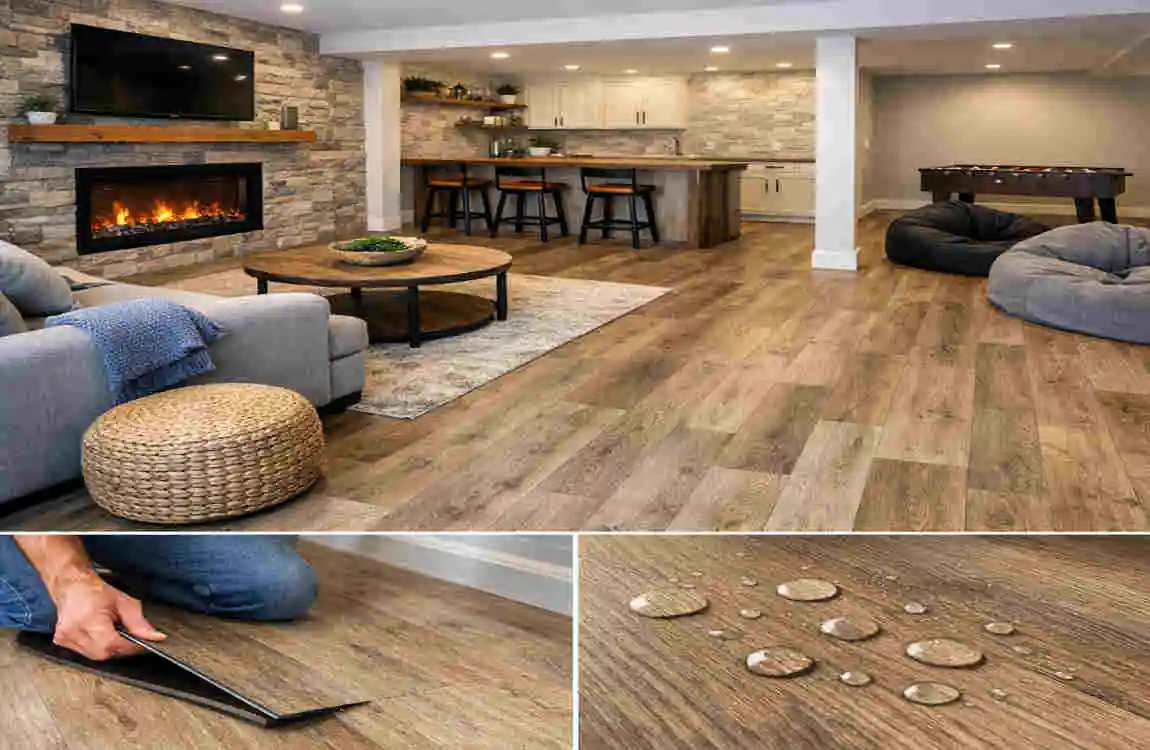
Moisture Resistance and Basement Performance
One of the biggest reasons homeowners choose vinyl is moisture resistance. Basements are more likely than upper floors to deal with humidity and water-related issues, so a flooring material needs to handle that environment well.
Compared with carpet, hardwood, and laminate, vinyl usually performs better in a basement. Carpet can hold moisture and smell musty. Hardwood can warp. Laminate can swell if water gets into the seams.
Vinyl is not magic, though. It should never be treated as a fix for a wet basement. If water is coming through the slab or walls, that issue should be corrected first.
Easy Cleaning and Maintenance
Basement spaces often accumulate dust and dirt and see daily foot traffic. Vinyl makes cleanup simple. Most of the time, you only need sweeping, vacuuming, and an occasional damp mop.
That makes it a good option for busy spaces like playrooms, laundry areas, and family rooms. If you want a floor that looks polished but requires little care, vinyl is a practical pick.
Comfortable and Stylish Design
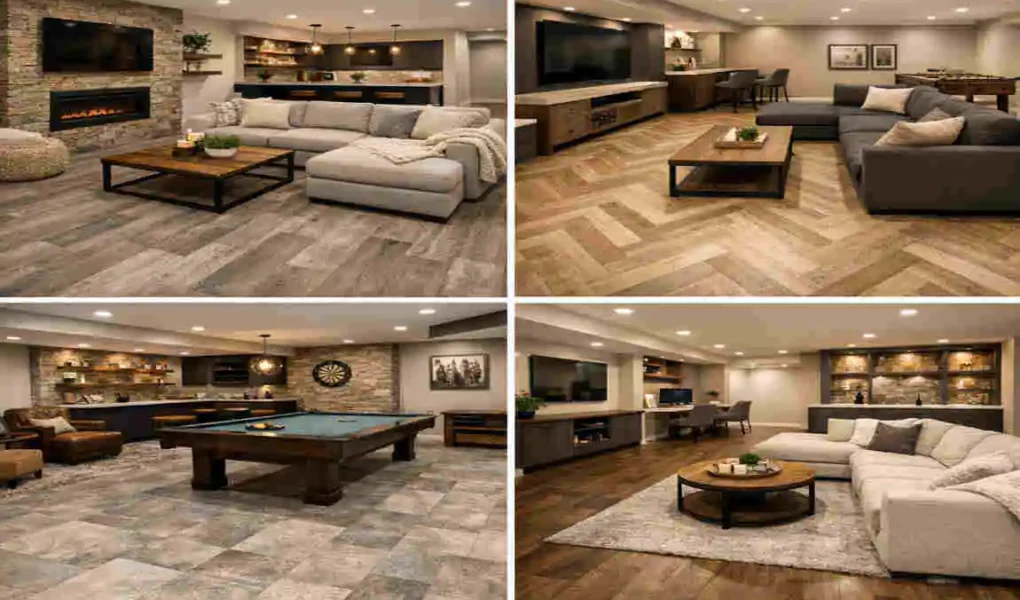
Modern vinyl can look surprisingly realistic. It can mimic wood, stone, ceramic tile, and even concrete. That means you can get the style you want without taking on the higher care needs of natural materials.
This is especially helpful in a basement because the right design can make the room feel like a true extension of the home rather than a lower-level afterthought.
Durability for High-Traffic Basement Spaces
Basements often serve more than one purpose. They may be a media room one day, a toy zone the next, and a home office after that. Vinyl works well in those active spaces because it is built to handle regular use.
When choosing a product, pay attention to the wear layer and overall construction. These factors matter a lot in high-traffic areas.
Best Vinyl Flooring Options for Basements
Luxury Vinyl Plank Flooring
Luxury vinyl plank flooring, or LVP, is one of the most popular choices for basements. It is designed to look like wood planks, which gives the room a warm and welcoming feel.
LVP works well in both modern and traditional basements. You can choose from light oak, warm walnut, gray wood, and natural wood tones depending on the look you want.
It is a strong choice if you want your basement to feel more like an upstairs living area.
Luxury Vinyl Tile
Luxury vinyl tile, or LVT, gives you the look of stone or ceramic tile. It is a nice option if you want a more polished or contemporary style.
LVT can work well in basements used for bathrooms, laundry rooms, and entertainment areas. It can also create a sleek backdrop for modern furniture and lighting.
Waterproof Vinyl Flooring
Many products are sold as waterproof, but it is important to read the details carefully. Water-resistant and waterproof are not the same thing.
Waterproof vinyl can resist surface moisture better, but it does not fix water coming from beneath the floor. That is why the basement still needs proper moisture control.
Vinyl Sheet Flooring
Vinyl sheet flooring comes in large rolls, which means fewer seams. That can be helpful in basement spaces where you want a smooth surface and simple cleaning.
It may not have the same plank-by-plank look as LVP, but it can still be a smart choice in some rooms, especially where budget and easy maintenance matter most.
Stylish Vinyl Flooring for Basements Ideas
Warm Wood-Look Vinyl for a Cozy Basement
If you want the basement to feel inviting, wood-look vinyl is a great choice. It adds warmth without the care concerns of real wood.
Medium oak, walnut, and warm brown tones work especially well in family rooms and lounge areas. They pair nicely with soft lighting, neutral walls, and comfortable furniture.
Light Vinyl Flooring for Small Basements
Light flooring is useful in basements that receive little natural light. It helps the room feel brighter and more open.
You can look for styles that resemble white oak, pale gray, beige, or light natural wood. These colors work well in smaller rooms because they visually expand the space.
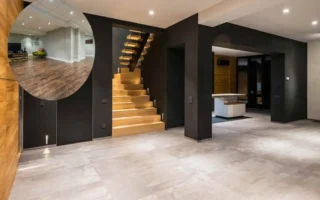
Gray Vinyl Flooring for a Modern Basement
Gray remains one of the most versatile choices for basement flooring. It feels modern without being too cold when you choose the right tone.
A warm gray can soften the room, while a cool gray creates a cleaner, more contemporary mood. This is a good option for offices, media rooms, and entertainment spaces.
Stone-Look Vinyl for an Upscale Appearance
If you want a more refined basement, stone-look vinyl can be a smart idea. It can resemble slate, limestone, marble, or concrete, which gives the space a more upscale feel.
This look works best when balanced with rugs, soft furniture, and warm lighting. Otherwise, the room can feel too hard or too cool.
Dark Vinyl Flooring for a Dramatic Look
Dark flooring can create a rich, dramatic basement style. It works especially well in media rooms or entertainment spaces where you want a more cinematic feel.
If you choose a dark floor, make sure the room has enough light. Lighter walls, mirrors, and soft furnishings can keep the space from feeling too closed in.
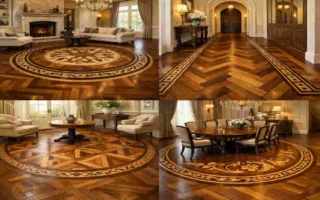
Herringbone and Chevron Vinyl Patterns
Patterned layouts like herringbone and chevron can make a basement feel more special. They add movement and visual interest without needing bold colors.
These patterns work best in larger basement rooms or open layouts where the floor can really be seen. Careful planning is important so the design feels balanced.
How to Choose the Right Vinyl Flooring for Your Basement
Check the Basement for Moisture
Before you choose flooring, check for signs of moisture. Look for damp spots, musty smells, condensation, and water stains. If any of those signs are present, solve the moisture issue first.
This step matters because flooring should support the basement, not cover up a problem.
Consider the Subfloor
A basement floor usually sits on concrete, and that surface needs to be clean, dry, level, and suitable for the product you choose. Even small uneven areas can affect the final result.
Following the manufacturer’s instructions is very important here. Every product has its own needs.
Choose the Right Thickness and Wear Layer
A thicker floor is not automatically better. What matters is the full product quality, including the wear layer, backing, and construction.
For high-use spaces, choose a product designed for heavier traffic. That will help the floor hold up better over time.
Select the Right Color and Pattern
Color changes the feeling of a basement more than many people realize. Lighter floors make a room feel more open. Darker floors create a cozy or dramatic effect.
Think about the natural light, wall color, ceiling color, and furniture before making a final choice.
Consider Installation Method
Vinyl floors may be installed using different methods, such as click-lock or glue-down. The right method depends on the product, the subfloor, and the room conditions.
Always follow the manufacturer’s directions. That is the best way to protect the floor’s performance.
Modern Basement Design Ideas With Vinyl Flooring
Cozy Basement Family Room
A family room needs flooring that feels warm and comfortable. Wood-look vinyl is a strong choice here because it creates a welcoming base for sofas, rugs, and soft lighting.
Add a few layered textures, and the room will feel much more finished.
Modern Basement Home Office
For a home office, choose flooring that feels clean and professional. A light wood-look or neutral vinyl floor can help the space feel calm and focused.
It also pairs well with simple furniture and good task lighting.
Basement Home Gym
Vinyl can work well in a light workout space. It gives you a cleaner surface than unfinished concrete and is easier to care for than carpet.
For heavy equipment or dropped weights, you may need extra protective mats. That keeps the floor safe and helps reduce wear.
Basement Entertainment or Media Room
A media room often looks best with darker or medium-toned vinyl. These colors create a more relaxed and movie-like feeling.
Add rugs and soft seating to make the room feel warm and comfortable.
Basement Guest Room
If your basement is also a guest room, choose flooring that feels soft and welcoming. Wood-look vinyl in a warm neutral tone works especially well.
It gives the room a bedroom-like feeling without making it too formal.
Basement Playroom
Playrooms need flooring that is easy to clean and built for daily use. Vinyl is ideal because it handles spills, snacks, and busy activity with less trouble.
A neutral floor also gives you freedom to change the decor as children grow.
Installation, Maintenance, and Common Mistakes
Preparing the Basement Before Installation
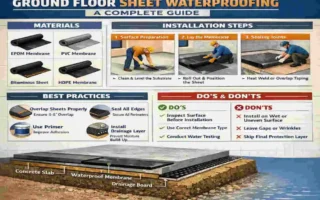
Preparation is one of the most important parts of the job. The basement should be dry, clean, and ready for flooring before anything is installed.
If the surface is not level or has moisture issues, those problems should be fixed first.
DIY vs. Professional Installation
Some vinyl products are manageable for experienced DIY homeowners. But professional installation is often the safer choice when the basement has uneven areas, moisture concerns, or a complex layout.
If you are unsure, getting professional help can save time and trouble later.
Common Installation Mistakes to Avoid
- Installing over a damp floor
- Skipping surface preparation
- Ignoring the product instructions
- Choosing a floor only because it looks nice
- Forgetting about expansion requirements when needed
- Using the wrong adhesive or underlayment
How to Maintain Basement Vinyl Flooring
Vinyl is easy to care for, but it still needs basic attention. Sweep or vacuum regularly to remove dirt and grit. Use a damp mop when needed, but avoid excess water unless the product allows it.
Heavy furniture should be protected with pads. Sharp objects can also damage the surface if you are not careful.
How Long Can Vinyl Flooring Last in a Basement?
The lifespan depends on the product, moisture conditions, installation quality, and daily use. A well-chosen floor in a dry, controlled basement can last a long time.
Good maintenance helps too. A clean, dry basement supports better floor performance.
Cost, Comfort, and Design Considerations
What Affects Vinyl Flooring Cost?
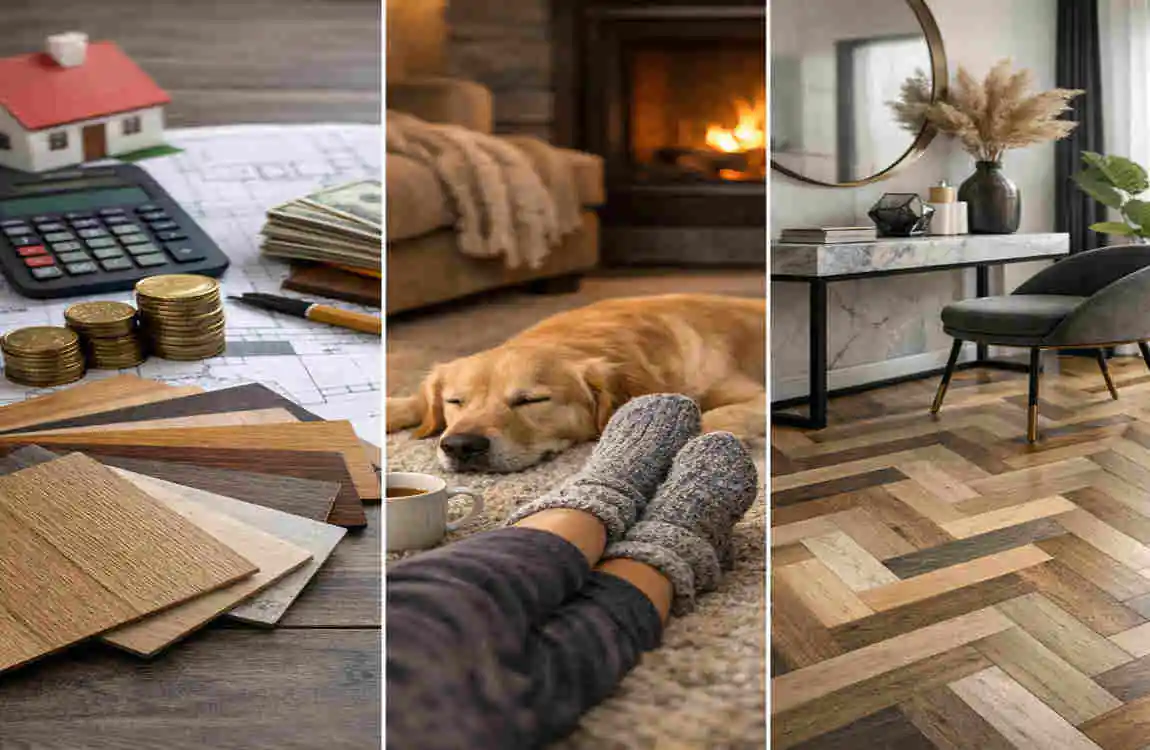
Several things affect the total cost, including material quality, room size, installation, floor prep, transitions, and removal of old flooring.
It helps to look at both product cost and full project cost. A cheaper floor may not always be the best value.
Is Vinyl Flooring Comfortable in a Basement?
Vinyl feels more comfortable underfoot than bare concrete or many tile floors. Still, a basement can feel cool if the space is not insulated well.
Rugs, warmer lighting, and good temperature control can make a big difference.
Can Vinyl Flooring Make a Basement Look More Expensive?
Yes, it can. Realistic textures, careful installation, and a thoughtful color choice can make a basement look polished and upscale.
The goal is to choose a floor that fits the room instead of overpowering it.
How to Make a Basement Feel Warmer and More Inviting
Use warm lighting, soft fabrics, area rugs, wood accents, and comfortable furniture. These details help the vinyl floor blend into a cozy design.
A simple, consistent style usually works best.
FAQ About Vinyl Flooring for Basements
Is vinyl flooring good for basements?
Yes. It is often a practical choice for finished basements, especially when moisture is under control.
What type of vinyl flooring is best for a basement?
LVP, LVT, sheet vinyl, and waterproof-rated products can all work well. The best choice depends on the basement conditions and the room’s purpose.
Is waterproof vinyl flooring safe for basement floors?
It can help protect against surface moisture, but it does not solve leaks or water coming through the slab.
Can you install vinyl flooring directly on a concrete basement floor?
Sometimes yes, but only if the concrete meets the product’s moisture, levelness, and preparation requirements.
What are the best vinyl flooring colors for a dark basement?
Light oak, beige, pale wood tones, and warm gray can help brighten the space.
Is LVP better than laminate for a basement?
Often yes, because vinyl usually handles moisture better than laminate.
Do you need underlayment under vinyl flooring in a basement?
Not always. It depends on the product and installation method, so follow the manufacturer’s instructions.
How do you keep vinyl flooring warm in a basement?
Use rugs, proper insulation, comfortable furnishings, and good temperature control.
Can vinyl flooring be installed over an uneven basement floor?
Usually not without preparation. The subfloor should be corrected before installation.
What is the most modern vinyl flooring for a basement?
Realistic wood looks, large-format tile looks, subtle concrete styles, and herringbone patterns are all modern choices.
| Flooring Type | Why It’s Great for Basements | Modern Style |
|---|---|---|
| Luxury Vinyl Plank (LVP) | Water-resistant, durable, and easy to maintain | Natural wood look |
| Luxury Vinyl Tile (LVT) | Handles moisture and offers strong durability | Stone, marble, or concrete look |
| Waterproof Vinyl Flooring | Ideal for damp-prone basement areas | Modern plank and tile designs |
| Rigid Core Vinyl | Stable under temperature and moisture changes | Clean, contemporary appearance |
| Wood-Look Vinyl | Creates a warm and cozy atmosphere | Oak, walnut, and modern wood finishes |
| Stone-Look Vinyl | Gives basements an elegant, upscale feel | Slate, marble, and limestone styles |