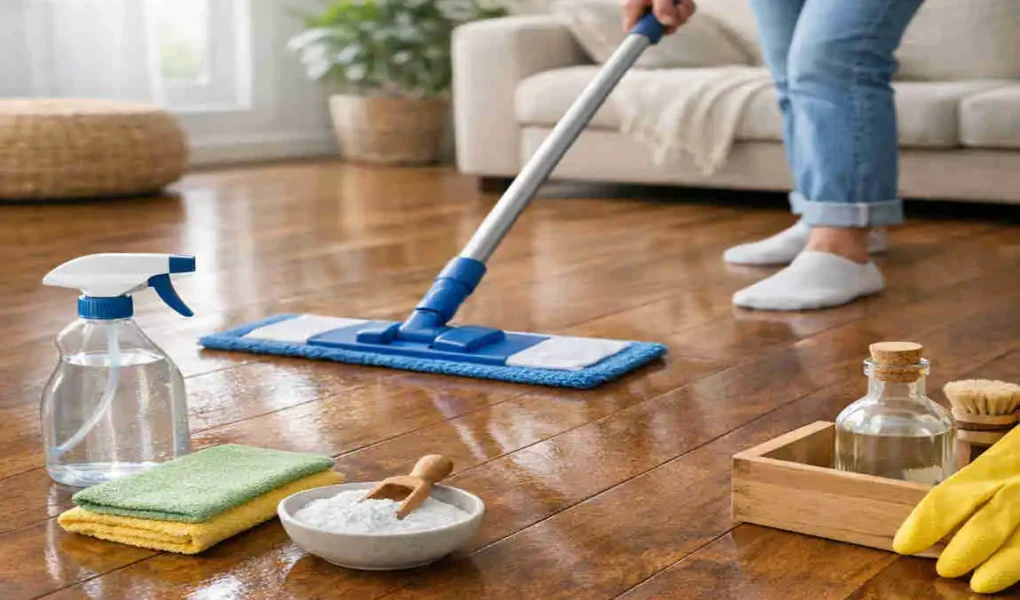
If you are looking for the best wood floor cleaning solution, the main goal is simple: clean the floor without harming the finish, the wood, or the shine. Wood floors can look beautiful for years, but only if you clean them the right way.
What Makes the Best Wood Floor Cleaning Solution?
A good wood floor cleaner should do three things well:
- Remove dirt and grime
- Protect the floor finish
- Leave no dull film or residue
The best wood floor cleaning solution should also be safe for your specific floor. Some floors are finished or sealed, while others are unfinished. That matters a lot.
Finished, Sealed, and Unfinished Floors
- Finished or sealed wood floors can usually handle gentle liquid cleaners.
- Unfinished wood floors absorb moisture easily, so they need extra care.
- Older wood floors may have worn finishes so that harsh products can cause damage more quickly.
Using the wrong cleaner can lead to discolouration, dullness, swelling, or surface damage. That is why it is important to choose carefully.
Key Ingredients to Look For
A safe cleaner often includes:
- Mild cleaning agents
- Water-based formulas
- pH-balanced ingredients
- No heavy wax buildup
Try to avoid products that are too oily, too soapy, or too strong unless the manufacturer says they are safe for your floor.
Best Wood Floor Cleaning Solutions for Different Floors
Not every wood floor needs the same care. The best choice depends on the type of floor you have.
Floor Type | Safe Cleaning Choice | What to Avoid
Sealed Hardwood Mild wood floor cleaner, lightly damp mop Too much water, harsh soap
Engineered Wood Gentle cleaner made for wood surfaces Standing water, soaking mop
Unfinished Wood Dry cleaning or professional advice Any liquid-heavy cleaner
Dark Wood Low-residue cleaner to avoid streaks Soap buildup, over-wetting
Light Wood Gentle cleaner to prevent dullness Colored or oily products
Sealed Hardwood Floors
Sealed hardwood is easier to clean because the finish acts like a shield. Still, less water is always better. Use a barely damp microfiber mop and dry the area soon after cleaning.
Engineered Wood Floors
Engineered wood is stable, but it still does not like standing water. Choose a safe hardwood floor cleaning product and never leave puddles behind.
Unfinished or Older Wood Floors
These floors need extra caution. They can soak up liquid quickly, which may cause warping or staining. If you are unsure, it is smart to ask a flooring professional before using any cleaner.
Dark and Light Wood Floors
Dark floors show streaks easily. Light floors can show residue and dull patches. In both cases, the best wood floor cleaning solution is one that leaves a clean, even finish without buildup.
How to Make a Simple Homemade Wood Floor Cleaner
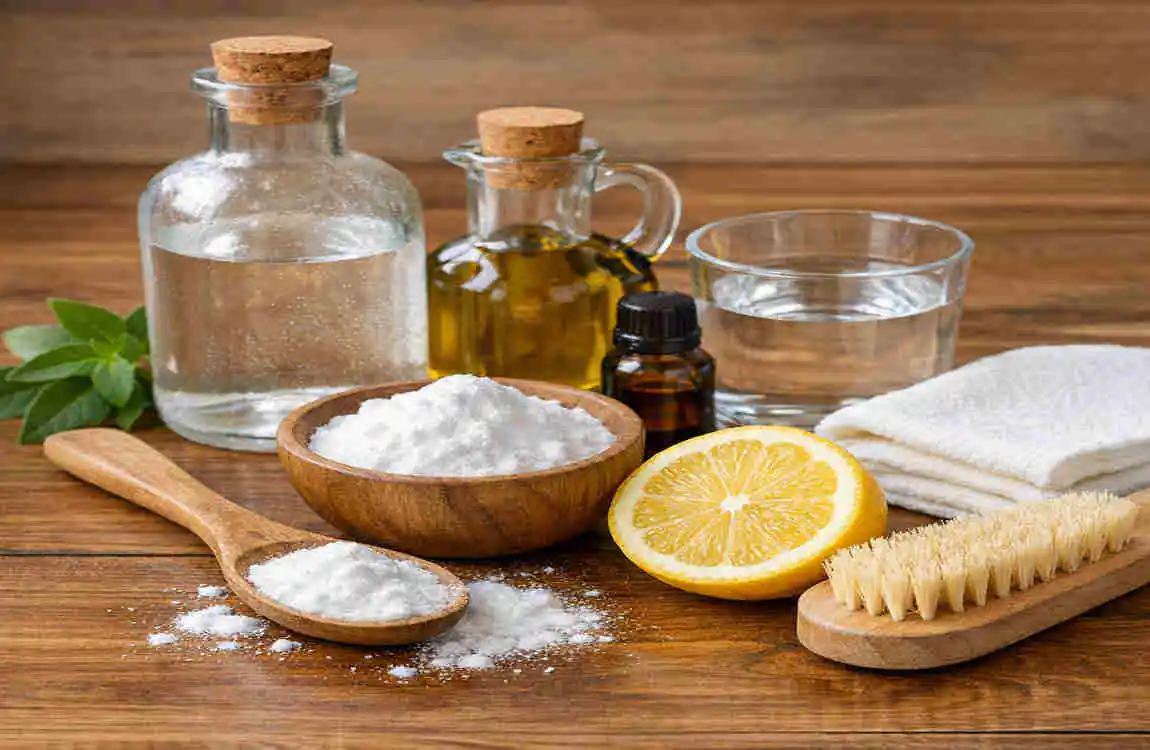
If you prefer a natural wood floor cleaner, keep it simple. A gentle homemade cleaner can work well for many sealed floors.
Basic Safe Mix
A common mix is:
- 1 gallon of warm water
- A small amount of mild soap or wood-safe cleaner
Use only a little. Too much soap can leave a sticky layer.
What About Vinegar?
Diluted vinegar is often discussed, but it is not right for every floor. Vinegar can be too strong for some finishes and may reduce shine over time. If you use it, make sure your floor manufacturer allows it.
Important Tips
- Never use harsh chemicals
- Avoid strong bleach or ammonia
- Test the mix in a hidden area first
- Stop if the floor looks cloudy or dull
A homemade cleaner should be gentle, not powerful. Your goal is safe cleaning, not deep scrubbing.
How to Clean Wood Floors Safely Step by Step
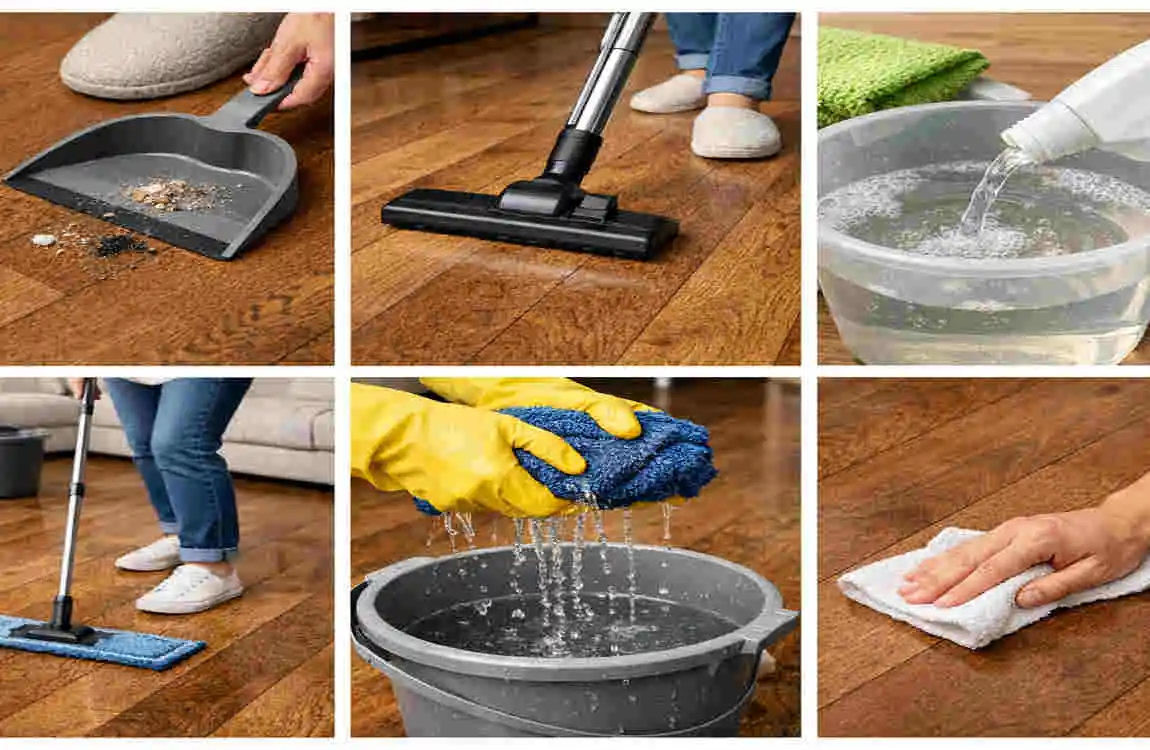
Cleaning wood floors the right way is just as important as choosing the right product.
Simple Cleaning Steps
- Remove dust and loose dirt first
- Use a microfiber mop or soft cloth
- Apply a small amount of cleaner
- Work in small sections
- Do not soak the floor
- Dry the surface if needed
Microfiber works well because it picks up dust without scratching the wood.
How Often Should You Clean?
- Sweep or vacuum: daily or every few days in busy homes
- Light damp cleaning: once a week or as needed
- Deep care: monthly, depending on foot traffic
The more traffic your home gets, the more often you may need cleaning.
Common Wood Floor Cleaning Mistakes to Avoid
Many floor problems come from simple mistakes. Here are the biggest ones to watch out for:
- Using too much water
- Scrubbing with rough tools
- Using the wrong household cleaner
- Leaving spills on the floor too long
- Using too much soap
- Ignoring the floor maker’s instructions
- Using steam cleaners without checking if they are safe
Steam cleaners can be risky because heat and moisture may damage the wood or finish. Always check first.
The safest rule is simple: gentle cleaner, light moisture, soft tools.
Tips for Keeping Wood Floors Clean and Beautiful
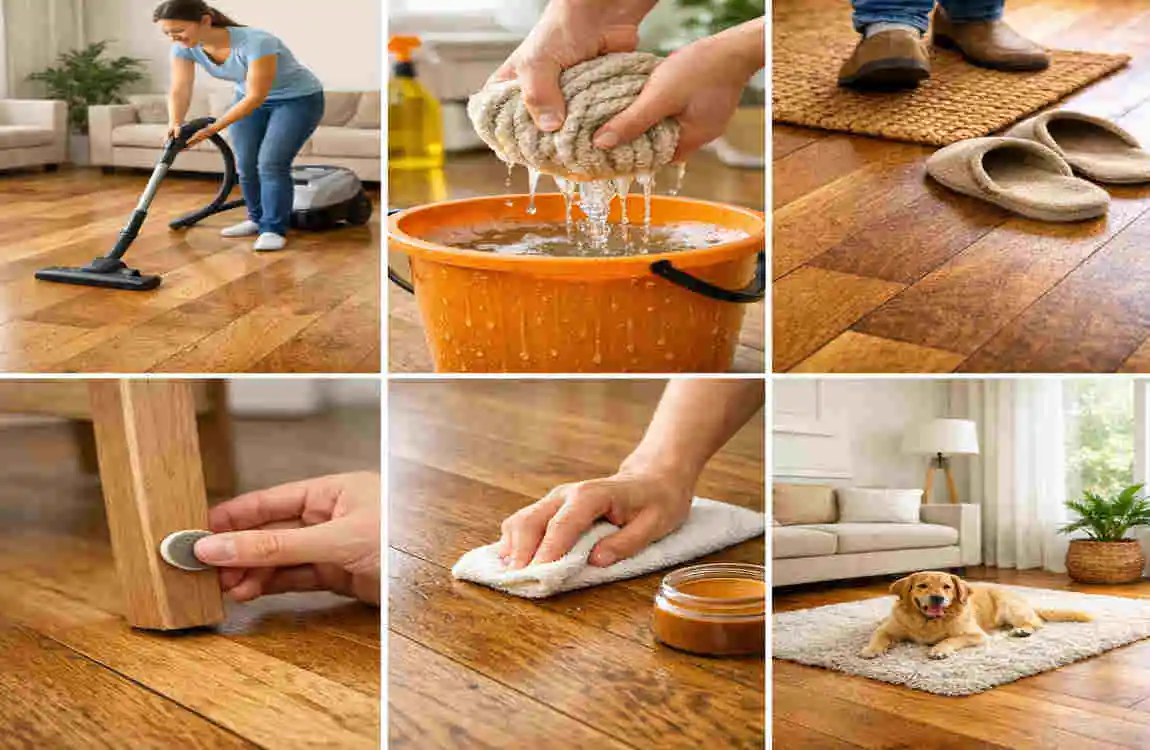
You do not need a complicated routine to keep wood floors looking good. Small habits make a big difference.
Helpful Daily and Weekly Habits
- Place entryway mats near doors
- Use rugs in busy areas
- Clean spills right away
- Trim pet nails to reduce scratches
- Add furniture pads under chairs and tables
- Sweep or vacuum often
When Cleaning Is Not Enough
If your floor still looks dull, scratched, or stained after cleaning, the finish may be worn out. In that case, refinishing may be a better solution than more cleaning.
FAQs About the Best Wood Floor Cleaning Solution
What is the best wood floor cleaning solution?
The best wood floor cleaning solution is a gentle, wood-safe cleaner that matches your floor type and finish. Always check the manufacturer’s instructions first.
Can I use vinegar to clean wood floors?
Sometimes, but not always. Vinegar may be too strong for some finishes, so use it only if your floor type allows it.
Is dish soap safe for hardwood floors?
Dish soap can leave residue if you use too much. A tiny amount may work in some cases, but it is not always the best choice.
How often should I clean my wood floors?
For most homes, sweep often and use a light damp cleaning once a week or as needed. High-traffic homes may need more frequent care.
Can I mop wood floors with water?
Yes, but only with very little water. Wood floors should never be soaked or left wet for long.
What cleaner makes wood floors shine?
A cleaner does not usually make floors shine on its own. Shine comes from a clean floor and a healthy finish. Polishes may help, but only if they are safe for your floor.
How do I clean wood floors without damaging them?
Use a soft mop, a mild cleaner, minimal moisture, and regular maintenance. That is the safest approach for most wood floors.
| Cleaning Tip | Best Choice | Why It Helps |
|---|---|---|
| Daily Cleaning | Microfiber dust mop | Removes dust without scratching |
| Routine Mopping | Wood-floor cleaner + damp mop | Cleans safely without excess water |
| Spills | Soft, slightly damp cloth | Prevents stains and moisture damage |
| Greasy Spots | Manufacturer-approved cleaner | Breaks down residue safely |
| Deep Cleaning | pH-neutral wood floor cleaner | Cleans without harsh chemicals |
| Avoid | Bleach, ammonia, soaking water | Can damage finish and wood |
| Finish Care | Follow flooring manufacturer’s advice | Protects shine and durability |