
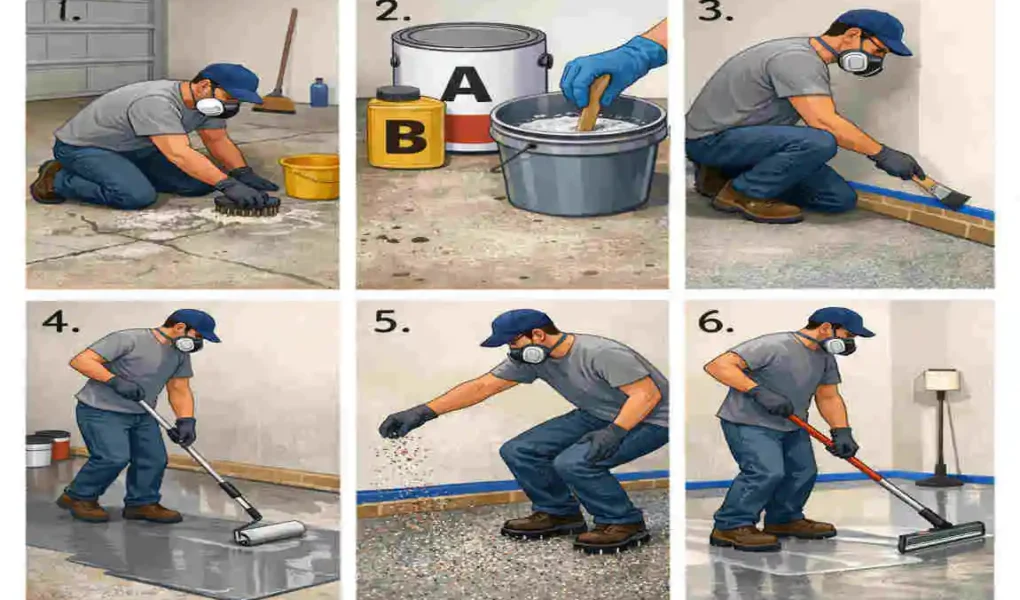
If you want a floor that looks clean, strong, and easy to care for, epoxy floor paint is a smart choice. It can give plain concrete a fresh, polished finish while also helping protect it from stains, moisture, and daily wear.
What Is Epoxy Floor Paint and Why Use It?
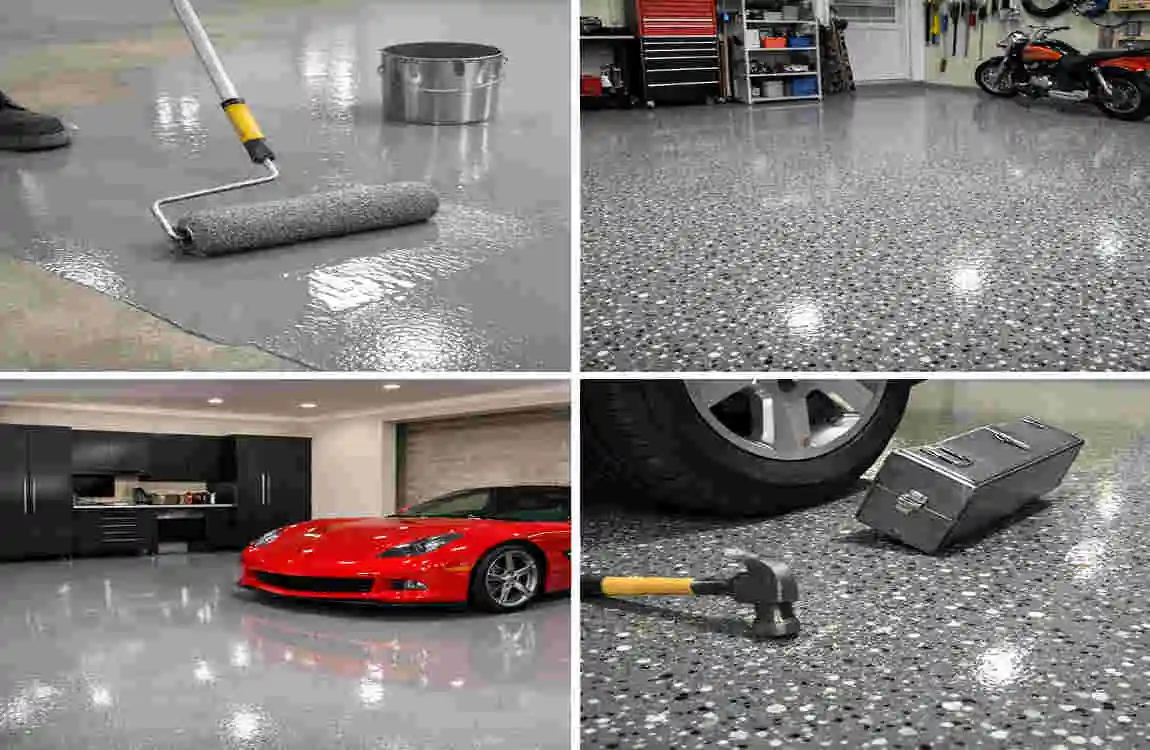
What epoxy floor paint means
Epoxy floor paint is a coating made for concrete floors. It mixes resin and hardener to create a tough surface once it cures. This is different from regular floor paint, which usually sits on the surface without forming a strong bond.
Why people choose it
Many people use epoxy because it gives the floor a clean look and better protection. It is a great option if you want a surface that can handle heavy use without looking worn out too quickly.
Best places to use it
Epoxy works especially well in:
- Garages
- Basements
- Workshops
- Utility rooms
These spaces often see spills, dirt, and heavy foot traffic. Epoxy helps the floor withstand that kind of use.
Main benefits
Here are the biggest reasons people like epoxy flooring:
- Strong and durable
- Resists stains
- Easy to clean
- Improves the look of concrete
- Works well in busy spaces
If you want a floor that feels practical and polished, epoxy is a solid choice.
What You Need Before Applying Epoxy Floor Paint
Basic tools and materials
Before you start, gather everything first. This saves time and helps you work smoothly.
You will usually need:
- Epoxy coating and hardener
- Paint roller and extension pole
- Paint tray
- Mixing container
- Floor scraper
- Stiff brush
- Concrete cleaner or degreaser
- Safety gloves and goggles
Safety matters
Epoxy products can give off strong fumes, so good airflow is important. Open doors and windows if possible, and wear the right safety gear.
Why instructions matter
Every epoxy product is a little different. Some dry faster, some need more mixing, and some need a short waiting time before application. Always read the manufacturer’s instructions before you begin.
How to Prepare the Floor for Epoxy Paint
Start with a clean surface.
The floor must be free from dust, grease, old paint, and loose dirt. Epoxy does not bond well to a dirty surface. If the floor is not clean, the coating may peel or bubble later.
Repair damaged areas
Check the concrete for cracks, holes, or weak spots. Fill and repair these areas before coating. A smooth, solid base gives you a much better final result.
Degrease the floor
If you are working in a garage or workshop, oil and grease are common. Use a strong, concrete-safe cleaner or degreaser to remove them fully. Cleaning concrete before epoxy is one of the most important steps.
Prepare the surface properly.
Some concrete floors need etching or mechanical preparation so the epoxy can grip better. This helps the coating adhere rather than sit loosely on top.
Let the floor dry
Moisture can cause major problems. The floor should be completely dry before you apply epoxy. If the concrete still holds water, the coating may not bond correctly.
Why preparation is so important
Poor epoxy floor preparation often leads to peeling, bubbling, and weak adhesion. If you want the finish to last, do not rush this stage.
How to Apply Epoxy Floor Paint Step by Step
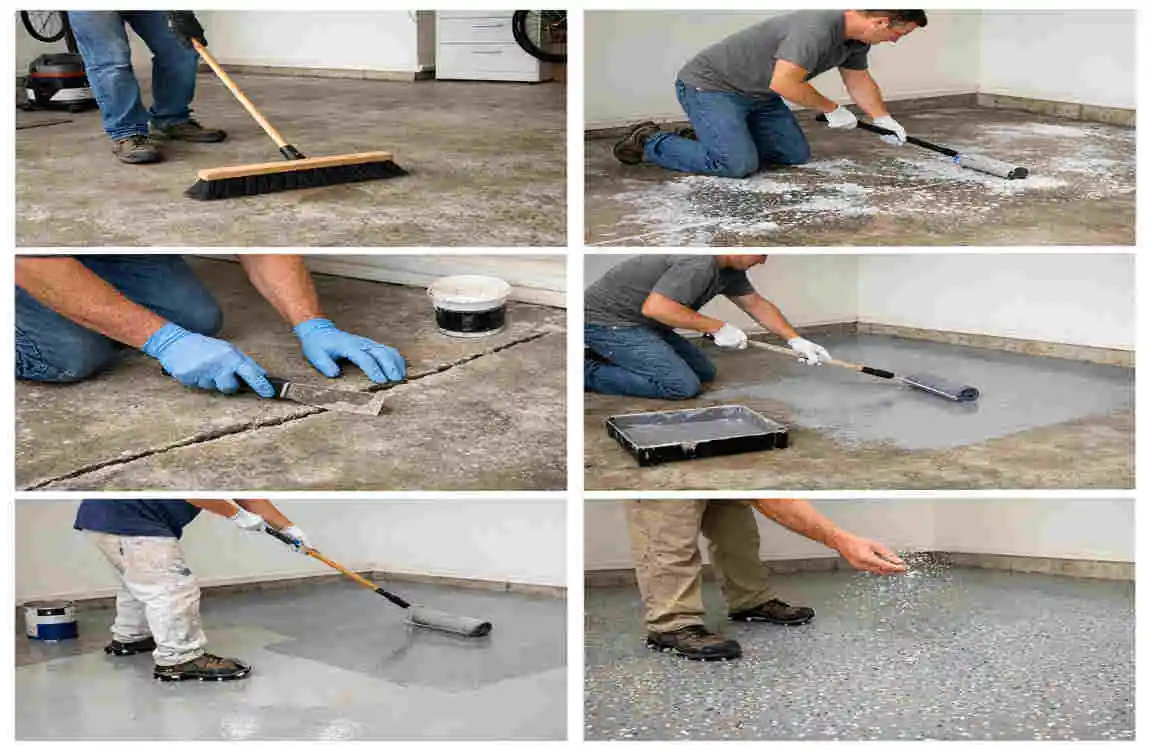
Read the product guide first.
Before mixing anything, read the label carefully. Some epoxy products have a short working time, so you need to move at the right pace.
Mix the epoxy correctly.
Epoxy usually comes in two parts: the coating and the hardener. Mix them in the exact ratio listed on the package. If the mix is off, the floor may not cure properly.
Let it sit if needed.
Some products need a short waiting period after mixing. This is called induction time. If your product requires it, do not skip it.
Start at the far corner.
Begin in the farthest corner of the room and work your way toward the exit. This keeps you from painting yourself into a corner.
Roll on an even coat.
Use a roller to spread the epoxy in smooth, even layers. Work in small sections and keep the coating thickness consistent.
Cut in the edges
Use a brush around corners, edges, and tight spots where the roller cannot reach. This helps the floor look neat and complete.
Keep a wet edge
Try to move steadily so the next section blends into the last one before it starts drying. This helps reduce lap marks.
Add decorative flakes if desired.
If your epoxy system includes decorative flakes, sprinkle them while the coating is still wet. This can add texture and style.
Apply a second coat if needed.
Some floors need more than one coat for full coverage and better strength. Follow the product instructions for recoat timing.
Simple application process
- Mix the epoxy correctly
- Cut in around the edges
- Roll the coating evenly
- Keep a wet edge
- Add flakes if desired
- Let it cure
- Apply another coat if required
The most important thing is to work within the product’s usable time after mixing. Once it starts setting, it becomes harder to spread smoothly.
How Long Does Epoxy Floor Paint Take to Dry and Cure?
Drying vs. curing
These two terms are not the same.
- Drying means the surface feels dry to the touch.
- Curing means the epoxy has fully hardened and reached its strongest state.
A floor may feel ready sooner than it really is. That is why you should not rush it.
Typical time stages
Exact times vary by product, temperature, humidity, and floor condition. Still, here is a simple general idea:
StageWhat it meansCommon timing
Touch dry Surface no longer feels wet A few hours
Light foot traffic You can walk on it carefully Usually after 24 hours
Recoat time Safe time for another coat Depends on product
Full cure Floor reaches full strength Several days
What affects drying time
A few things can change how fast epoxy dries:
- Temperature
- Humidity
- Concrete condition
- Product formula
- Ventilation
Warm, dry air usually helps the process. Cold or damp weather can slow it down.
Be patient with curing.
Do not move heavy items, park vehicles, or place furniture back too early. Even if the surface looks ready, the coating may still be soft underneath.
Ventilation helps
Good airflow can help during both application and curing. It also makes the work area more comfortable and reduces strong odours.
Common Epoxy Floor Painting Mistakes and Maintenance Tips
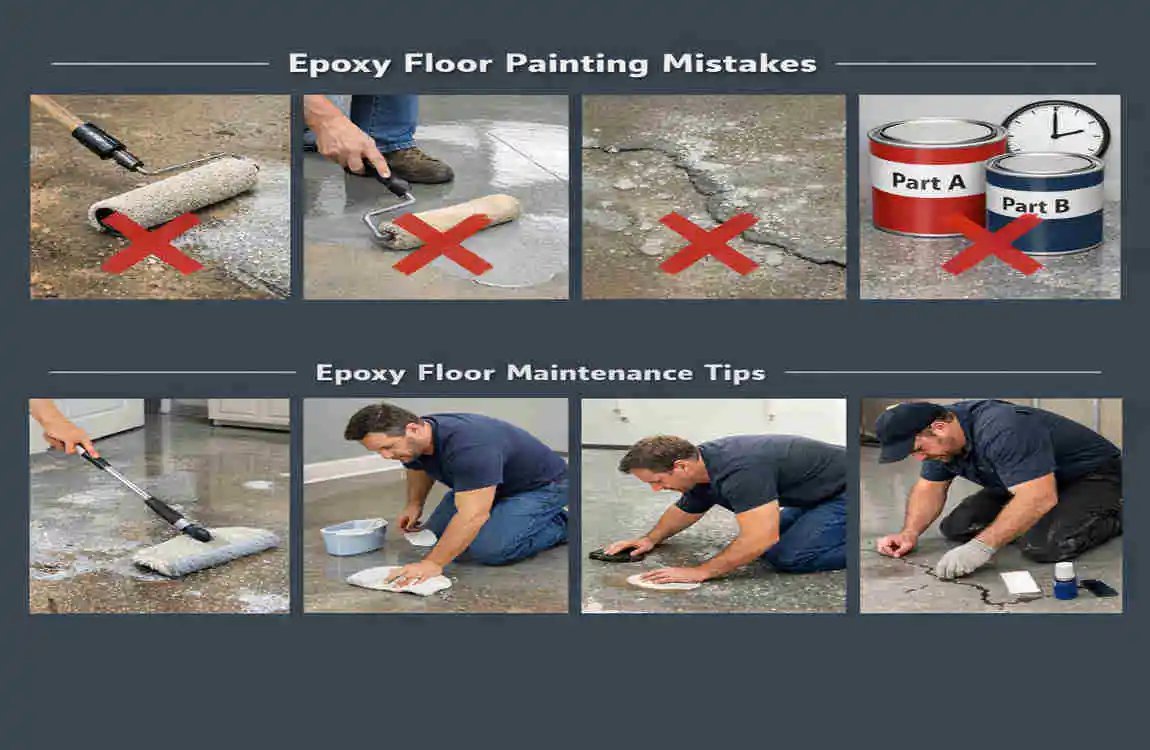
Common mistakes to avoid
Many epoxy problems stem from simple mistakes. Try to avoid these:
- Applying epoxy over a dirty floor
- Painting on damp concrete
- Mixing the product in the wrong ratio
- Making the coat too thick
- Working in very cold or very humid conditions
- Ignoring cracks and damage
- Walking on the floor too soon
- Not ventilating the room well
Why floors peel or bubble
If epoxy peels, the problem is often poor preparation, trapped moisture, or bad mixing. If you take care with the prep work, you significantly reduce the chance of these issues.
Easy maintenance tips
Once the floor is finished, keeping it clean is simple.
- Sweep or vacuum regularly
- Wipe up spills quickly
- Use gentle cleaners approved by the product
- Avoid harsh scrubbing tools
- Check the floor now and then for chips or peeling
Do and don’t list
Do:
- Clean the floor often
- Follow the product care guide
- Keep the surface dry when needed
- Watch for damage early
Don’t:
- Use strong chemicals unless allowed
- Drag heavy items across the floor
- Ignore moisture problems
- Scrub with rough pads
A little care will help your epoxy floor stay attractive for a long time.
Frequently Asked Questions About Applying Epoxy Floor Paint
Can I apply epoxy floor paint myself?
Yes, many people can do it themselves if the space is small or medium-sized and the floor is in good shape. DIY works best when you prepare the surface properly and follow the instructions carefully. For large or damaged floors, professional help may be better.
How do I apply epoxy floor paint to concrete?
The basic process is simple: clean the concrete, repair damage, let it dry, mix the epoxy, roll it on evenly, and let it cure. Good preparation is the key to success.
Does concrete need to be completely dry before epoxy?
Yes. Moisture can stop the epoxy from sticking well. If the concrete is damp, you may get peeling or bubbling later.
How many coats of epoxy floor paint should I apply?
It depends on the product and the look you want. Some floors need one coat, while others need two. Always follow the manufacturer’s directions.
How long should epoxy floor paint cure before walking on it?
The timing varies, but many floors can handle light foot traffic after about 24 hours. Full curing takes longer. Check your product label for exact times.
Can epoxy floor paint be applied over old paint?
Sometimes, yes. But the old coating must still be soundly bonded. If it is loose or incompatible, it should be removed first.
Why is my epoxy floor peeling?
Peeling usually occurs due to poor cleaning, moisture, inadequate surface prep, or improper mixing. It can also happen if the floor was used too soon.
Is epoxy floor paint good for a garage?
Yes. A garage is one of the best places for epoxy because it handles stains, dirt, and vehicle traffic well when the concrete is prepared correctly.
Can I apply epoxy floor paint in cold or humid weather?
You can, but it may not work as well. Cold, humid air can slow drying and curing so that the final result may suffer.
How long does an epoxy floor last?
That depends on the product’s quality, how well the floor was prepared, and how much traffic it gets. A well-installed epoxy floor can last for years.
| Step | What to Do | Key Tip |
|---|---|---|
| Prepare the Floor | Remove furniture, dirt, grease, and old coatings. | Start with a completely clean surface. |
| Repair Damage | Fill cracks, holes, and uneven areas. | Let repairs cure fully before coating. |
| Etch or Grind | Roughen smooth concrete to help epoxy bond. | Remove dust thoroughly afterward. |
| Mix Epoxy | Combine resin and hardener according to the manufacturer’s instructions. | Mix only the amount you can use within its working time. |
| Apply the Coating | Use a roller for large areas and a brush for edges. | Apply thin, even coats and avoid puddles. |
| Add a Second Coat | Apply another coat after the recommended waiting period. | Follow the product’s recoat time carefully. |