If you are planning a floor upgrade, epoxy flooring is one of the most practical options to consider. It is strong, smooth, easy to clean, and looks polished in many spaces.
You will often see it in garages, basements, workshops, warehouses, kitchens, showrooms, and commercial buildings. People choose it because it can handle daily wear while still looking neat and modern.
The biggest question for most homeowners and business owners is simple: what is the cost of epoxy flooring per square foot? That number helps you estimate the full budget before you start the project.
The honest answer is that epoxy pricing is not one-size-fits-all. It depends on the floor size, concrete condition, epoxy type, finish style, and whether you hire a professional or do it yourself.
What Is Epoxy Flooring?
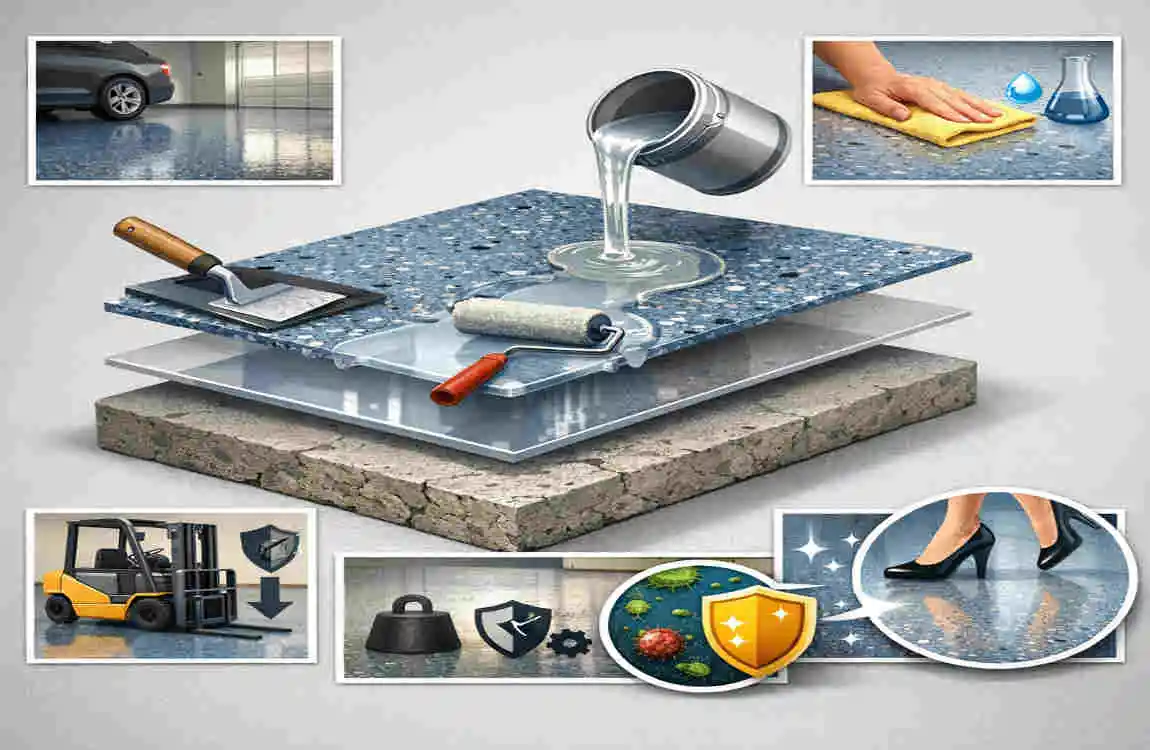
How Epoxy Flooring Works
Epoxy flooring consists of two main components: resin and hardener. When mixed, they form a strong coating that adheres to the concrete surface.
Once cured, the coating becomes tough, smooth, and resistant to many everyday problems. That is why epoxy is so common in spaces that need durability.
Common Applications
Epoxy flooring works well in many different spaces, including:
- Garages
- Basements
- Kitchens
- Workshops
- Showrooms
- Commercial buildings
It is popular anywhere people want a floor that is easier to maintain and more durable than bare concrete.
Benefits of Epoxy Floors
Epoxy flooring offers several clear benefits:
- Durability for high-traffic areas
- Easy cleaning with simple sweeping and mopping
- Moisture resistance when installed correctly
- Attractive appearance with many finish options
- Long service life with proper care
For many property owners, that mix of performance and appearance makes epoxy worth serious consideration.
Epoxy Floor Cost Per Square Foot
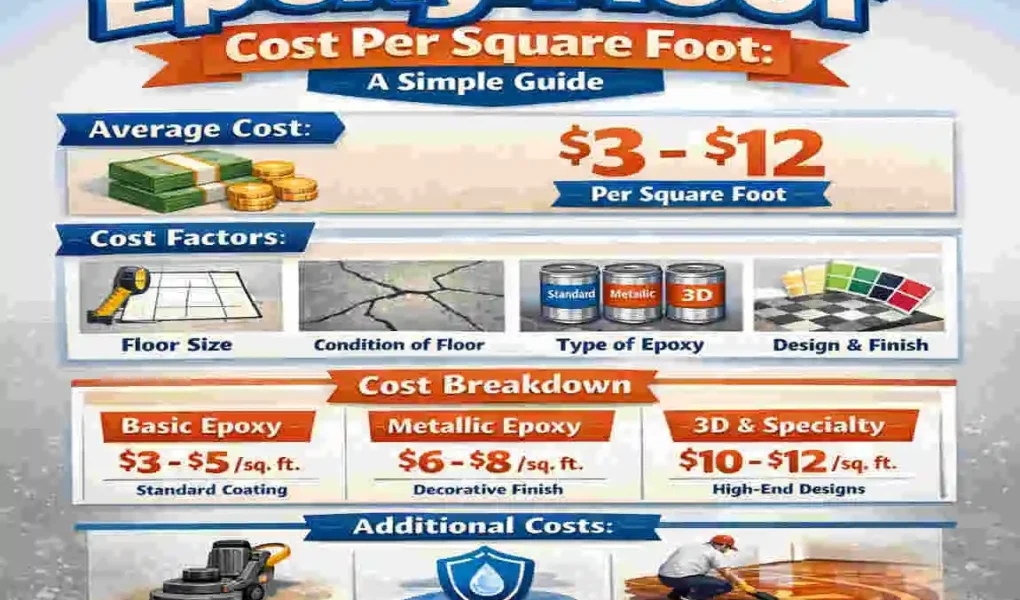
The epoxy floor cost per square foot varies based on the type of system you choose and the condition of the underlying floor.
A basic coating usually costs less than a decorative or heavy-duty commercial system. If the concrete needs repairs, moisture treatment, or extra preparation, the total cost rises.
Cost Factor Typical Impact
Basic epoxy coating Lower cost
Professional installation Moderate to higher cost
Floor repairs Adds to total
Decorative flakes or metallic finishes Higher cost
Heavy-duty commercial epoxy Higher cost
DIY Material Costs vs. Professional Installation Costs
If you do the work yourself, you mainly pay for the materials and tools. That can lower the upfront cost, especially for smaller projects.
If you hire a professional, you are also paying for:
- Surface preparation
- Moisture testing
- Labor
- Coating application
- Cleanup
- Finishing work
DIY may look cheaper at first, but professional work often gives a more durable and polished result.
Factors That Affect Epoxy Flooring Cost
Floor Size
Bigger floors cost more overall because they need more material and more labor.
That said, larger projects may sometimes have a lower price per square foot because the installer can work more efficiently. Even so, the total project cost will still be higher.
Existing Floor Condition
A clean, smooth concrete slab is much easier to coat than a damaged one.
Costs can rise if the floor has:
- Cracks
- Stains
- Uneven areas
- Moisture problems
- Old coatings that need removal
Surface preparation is often one of the biggest cost factors in the whole project.
Epoxy Type
Not all epoxy products are the same. Some are better for simple use, while others are made for stronger wear or better appearance.
Basic types include:
- Water-based epoxy: Easier to use, often lower cost, but usually less durable
- Solvent-based epoxy: Stronger in some cases, but may require more ventilation
- 100% solids epoxy: More durable and thicker, often used for higher-performance floors
The stronger the system, the more it usually costs.
Design and Finish
A plain floor is usually less expensive than a decorative one.
Extra design features can include:
- Decorative flakes
- Metallic effects
- Border designs
- Custom colors
- Patterned finishes
These add visual appeal, but they also increase labor and material costs.
Labor Costs
Professional labor can take up a large part of the total budget.
A skilled installer does more than apply coating. They also prepare the floor, test for moisture, repair any damage, and ensure the finish is even. That careful work adds value, but it also adds cost.
DIY vs. Professional Epoxy Flooring
DIY Epoxy Flooring
DIY epoxy can work well for small or simple projects if you are comfortable following instructions carefully.
It may suit you if:
- The floor is in good shape
- The area is small
- You want a basic finish
- You already have some tools
- You are willing to spend time on prep work
Still, DIY takes patience. If the surface is not prepared correctly, the coating may not last.
Professional Installation
Professional epoxy flooring is often the better choice for bigger or more demanding spaces.
A pro can help with:
- Concrete inspection
- Moisture testing
- Crack repair
- Proper mixing
- Even application
- Better finish quality
This is especially useful in garages, commercial spaces, or floors that need heavy use.
Which Option Is More Cost-Effective?
DIY may save money upfront. Professional installation may cost more at first, but it can reduce the chance of early peeling, bubbling, or patchy results.
So the cheaper option is not always the better value. The right choice depends on your floor, your budget, and your comfort level.
How to Calculate the Total Epoxy Floor Cost
A simple way to estimate your budget is:
Floor Area × Epoxy Cost Per Square Foot = Estimated Flooring Cost
But that is only the starting point. You should also add:
- Surface preparation
- Repairs
- Primer
- Topcoat
- Tools
- Labor, if using a contractor
Example Cost Calculation
Let’s say you have a 400-square-foot garage.
If you multiply the area by the per-square-foot epoxy rate, you get a starting estimate. Then you add any extra work, such as crack repair, primer, or a decorative finish.
This example is only a guide. It is not a fixed market price because actual costs vary by location, floor condition, and product choice.
Ways to Reduce Epoxy Flooring Costs
You can keep costs under control without cutting corners.
Practical Ways to Save Money
- Compare several installation quotes
- Choose a simple finish instead of a decorative one
- Prepare the concrete properly before coating
- Consider DIY only for smaller, suitable projects
- Repair major floor problems first
- Pick the right epoxy system for the room’s use
The best savings usually come from good planning, not from choosing the cheapest product.
Is Epoxy Flooring Worth the Cost?
For many people, the answer is yes.
Epoxy flooring can be worth the cost because it offers long-term benefits in areas that get heavy use, spills, moisture, or frequent cleaning. It can also reduce the need for constant floor maintenance.
It is especially useful in garages and commercial spaces where durability matters. A properly installed epoxy floor can handle a lot while still looking clean and professional.
Still, good results depend on proper preparation and installation. A cheap or rushed job may not last as well.
How to Get an Accurate Epoxy Flooring Estimate
If you want a more reliable estimate, start with the basics.
Steps to Get a Better Estimate
- Measure the floor carefully
- Inspect the concrete condition
- Decide on the finish you want
- Ask for itemized quotes
- Confirm what is included
You should always ask whether the estimate covers:
- Materials
- Labor
- Preparation
- Repairs
- Primer
- Topcoat
- Cleanup
That way, you can compare quotes fairly.
Epoxy Floor Maintenance and Long-Term Costs
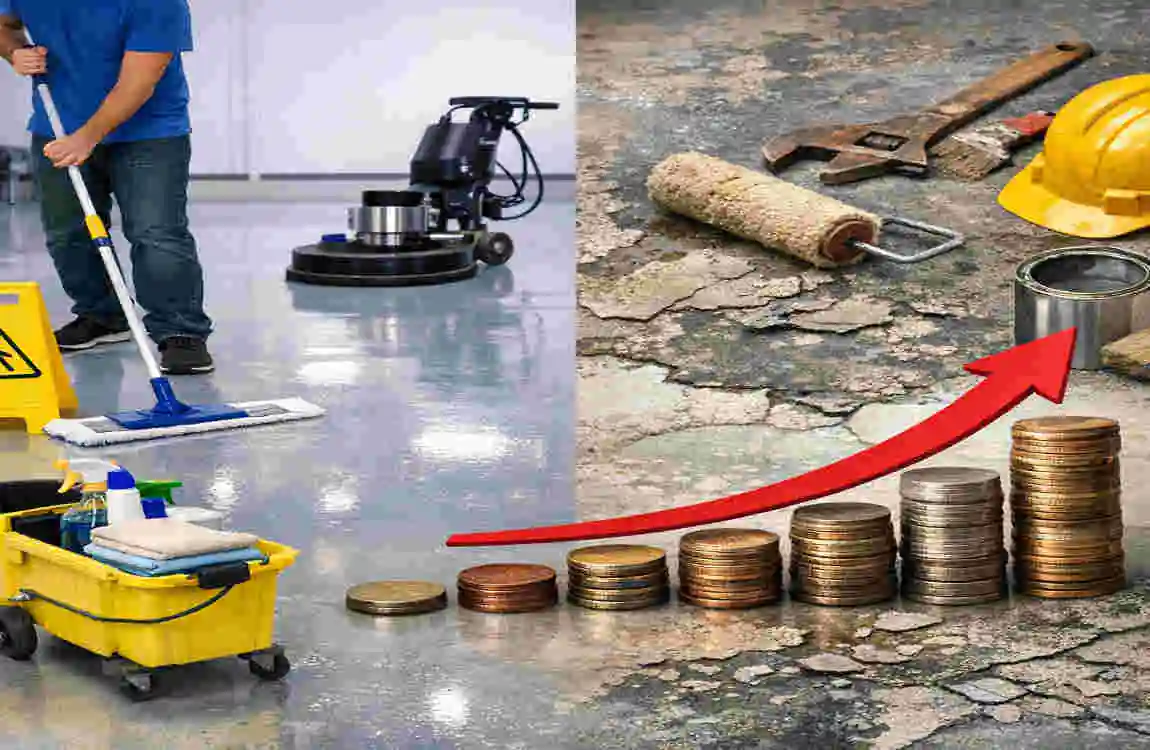
Routine Cleaning
Epoxy floors are easy to care for. Regular sweeping and simple mopping usually keep them in good shape.
You do not need harsh cleaners for everyday maintenance. A mild floor cleaner is often enough.
Preventing Damage
To help your floor last longer:
- Avoid dragging heavy items
- Do not use harsh chemicals
- Clean spills quickly
- Fix cracks or coating damage early
Small habits can prevent bigger repair costs later.
Repairs and Recoating
Over time, a floor may need minor repairs or a fresh topcoat.
This depends on:
- Traffic level
- Floor use
- Installation quality
- UV exposure
- Product type
Well-maintained epoxy floors can last for many years, but like any surface, they still need occasional attention.
Frequently Asked Questions
How much does epoxy flooring cost per square foot?
The price varies by epoxy type, preparation needs, labor, floor condition, and finish style.
Is epoxy flooring cheaper than tile?
It can be, but you should compare project-specific material and installation costs before deciding.
How much does it cost to epoxy a 2-car garage?
You can estimate it by measuring the garage area, multiplying by the epoxy rate, and adding prep and installation costs.
Is DIY epoxy flooring worth it?
Yes, for smaller and simpler projects. For larger or damaged floors, professional installation may be better.
Does concrete preparation increase epoxy flooring costs?
Yes. Cracks, stains, uneven concrete, and moisture problems can all add to the total cost.
How long does an epoxy floor last?
Lifespan depends on the epoxy system, traffic, maintenance, UV exposure, and installation quality.
Can epoxy flooring be installed over old concrete?
Yes, as long as the concrete is structurally sound and properly cleaned, repaired, and prepared.
What is the biggest factor affecting epoxy floor cost?
Surface preparation and the type of epoxy used are often the biggest cost factors, along with labor and floor size.
| Cost Factor | Typical Cost Per Sq. Ft. | Notes |
|---|---|---|
| Basic Epoxy Floor | $3–$7 | Simple, durable finish |
| Decorative Epoxy | $5–$12 | Includes flakes, colors, or patterns |
| Metallic Epoxy | $7–$15 | Premium, glossy appearance |
| Labor | $2–$6 | Depends on surface condition |
| Surface Preparation | $1–$3 | Repairs, cleaning, and grinding |
| Overall Average | $3–$12 | Varies by floor size and finish |