
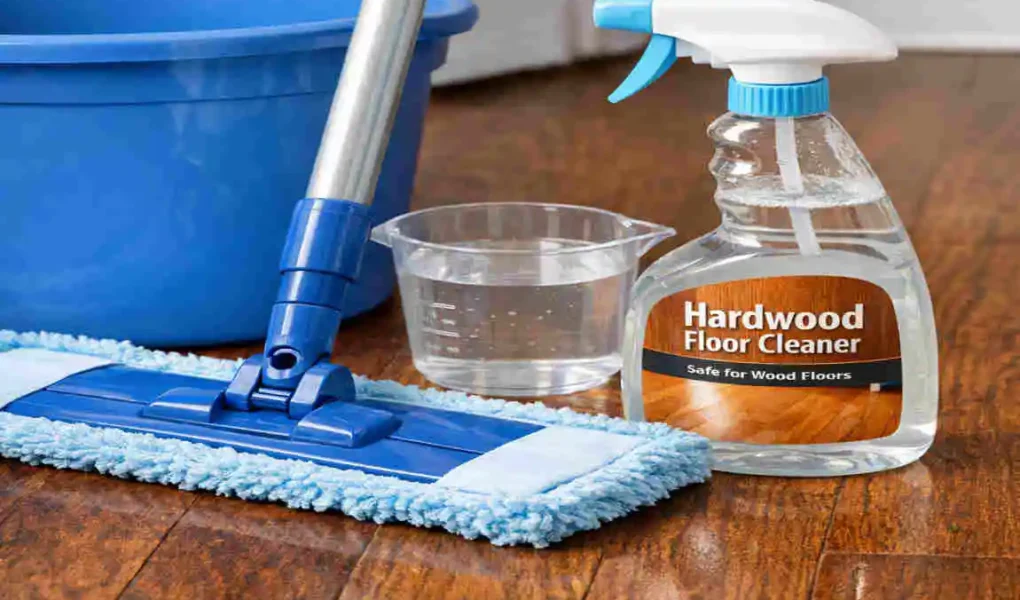
Hardwood floors are loved for a reason. They look warm, feel natural, and can last for years with proper care. They fit almost any home style, from modern spaces to classic rooms.
But wood floors also show dirt fast. Dust, grease, muddy shoes, spills, and daily foot traffic can make them look dull and dirty. That is why many homeowners ask, how can I clean very dirty hardwood floors without damaging the finish?
How Can I Clean Very Dirty Hardwood Floors?
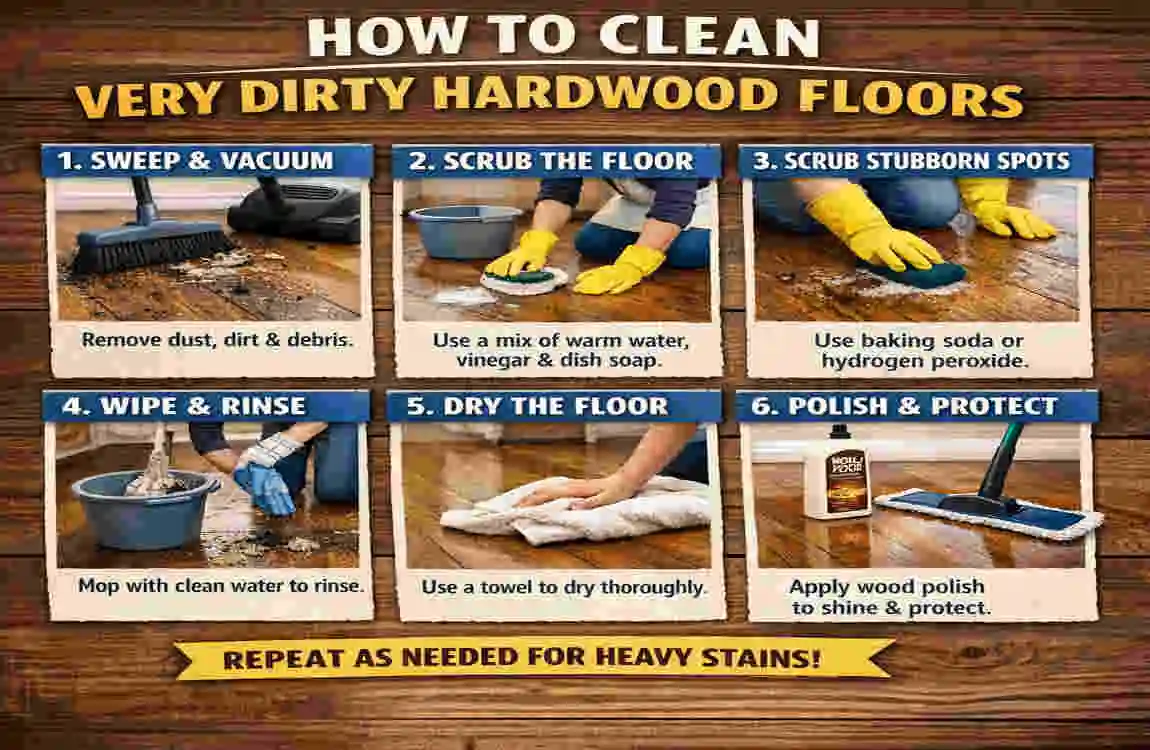
Check the Floor First
Before cleaning, inspect the floor closely. Is the dirt only on the surface, or does it look sticky and built up? Is the floor sealed, engineered, or unfinished?
This matters because different wood floors need different care. Sealed floors are easier to clean. Unfinished wood needs more caution and often professional guidance.
Remove Loose Dirt
Before any wet cleaning, sweep or vacuum the floor. This is one of the most important steps. Dirt and grit can scratch wood if you push them around with a mop.
Use:
- a soft broom
- a microfiber dust mop
- a vacuum with a hard-floor setting
Use a Lightly Damp Mop
Lightly spray the cleaner onto the mop or floor, following the product directions. Do not soak the floor. The mop should be damp, not dripping.
Work in small sections so the cleaner doesn’t sit on the wood too long. This helps avoid streaks and water damage.
Clean Stubborn Areas Gently
If one area is still dirty, use a soft cloth and go over it again. Do not scrub hard. Gentle repeat cleaning works better than force.
Dry the Floor Promptly
After cleaning, dry the floor with a clean microfiber cloth if needed. This helps prevent water spots and protects the finish.
Helpful Tip
If the floor is very dirty, it is better to clean it twice gently than once with a strong chemical. Slow and steady is safer for wood.
How to Remove Stubborn Stains, Grease, and Built-Up Dirt From Wood Floors
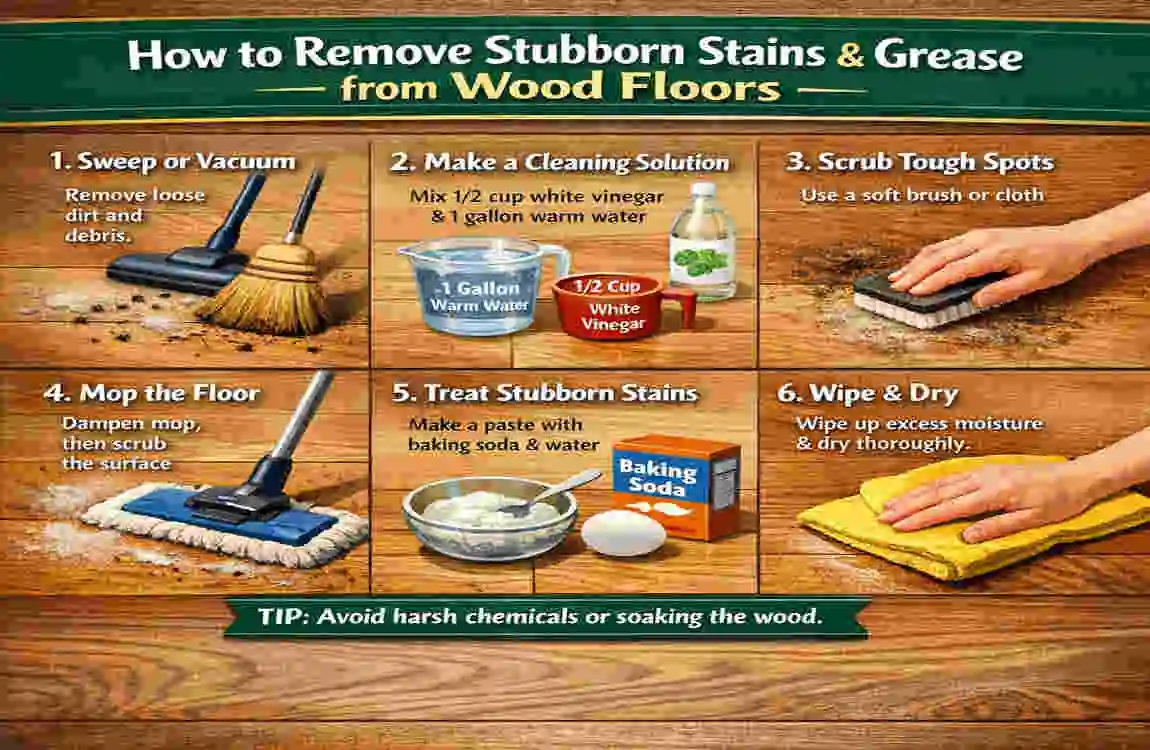
Different Messes Need Different Fixes
Not all dirt is the same. Mud, grease, food spills, and pet messes each need a different approach.
For Mud and Dry Dirt
Let mud dry first, then sweep or vacuum it up. After that, clean the area with a damp microfiber mop and hardwood cleaner.
For Grease or Sticky Spots
Use a hardwood-safe cleaner and a soft cloth. Press gently and wipe away the residue. Avoid sharp tools or rough pads.
For Scuff Marks
Scuffs from shoes or furniture often come off with a microfiber cloth and a little cleaner. If needed, try rubbing very lightly in the direction of the grain.
For Pet Accidents
Clean pet accidents quickly. Moisture and stains can sink into wood if left too long. Blot the area first, then clean it with a wood-safe product.
When the Damage Is Deeper
If the stain has penetrated below the surface, or the floor finish is peeling, the issue may be more than a simple cleaning. In that case, professional help may be the best option.
Which Cleaning Products and Methods Should You Avoid on Hardwood Floors?
Too Much Water
Water is one of the biggest problems for wood floors. It can cause swelling, warping, and dull spots.
Vinegar and Acidic Mixes
Many people use vinegar because it seems natural. But repeated use can weaken some finishes and make the floor look tired over time.
Bleach, Ammonia, and Strong Cleaners
These can remove dirt, but they can also damage colour and finish. They are too harsh for most hardwood floors.
Steam Mops
Steam may seem like a fast fix, but the heat and moisture can harm wood floors. Many manufacturers do not recommend them.
Abrasive Pads
Rough pads and stiff brushes can scratch the surface, which makes the floor harder to clean later.
How to Keep Hardwood Floors Clean, Shiny, and Well-Maintained
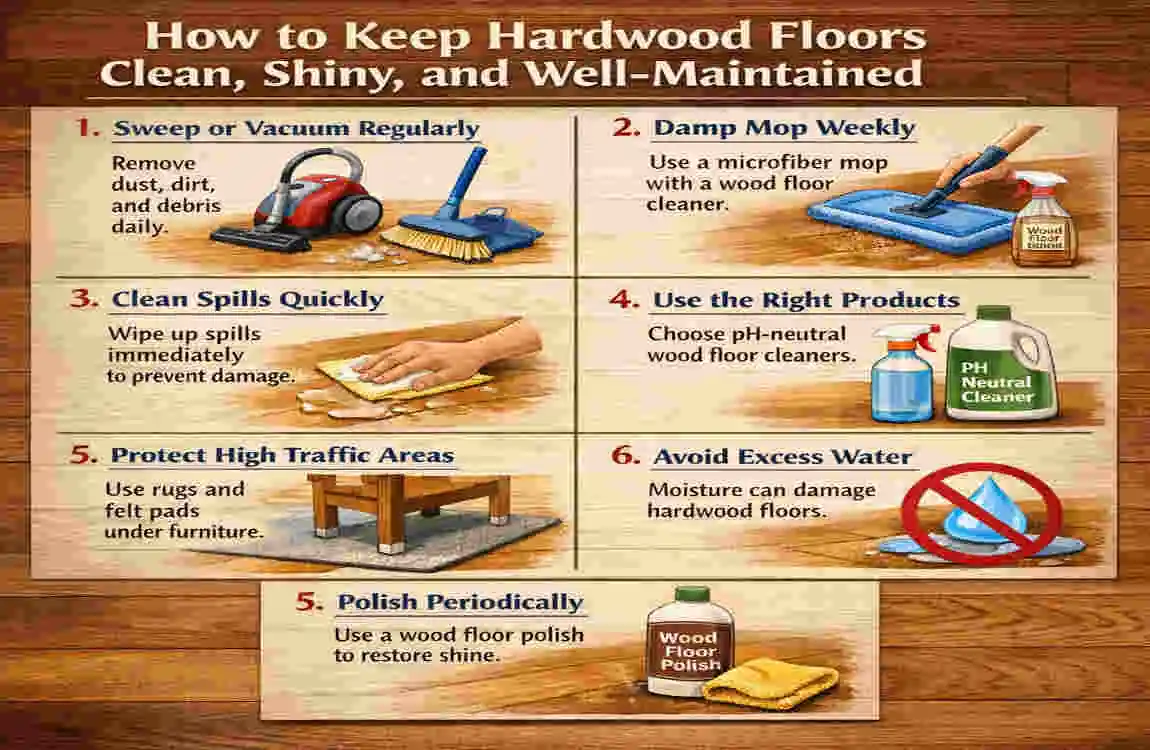
Simple Daily and Weekly Habits
The easiest way to keep wood floors looking good is to stop dirt before it spreads. A little regular care goes a long way.
Good habits include:
- Sweep or dust mop often
- Wipe spills right away
- Use mats near doors
- Add felt pads under furniture
Keep the Indoor Air Balanced
Very dry or very damp air can affect wood. If possible, keep indoor humidity steady.
Mopping Schedule
You do not need to mop hardwood every day. For most homes, a light mop once a week or every two weeks is enough, depending on traffic.
Easy Maintenance Routine
TaskHow OftenWhy It Helps
Dust mop or sweep Daily or every few days Removes grit before it scratches
Spot clean spills Immediately Prevents stains and water damage
Damp mop Weekly or biweekly Keeps the floor fresh without soaking it
Check furniture pads Monthly Prevents scratches and scuffs
Frequently Asked Questions About Cleaning Very Dirty Hardwood Floors
What is the best thing to use to clean wood floors?
A pH-neutral hardwood floor cleaner and a microfiber mop are usually the safest and most effective choice.
How can I clean very dirty hardwood floors without damaging them?
Start by removing loose dirt, then clean with a lightly damp mop and a wood-safe cleaner. Avoid soaking the floor.
Can I use dish soap to clean hardwood floors?
Only if the floor maker says it is okay. Too much soap can leave residue behind.
Is vinegar and water safe for hardwood floors?
Not for regular use. It can wear down some finishes over time.
Can I use a steam mop on hardwood floors?
Usually not recommended. Steam and heat can damage many wood floors.
How do I make hardwood floors look clean and shiny again?
Use gentle cleaning, remove buildup, and keep the floor dry. If the finish is worn, you may need to refinish.
| Cleaning Factor | Best Choice | Benefits |
|---|---|---|
| Best Overall Cleaner | Wood floor cleaner | Removes dirt without damaging the finish |
| Daily Cleaning | Microfiber dust mop | Collects dust, hair, and debris |
| Deep Cleaning | Damp microfiber mop | Removes stubborn dirt safely |
| Natural Cleaning | Small amount of water on a damp mop | Simple and affordable for routine cleaning |
| Sticky Spots | Wood-safe cleaner and a soft cloth | Helps remove sticky residue |
| Best for Shine | Hardwood floor polish made for your floor finish | Restores shine when needed |
| What to Avoid | Excess water, steam mops, bleach, and abrasive cleaners | Helps prevent damage, swelling, and dullness |
| Best Cleaning Tip | Wipe spills immediately | Protects wood from moisture damage |