Basement flooring needs more planning than flooring in other parts of the home. Basements can have higher humidity, moisture, cooler temperatures, and occasional water problems. Because of this, a flooring material that works perfectly upstairs may not be the right choice below ground.
So, what flooring is best for basement spaces? The answer depends on moisture conditions, how you use the basement, your preferred style, and your budget.
For many modern homes, luxury vinyl, tile, epoxy, engineered wood, and carpet tiles are practical choices. The most important rule is simple: solve moisture problems before installing any finished flooring.
What Flooring Is Best for a Basement?
Key Factors to Consider
Before choosing flooring, look at several important factors.
Moisture resistance should come first. A basement floor may be exposed to humidity, condensation, or water from plumbing and foundation issues.
Also consider durability, comfort, maintenance, installation cost, and appearance. Think about how your family will actually use the space.
Best Overall Basement Flooring Options
Some of the most useful choices include:
- Luxury vinyl plank: Stylish, comfortable, and highly practical.
- Porcelain or ceramic tile: Durable and suitable for moisture-prone areas.
- Engineered wood: Provides a warmer wood appearance when basement conditions are properly controlled.
- Carpet tiles: Comfortable and convenient for finished living spaces.
- Epoxy: Strong, easy to clean, and useful for gyms or workshops.
The best flooring is not necessarily the most expensive option. It is the material that matches your basement’s conditions and daily use.
Luxury Vinyl Flooring for Modern Basements
Why Vinyl Is Popular
Luxury vinyl has become a popular basement flooring choice because it combines modern style with practical performance.
Many products are designed to resist water, making them useful where moisture is a concern. Vinyl is also easy to clean and comes in many colours and patterns.
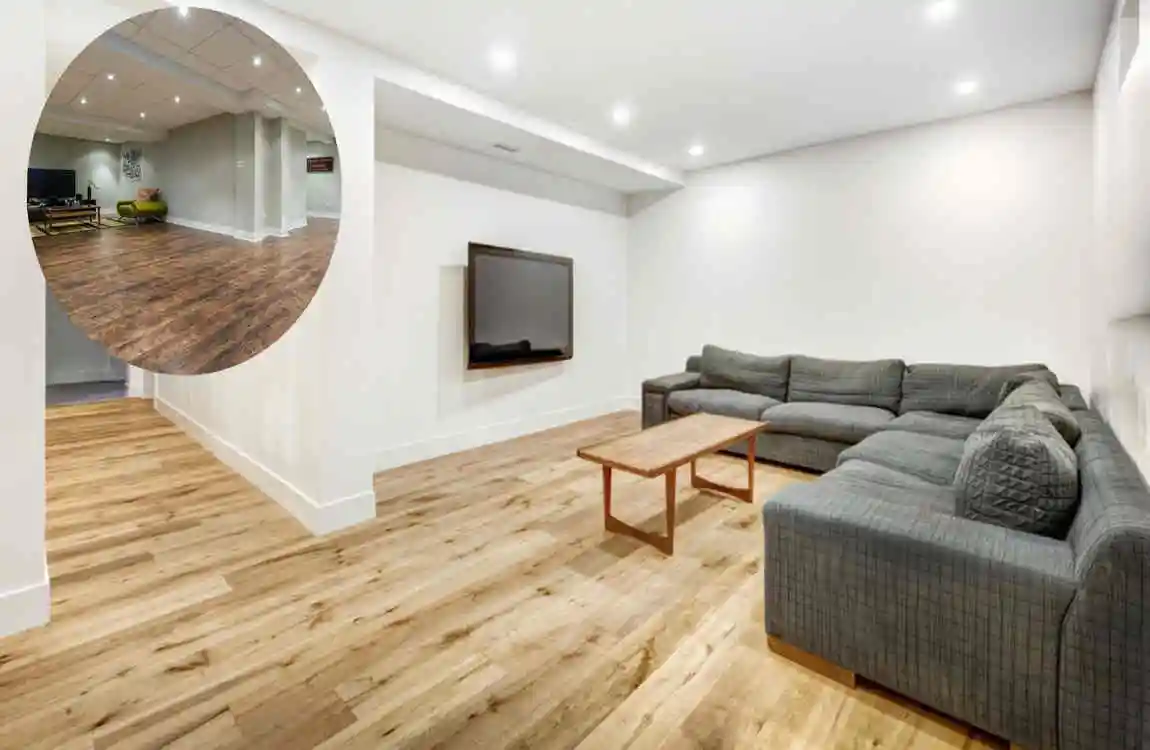
Wood-look vinyl can give a basement the appearance of hardwood without requiring the same level of moisture control as traditional solid wood.
Best Vinyl Styles
You can choose from:
- Luxury vinyl plank (LVP)
- Luxury vinyl tile (LVT)
- Waterproof vinyl flooring
Wood-look planks work especially well in family rooms and finished entertainment areas. Stone-look vinyl can create a clean contemporary appearance.
Pros and Cons
Vinyl is generally easy to maintain, comfortable underfoot, and available in many designs.
However, installation still requires attention to the concrete slab and manufacturer’s moisture requirements. A waterproof surface does not mean you should ignore water coming through the foundation.
Tile Flooring for Moisture-Prone Basements
Porcelain vs. Ceramic Tile
Tile is another strong option for basement floors.
Porcelain tile is dense and highly water-resistant, making it especially useful in areas where moisture is a concern. Ceramic tile also offers good durability and comes in many styles.
The right choice depends on the room, installation conditions, design preferences, and budget.
Modern Basement Tile Ideas
Modern homeowners have many attractive choices.
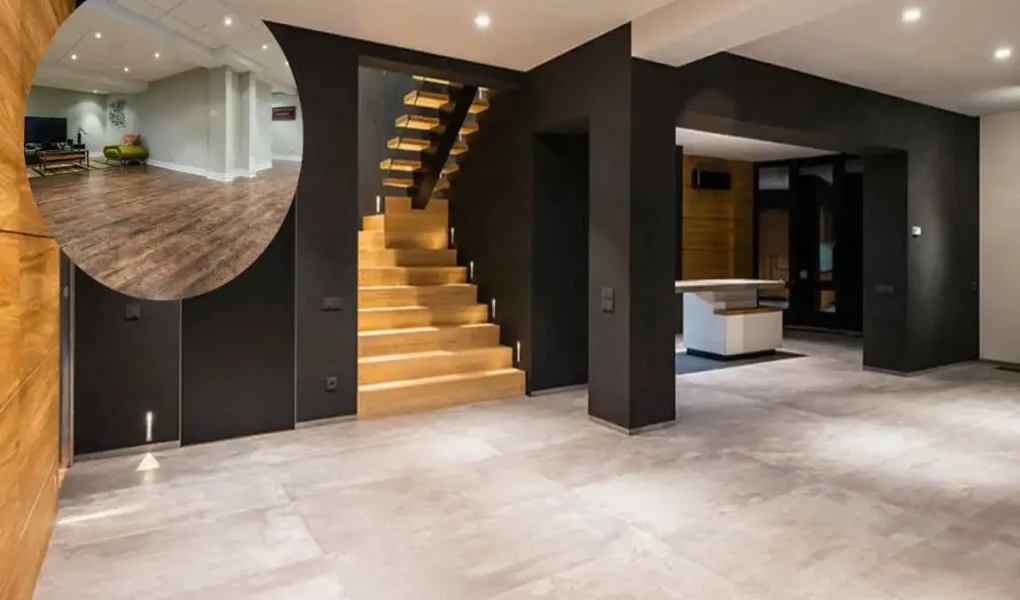
Wood-look tile can provide the appearance of timber while offering the durability of tile. Large-format tiles can make a basement feel more open by reducing visible grout lines.
Stone-look tile and neutral colours also work well with contemporary basement designs.
Installation Considerations
Prepare the concrete slab properly before installing tile.
Address any moisture or drainage problems first. Uneven areas may also need correction before installing the tiles.
Because tile installation can require careful levelling and cutting, professional installation may be best for larger or more complex projects.
Comfortable Basement Flooring Ideas
Not every basement needs hard flooring. If you are creating a cozy living space, comfort may matter as much as moisture resistance.
Carpet and Carpet Tiles
Carpet can make a basement feel warmer, softer, and more inviting.
It can work well in bedrooms, playrooms, family rooms, and entertainment spaces when the basement is dry and properly protected from moisture.
Carpet tiles offer another advantage. If one section becomes damaged or stained, you may be able to replace only that section instead of replacing the entire floor.
Rubber Flooring
Rubber flooring is particularly useful for home gyms and activity rooms.
It provides cushioning and can handle impact from exercise equipment. It is also relatively easy to clean.
For a basement workout area, rubber flooring offers a practical balance of comfort and durability.
Cork Flooring
Cork provides a naturally warm and comfortable surface.
It can feel softer than tile or concrete, but it requires more attention to moisture. Consider it only when basement humidity and water conditions are well controlled.
Engineered Wood and Other Modern Flooring Options
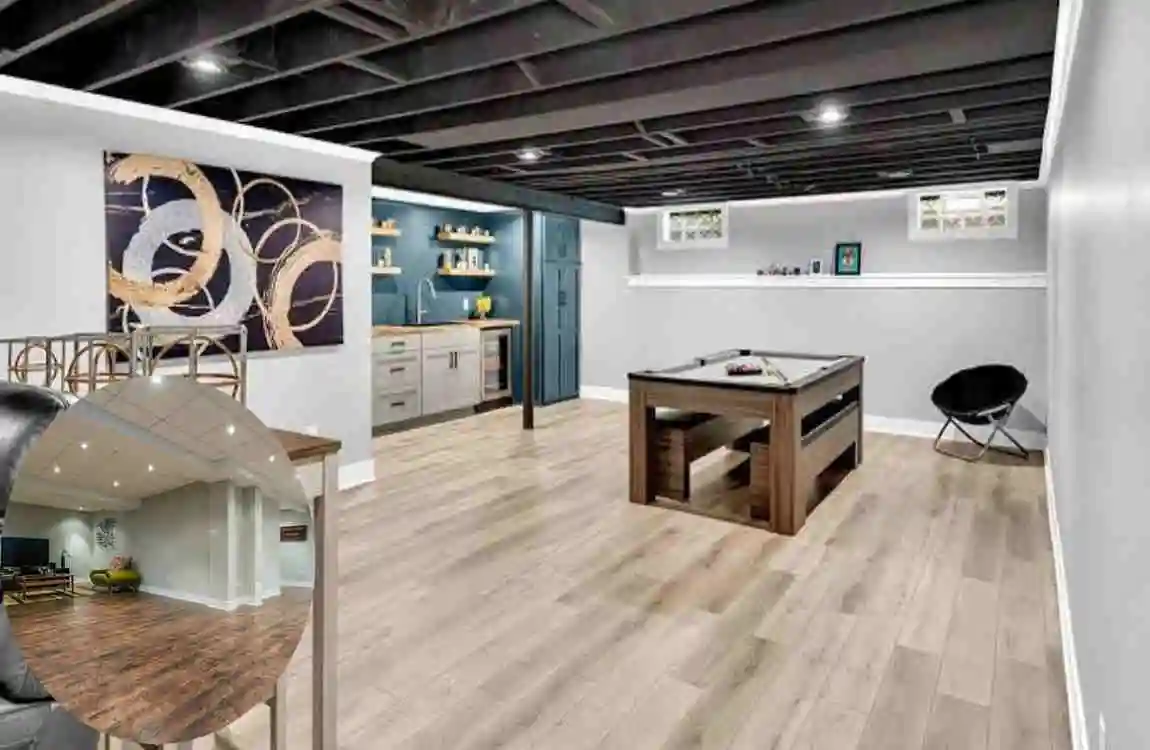
Engineered Hardwood
If you love the appearance of real wood, engineered hardwood may be worth considering.
Unlike solid hardwood, engineered wood uses multiple layers, which can provide better dimensional stability when conditions change.
However, it is still more moisture-sensitive than materials such as tile or properly rated waterproof vinyl. A dry, well-controlled basement is important.
Epoxy Flooring
Epoxy flooring is a practical choice for workshops, utility rooms, garages, and home gyms.
It creates a hard, seamless surface that is easy to clean. Modern epoxy finishes can also provide an attractive industrial appearance.
Because epoxy is highly durable, it can handle heavy use better than many soft flooring materials.
Concrete Flooring
Concrete does not always need to be covered.
A properly prepared, sealed, or polished concrete floor can create a minimalist modern appearance.
Concrete works particularly well with industrial, contemporary, and simple interior styles. You can add rugs to make the space more comfortable.
How to Choose the Right Basement Flooring
Check for Moisture First
Before choosing any flooring, inspect the basement.
Look for:
- Damp spots or standing water
- Musty odors
- Condensation
- Foundation leaks
- Plumbing leaks
- Moisture coming through the concrete slab
Do not cover a moisture problem with new flooring. Water issues should be corrected first.
Match Flooring to Basement Use
Think about what you want to do in the space.
A family room may benefit from vinyl or carpet tiles. A home office can work well with vinyl or engineered wood. A home gym may benefit from rubber or epoxy.
For a storage or utility area, durability and easy cleaning may be more important than softness.
Compare Cost and Maintenance
Flooring TypeMoisture ResistanceComfortMaintenanceBest Use
Luxury Vinyl High Good Easy Modern living spaces
Porcelain Tile Excellent Moderate Easy Moisture-prone areas
Carpet Tiles Moderate Excellent Moderate Family rooms
Engineered Wood Moderate Good Moderate Stylish finished basements
Epoxy Excellent Low Very Easy Gyms and workshops
Concrete Excellent Low Easy Minimalist designs
The table shows why no single flooring material works for every basement. Your room function and moisture conditions should guide the final decision.
Best Basement Flooring Ideas for Modern Homes
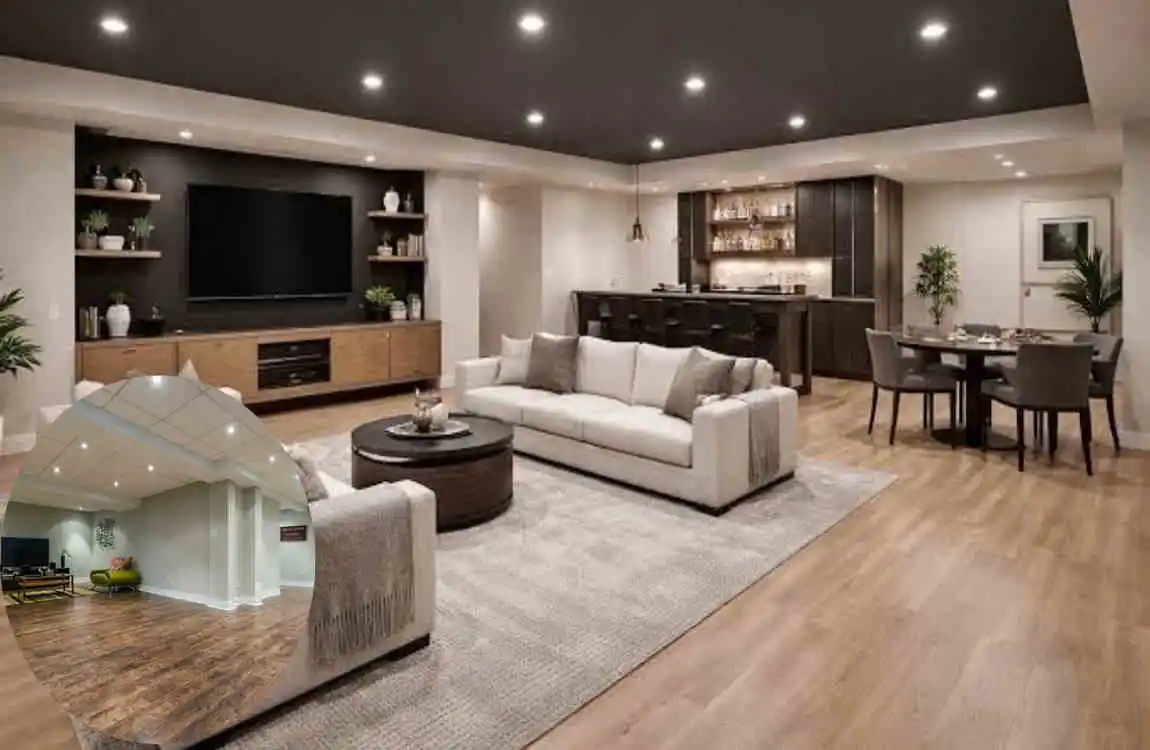
Modern Design Trends
Modern basement flooring does not have to look basic or industrial.
Warm wood-look vinyl can create a comfortable residential appearance. Large-format tile provides a clean contemporary finish, while neutral colours can make the room feel brighter and more spacious.
Concrete-inspired flooring is another popular design direction for homeowners who prefer an industrial style.
You can also create mixed flooring zones. For example, vinyl can cover the main living area while rubber flooring defines a small workout space.
Common Basement Flooring Mistakes
One of the biggest mistakes is installing flooring before solving moisture problems.
Other common mistakes include:
- Choosing flooring only because it looks attractive.
- Ignoring the condition of the concrete slab.
- Skipping proper subfloor preparation.
- Using moisture-sensitive materials in damp areas.
- Failing to follow the flooring manufacturer’s installation requirements.
A beautiful floor will not perform well if the basement underneath it has moisture problems.
FAQ: Basement Flooring
What flooring is best for basement?
The best choice depends on the basement’s moisture level and intended use. Luxury vinyl, porcelain tile, epoxy, and properly prepared concrete are among the practical choices for many basements.
Is vinyl flooring good for a basement?
Yes. Luxury vinyl is popular because it offers a wide range of modern designs, easy maintenance, and good moisture resistance. Always check the product’s installation requirements.
Is carpet a good choice for basement floors?
Carpet can be comfortable and attractive in a dry basement. Carpet tiles can be especially practical because you can replace individual damaged sections.
Is tile or vinyl better for a basement?
Both can work well. Tile offers excellent durability and moisture resistance, while vinyl usually feels softer and warmer underfoot. Your priorities should determine the choice.
Can you put hardwood flooring in a basement?
Solid hardwood is generally not the first choice for basement conditions because moisture and humidity can affect it. Engineered wood can be more suitable when the basement is dry and properly controlled.
What is the cheapest flooring option for a basement?
Cost depends on the material, installation, and the condition of the existing floor. Sealed concrete can be a practical budget option, while some vinyl products can provide an affordable finished appearance.
What flooring is best for a damp basement?
Highly moisture-resistant materials such as tile, epoxy, and suitable waterproof flooring products may be appropriate. However, the priority should always be to identify and fix the source of the moisture.
| Flooring Idea | Key Features | Best For |
|---|---|---|
| Luxury Vinyl Plank (LVP) | Water-resistant, stylish, easy to maintain | Living spaces & family rooms |
| Luxury Vinyl Tile (LVT) | Modern tile look with better moisture resistance | Modern basement designs |
| Porcelain Tile | Durable, moisture-resistant, long-lasting | Wet or high-traffic basements |
| Epoxy Flooring | Seamless, tough, easy to clean | Garages & utility areas |
| Engineered Wood | Warm appearance with better stability than solid wood | Finished living areas |
| Carpet Tiles | Comfortable, replaceable sections | Bedrooms & playrooms |
| Rubber Flooring | Soft, durable, shock-resistant | Home gyms |