White vinegar is one of the most affordable cleaning ingredients in most homes. It is useful for everyday cleaning because it can loosen light grime, soap residue, and mineral deposits on certain tile surfaces.
However, vinegar is acidic. That means it can damage delicate materials, especially natural stone such as marble, limestone, and travertine. It can also weaken cement-based grout if you use it too often.
Before you start, identify your tile type and read the manufacturer’s care instructions. Used correctly, vinegar can be a budget-friendly option for compatible floors; used incorrectly, it can cause dullness, discolouration, or permanent surface damage.
Benefits of Using Vinegar for Floor Tile Cleaning
Vinegar works best as a light-duty cleaner. It isn’t a miracle solution for every stain. Still, it can help with regular maintenance on the right surfaces.
Where Vinegar Works Well
Diluted white vinegar may clean certain glazed ceramic and porcelain tiles. It can help remove water spots, soap scum, light mineral deposits, and everyday dust or dirt.
It is especially useful when you want a low-cost cleaning option without buying a specialised product. A mild vinegar solution can leave compatible tiles looking fresher when you rinse and dry them properly.
Where Vinegar Falls Short
Vinegar isn’t the best choice for heavy grease, sticky spills, mould, or stubborn grime. For those problems, a pH-neutral tile cleaner or a product recommended by the tile manufacturer is usually safer and more effective.
Most importantly, avoid vinegar on marble, limestone, travertine, and other acid-sensitive natural stone. The acid can etch the surface, leaving dull patches or permanent marks.
Cleaning Need: Is Vinegar a Good Choice?Better Option
Light dust and dirt on ceramic or porcelain Yes, if diluted and tile-safe Mild vinegar solution
Soap residue or light mineral spots Sometimes Diluted vinegar, then rinse well
Greasy kitchen floors Not ideal pH-neutral degreasing floor cleaner
Natural stone tiles No Stone-safe pH-neutral cleaner
Frequent grout cleaning No Manufacturer-approved grout cleaner
Supplies and Preparation Before Cleaning Floor Tiles
Preparation makes the job easier and reduces the risk of damage. Gather your supplies before you begin, and always check that your floor can handle vinegar.
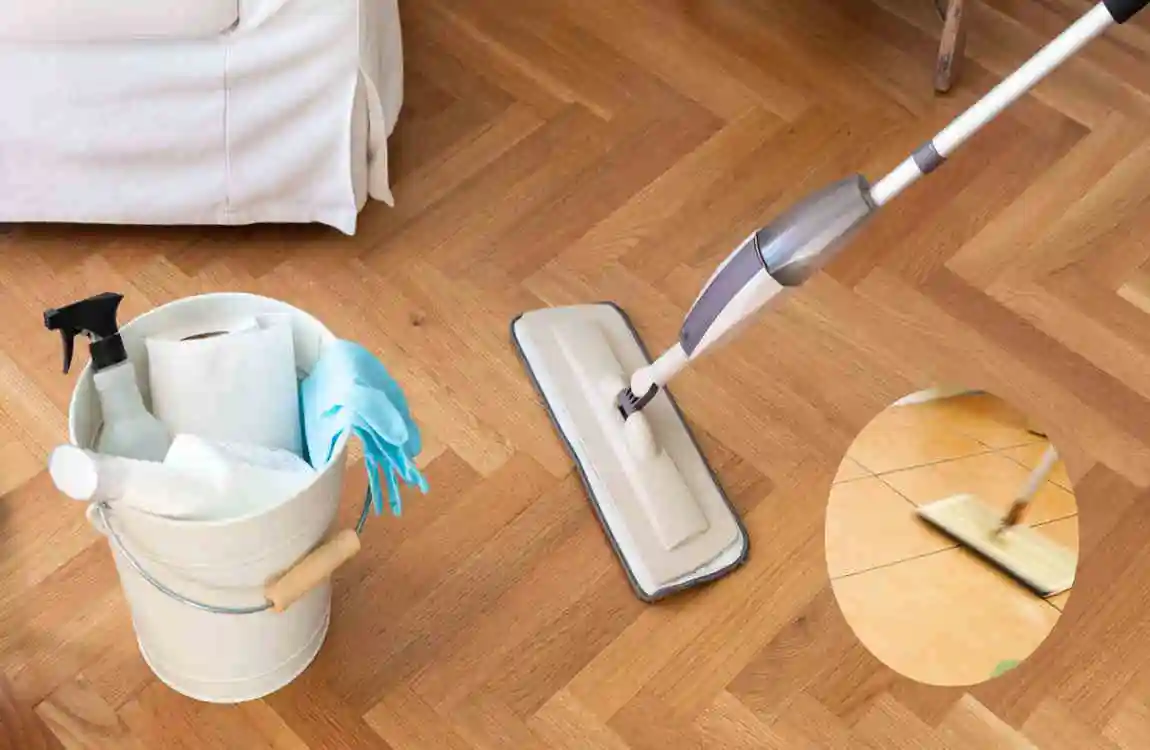
What You Need
You only need a few basic items:
- Distilled white vinegar
- Warm water
- A bucket
- A microfiber mop or soft mop
- A soft cleaning cloth or sponge
- A vacuum or broom
- Clean water for rinsing
Avoid steel wool, stiff brushes, and abrasive scouring pads. These can scratch glazed tile, damage finishes, and wear down grout.
Check Your Tile First
Read the tile manufacturer’s instructions before using vinegar. If the label says to avoid acidic cleaners, don’t use vinegar—even if the tile looks like ceramic or porcelain.
If your tiles are confirmed vinegar-safe, test the diluted solution in a hidden corner first. Let it dry, then check for dullness, colour change, or damage before cleaning the entire floor.
Use Safe Dilution and Ventilation
A common, gentle mixture is 1/2 cup white vinegar per gallon of warm water. This keeps the solution mild while still helping with light cleaning.
Open a window or turn on ventilation while cleaning. Most importantly, never mix vinegar with bleach or bleach-containing cleaners. The combination can release toxic chlorine gas, which can cause coughing, breathing difficulty, chest pain, and eye or throat irritation.
Step-by-Step Guide on How to Clean Floor Tiles with Vinegar
Once you confirm that your floor is suitable, follow a gentle cleaning process. The goal is to clean the tile without flooding the floor or damaging the grout.
Prepare the Floor
Start by sweeping or vacuuming to remove dust, crumbs, pet hair, and loose dirt. This prevents grit from scratching the tile while you mop.
Pay extra attention to corners, entryways, and areas under furniture. These spots often collect the most debris.
Mix the Cleaning Solution
Fill a bucket with 1 gallon of warm water, then add 1/2 cup distilled white vinegar. Stir gently.
Do not pour vinegar directly onto the floor. Undiluted vinegar is too strong for many surfaces and can increase the risk of damage.
Mop in Small Sections
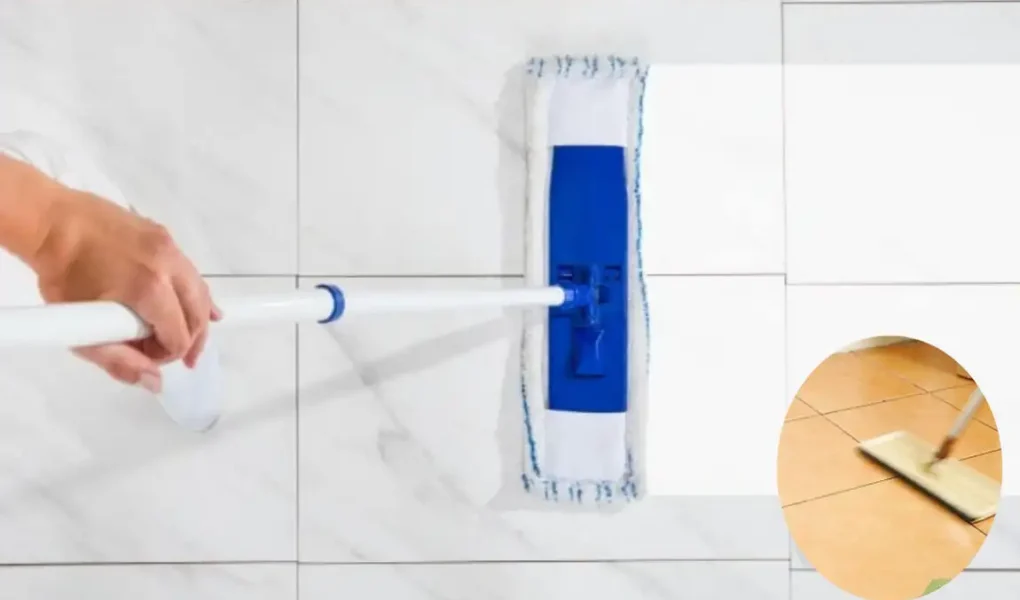
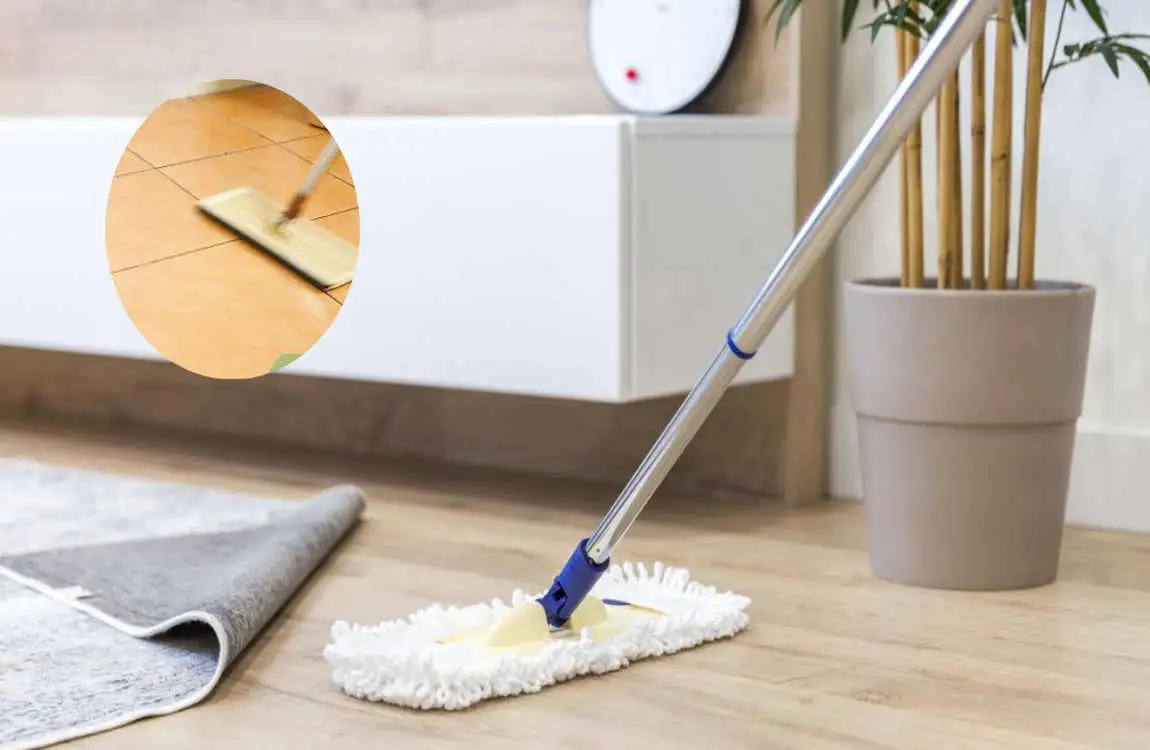
Dip your microfiber mop into the solution and wring it out well. The mop should be damp, not dripping wet.
Clean one small section at a time using smooth, overlapping strokes. This helps you control moisture and prevents the solution from pooling in grout lines.
Treat Stubborn Marks Gently
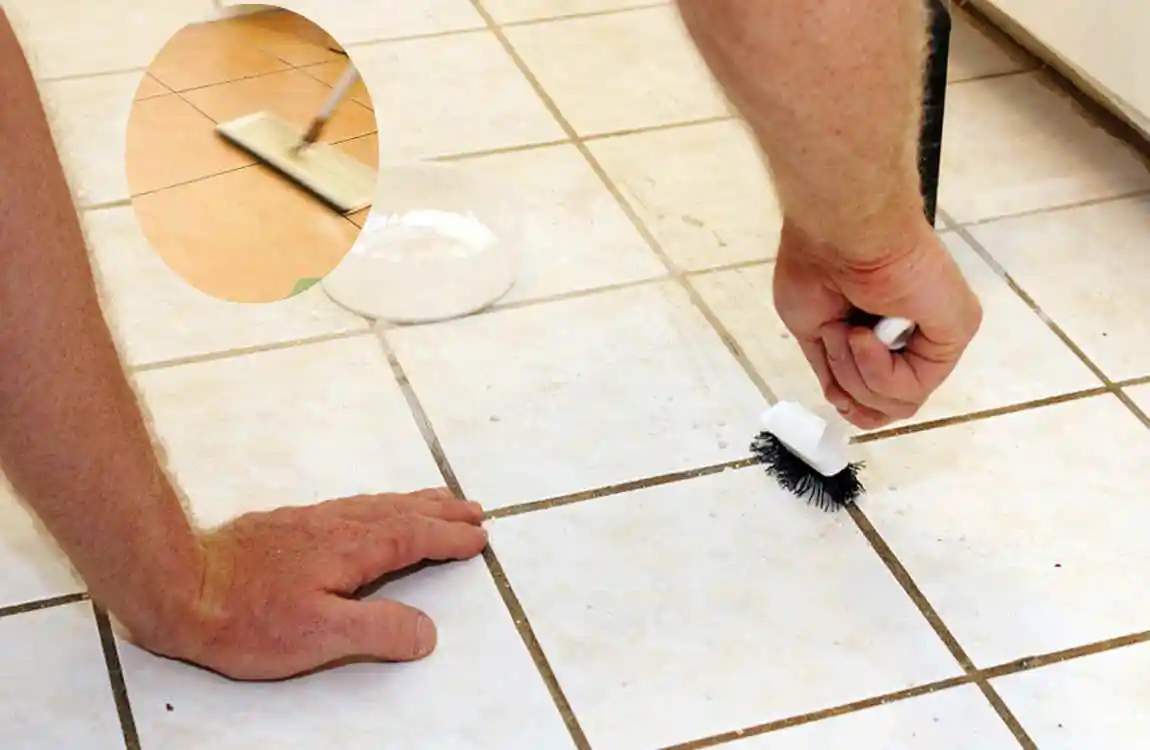
For stubborn marks, apply a small amount of the diluted solution to a soft cloth and let it sit briefly. Then wipe gently.
Do not scrub aggressively or use abrasive pads. If the mark doesn’t lift, switch to a cleaner made for your specific tile type instead of increasing the vinegar strength.
Rinse and Dry the Floor
After mopping, rinse the mop with clean water and go over the floor again to remove any vinegar residue. This step is especially important in kitchens, bathrooms, and areas with grout.
Finally, dry the floor with a clean microfiber cloth or let it air-dry in a well-ventilated area. Drying helps prevent water spots and reduces slip hazards.
Cleaning Different Rooms
In the kitchen, sweep first and spot-clean grease before mopping. In the bathroom, use the solution sparingly and avoid letting it sit on grout. In the entryway, clean more often because dirt and moisture build up quickly.
Common Mistakes, Alternative Cleaning Methods, and Maintenance Tips
Many tile problems come from using the wrong cleaner or using too much liquid. Avoiding a few common mistakes can protect your floors for years.
Mistakes to Avoid
Avoid using undiluted vinegar, especially on sensitive surfaces. Do not soak the floor, scrub grout harshly, or use vinegar as a weekly cleaner on cement-based grout.
Also avoid mixing cleaning products. Vinegar should never be combined with bleach, ammonia, or other chemical cleaners.
How to Clean Grout Safely
Grout is often more delicate than the tile itself. Vinegar may be acceptable for an occasional clean on some porcelain or ceramic tiles. Still, frequent use can discolour or weaken cement-based grout.
For routine grout care, use warm water and a pH-neutral cleaner, or choose a product specifically made for grout. Seal clean grout afterwards if the manufacturer recommends it, because sealing helps reduce future staining.
Better Alternatives for Tough Stains
For grease, use a pH-neutral degreasing floor cleaner. For hard-water marks, use a product designed for mineral deposits and follow the label carefully. For persistent discolouration, identify the cause first—such as mould, rust, dye, or grout staining—before choosing a cleaner.
Keep Tiles Clean Longer
A simple routine keeps floors looking their best:
- Sweep or vacuum high-traffic areas several times a week
- Wipe spills immediately to prevent staining
- Mop weekly with a suitable cleaner
- Rinse and dry floors after deep cleaning
- Use entry mats to reduce tracked-in dirt
Regular maintenance reduces the need for harsh cleaning and helps preserve both tile and grout.
Frequently Asked Questions About Cleaning Floor Tiles with Vinegar
Can I use vinegar to clean all types of floor tiles?
No. Vinegar may be suitable for some glazed ceramic and porcelain tiles. Still, it can damage natural stone, unsealed tiles, and some grout. Always check the manufacturer’s guidance first.
What is the correct vinegar-to-water ratio for cleaning tiles?
A gentle option is one-half cup of white vinegar per gallon of warm water. Use a damp mop rather than soaking the floor.
Is white vinegar safe for ceramic and porcelain floor tiles?
It can be safe for many glazed ceramic and porcelain tiles when diluted, tested first, and rinsed well. However, some finishes and coatings may not tolerate acid, so follow the tile-care instructions.
Can vinegar damage tile grout?
Yes, especially with frequent use. Vinegar can discolour or weaken cement-based grout over time, so avoid using it as a regular grout cleaner.
How long should vinegar sit on floor tiles?
Do not let it sit for long. For a stubborn spot, apply the diluted solution briefly with a soft cloth, then wipe and rinse. Prolonged contact increases the risk of damage.
Should I rinse floor tiles after cleaning with vinegar?
Yes. Rinse with clean water to remove residue, then dry the surface. This helps prevent film, water spots, and unnecessary exposure for grout.
Can I use vinegar to clean bathroom and kitchen floors?
You can use diluted vinegar on compatible ceramic or porcelain floors, but use it carefully around grout and avoid grease-heavy areas where a dedicated cleaner may work better.
What should I use instead of vinegar on marble or natural stone tiles?
Use a pH-neutral stone cleaner or a cleaner specifically approved for natural stone. Avoid vinegar, lemon, and other acidic products because they can etch and dull the surface.
| Cleaning Step | Instructions |
|---|---|
| Prepare the Solution | Mix equal parts white vinegar and warm water. |
| Remove Dust | Sweep or vacuum the floor before cleaning. |
| Test the Surface | Test the solution on a small, hidden area first. |
| Mop the Tiles | Use a soft mop dipped in the diluted solution. |
| Clean Tough Stains | Gently scrub stains with a soft-bristle brush. |
| Rinse the Floor | Wipe with clean water to remove vinegar residue. |
| Dry the Tiles | Use a clean microfiber cloth to prevent water marks. |
| Safety Tip | Avoid vinegar on marble, limestone, travertine, and other natural stone because its acidity can damage the surface. |
| Best Results | Use vinegar only on acid-resistant tiles, such as many ceramic and porcelain tiles, after checking the manufacturer’s care instructions. |