
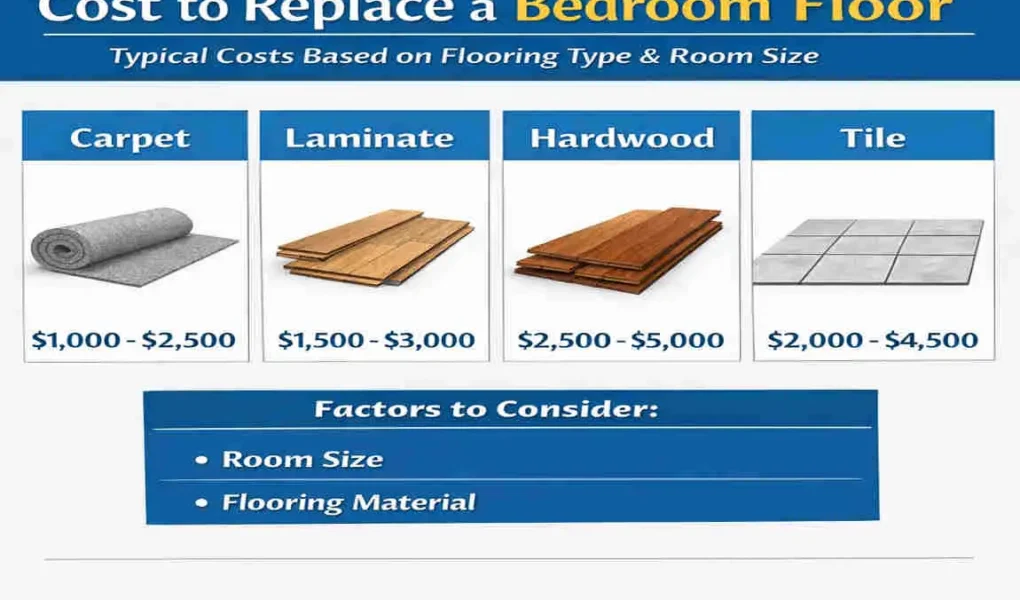
Replacing a bedroom floor can make a big difference in how your room looks and feels. A fresh floor can add comfort, improve style, and even increase home value. If your old floor is worn out, noisy, stained, or outdated, this project may be worth the money.
The total cost depends on a few key things. Room size, flooring material, labor, removal, and subfloor condition all affect the final price. A small bedroom will cost less than a large main bedroom, and a basic carpet job will usually cost less than hardwood or tile.
How Much Does It Cost to Replace a Bedroom Floor?
The cost to replace a bedroom floor usually falls into a wide range because every project is different. In most cases, homeowners spend money on materials, installation, removal of the old floor, and any prep work needed before the new floor goes down.
A basic bedroom floor replacement may stay affordable if the room is small and the flooring is simple. A larger room, premium material, or damaged subfloor will raise the price quickly.
Average Bedroom Flooring Replacement Cost
Cost Factor Typical Cost Range
Flooring materials $1–$15+ per sq. ft.
Professional installation $1–$5+ per sq. ft.
Old flooring removal $0.50–$3 per sq. ft.
Subfloor repairs Varies by damage
Total project Depends on room size and material
A good way to think about it is this: the bigger the room and the better the material, the higher the cost.
Bedroom Floor Replacement Cost by Room Size
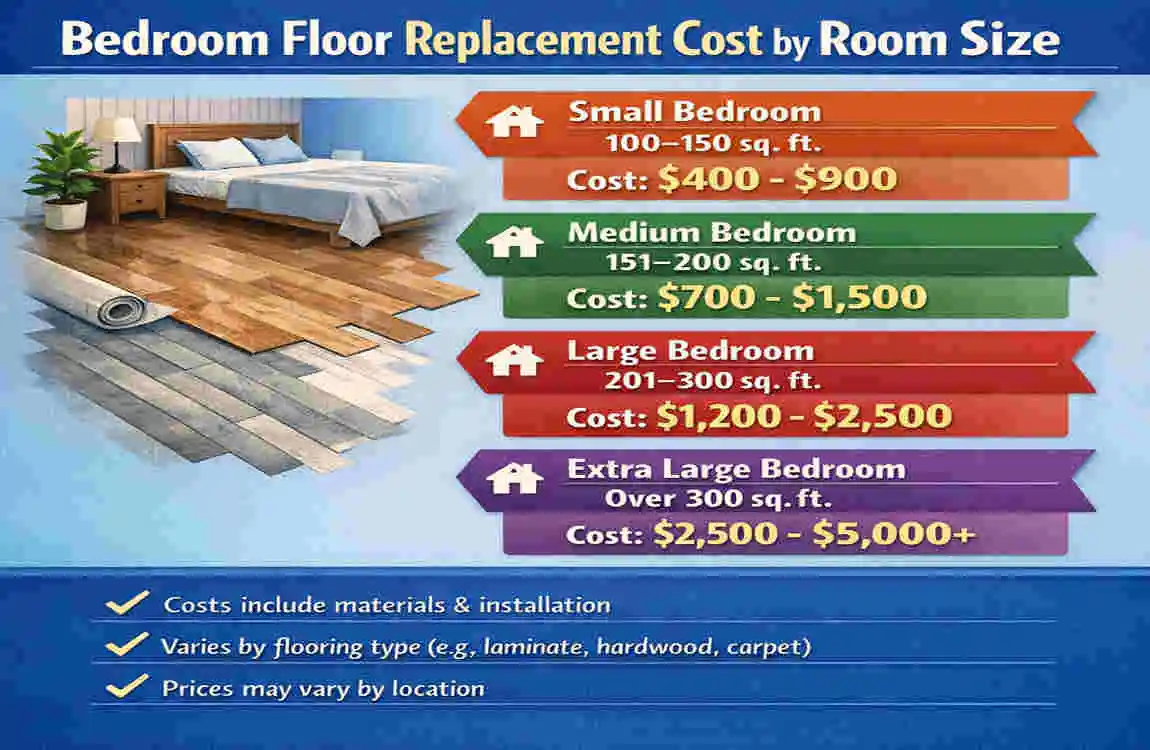
Room size has a direct effect on your final budget. More square footage means more material, more labor, and often more waste.
Cost for a 10×10 Bedroom
A 10×10 bedroom is about 100 square feet. This is one of the easiest and most affordable rooms to floor.
If you choose a budget-friendly material like carpet, vinyl, or laminate, the project may stay fairly low-cost. If you choose hardwood, engineered wood, or tile, the price will rise.
Cost for a 12×12 Bedroom
A 12×12 bedroom is about 144 square feet. This is a very common bedroom size, and it usually needs a little extra flooring for cuts and mistakes.
If you hire a pro, you’ll usually pay more than a DIY job, but you also get faster and cleaner results.
Cost for a 12×15 Bedroom
A 12×15 bedroom is about 180 square feet. This size often needs a bigger budget because material and labor both increase.
If the room has closets or unusual corners, the cost can go up a bit more.
Cost for a Large Main Bedroom
Large master bedrooms cost the most because they need more flooring overall. If the layout includes closets, angled walls, or connected hallway space, the total can climb even faster.
Bedroom Flooring Cost by Material
The material you choose is one of the biggest cost factors. Some floors are soft and cozy, while others are more durable or stylish.
Carpet
Carpet is one of the most popular bedroom choices because it feels warm and soft underfoot.
It is usually one of the more affordable options, especially if you choose a basic style. Carpet also helps reduce noise, which makes it a smart pick for sleeping spaces.
Pros:
- Comfortable and warm
- Good for bedrooms
- Often budget-friendly
Cons:
- Can stain easily
- Needs regular cleaning
- May wear out faster than harder materials
Laminate Flooring
Laminate is a popular low-cost alternative to hardwood. It offers a clean look without the higher price tag.
It is fairly easy to maintain and works well in bedrooms where moisture is not a major concern.
Pros:
- Affordable
- Easy to clean
- Good style options
Cons:
- Can feel less soft than carpet
- May not last as long as hardwood
Vinyl Flooring
Vinyl flooring is another budget-friendly choice. It is easy to clean and works well for homeowners who want low maintenance.
Luxury vinyl plank, or LVP, often looks more realistic and feels sturdier than standard vinyl.
Pros:
- Water-resistant
- Easy to maintain
- Good for DIY projects
Cons:
- Basic vinyl may look less premium
- Quality varies a lot
Hardwood Flooring
Hardwood costs more, but many homeowners love it for its timeless look and long life.
It can also help with resale value. If cared for properly, hardwood can last for decades and can be refinished later.
Pros:
- Beautiful and classic
- Long lifespan
- Strong resale appeal
Cons:
- Higher upfront cost
- More sensitive to scratches and moisture
Engineered Wood Flooring
Engineered wood gives you the look of hardwood with a more stable structure underneath.
It usually costs less than solid hardwood, and it can be a smart middle-ground option.
Tile Flooring
Tile is durable and long-lasting, but it is less common in bedrooms because it can feel cold and hard.
It may work well if you want a very low-maintenance floor or if the bedroom connects to a tiled bathroom.
Bamboo Flooring
Bamboo has a natural look and can be a good eco-friendly option. It often costs somewhere between laminate and hardwood.
It gives the room a clean, modern feel while still staying warm and attractive.
Flooring Comparison Table
Flooring TypeCost LevelDurabilityBedroom Suitability
Carpet Low–Medium Medium Excellent
Laminate Low–Medium Good Excellent
Vinyl Low–Medium Good–Excellent Excellent
Hardwood High Excellent Excellent
Engineered Wood Medium–High Good–Excellent Excellent
Tile Medium–High Excellent Good
Bamboo Medium–High Good Very Good
Labor Cost to Replace a Bedroom Floor
Labor is another major part of the total cost. Professionals may charge per square foot, by project, or by material type.
Simple floors like laminate or vinyl are usually cheaper to install than hardwood or tile. If the room has tricky corners, closets, stairs, or pattern work, labor costs can rise.
DIY vs. Professional Installation
DIY installation can save money, especially with click-lock laminate or vinyl plank. But it takes time, tools, and patience.
Professional installation costs more upfront, but it usually gives you faster results and fewer mistakes. It is often the better choice for hardwood, tile, or more complex layouts.
Additional Costs When Replacing a Bedroom Floor
Many homeowners forget about the extra costs that can appear during the project.
Common Extra Costs
- Old floor removal
- Disposal fees
- Subfloor repairs
- Underlayment
- Baseboards and trim
- Furniture moving
If your old floor has water damage or the subfloor is uneven, you may need more prep work before the new floor can go in.
What Factors Affect Bedroom Floor Replacement Cost?
Several things shape the final price:
- Bedroom size
- Flooring material
- Material quality
- Labor rates
- Old floor removal
- Subfloor condition
- Underlayment needs
- Installation pattern
- Furniture moving
- Location and local prices
If you want a clear idea of your budget, it helps to get more than one estimate.
How to Calculate the Cost of a New Bedroom Floor
A simple formula can help:
Total cost = room size × material cost per square foot + labor + extra costs
Measure the Room
Multiply the length by the width to get square footage. If flooring will continue into closets, include those too.
Add Waste
Most projects need a little extra flooring for cuts and mistakes. This is especially important with patterned materials.
Include Labor and Prep Work
Add installation, underlayment, removal, repairs, trim, and any moving costs.
Cheapest Flooring Options for a Bedroom
If you want to stay on budget, these are usually the best choices:
- Basic carpet
- Vinyl
- Laminate
- Some engineered flooring options
How to Save Money
- Compare at least two or three quotes
- Shop during sales
- Keep the subfloor if it is in good shape
- Choose simple patterns
- Remove furniture yourself if possible
- Avoid unnecessary repairs
Is It Worth Replacing a Bedroom Floor?
Yes, if the floor is damaged, stained, noisy, or simply outdated. A new floor can make the room feel cleaner and more comfortable.
Consider repairing instead of replacing if the damage is small or if hardwood can be refinished.
How to Choose the Best Bedroom Flooring
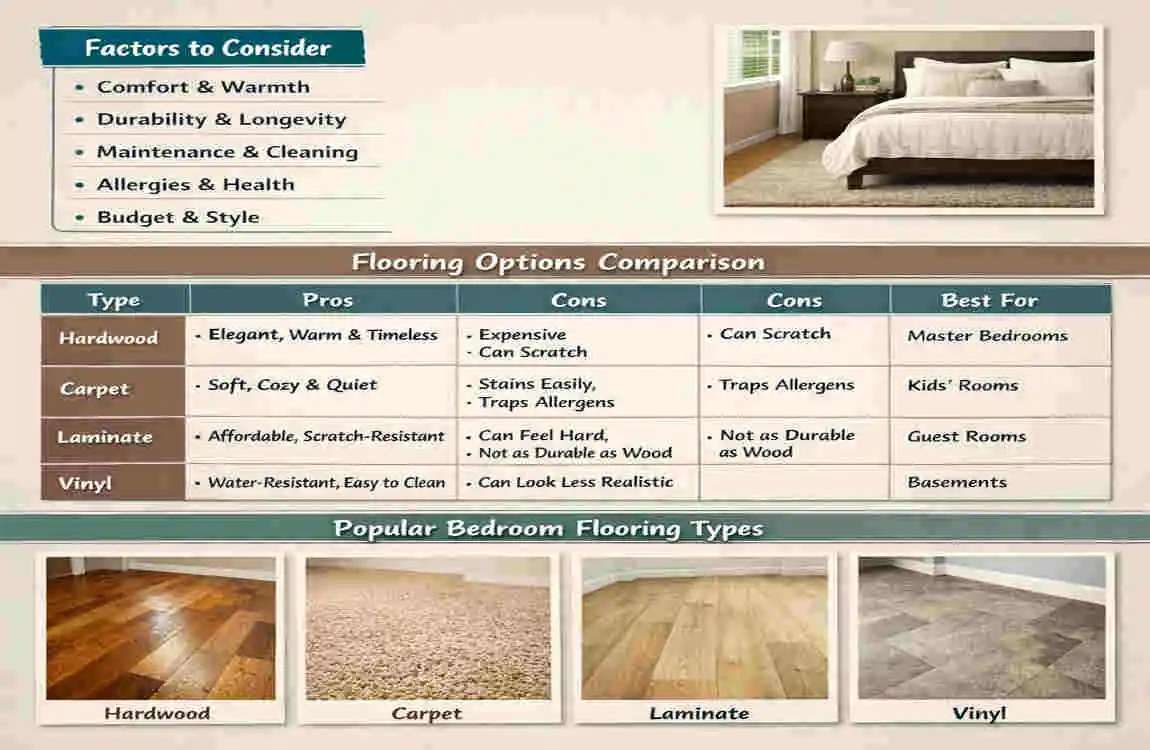
When choosing a floor, think about comfort, durability, style, maintenance, and budget.
Comfort
Bedrooms should feel soft, warm, and relaxing.
Durability
Choose a floor that can handle daily use without wearing out too fast.
Maintenance
Some floors are easier to clean than others. Think about your lifestyle.
Style
The floor should match your walls, furniture, and overall bedroom design.
Budget
Always balance the upfront price with long-term value.
Frequently Asked Questions
How much does it cost to replace a bedroom floor?
The cost depends on room size, flooring type, labor, and prep work. A small bedroom with carpet or laminate will cost less than a large room with hardwood or tile.
What is the cheapest flooring to install in a bedroom?
Usually, basic carpet, vinyl, or laminate are the cheapest options.
How much does it cost to floor a 10×10 bedroom?
A 10×10 bedroom is about 100 square feet. The total cost depends on the material, but this size is usually one of the most affordable to complete.
Is carpet or laminate cheaper for a bedroom?
Carpet is often cheaper at the low end, but laminate can be a strong value because it lasts longer and is easier to clean.
Can I replace my bedroom floor myself?
Yes, if you choose a DIY-friendly material like click-lock laminate or vinyl plank. For hardwood or tile, a professional is usually a better choice.
How long does it take to replace a bedroom floor?
A simple bedroom floor can often be done in one day, but removal, repairs, and drying time can add more time.
| Flooring Type | Average Cost per Sq. Ft. | Approx. Cost for 200 Sq. Ft. Bedroom |
|---|---|---|
| Vinyl Flooring | $2–$7 | $400–$1,400 |
| Laminate Flooring | $3–$8 | $600–$1,600 |
| Carpet | $2–$6 | $400–$1,200 |
| Engineered Hardwood | $6–$12 | $1,200–$2,400 |
| Solid Hardwood | $8–$15 | $1,600–$3,000 |
| Tile Flooring | $5–$15 | $1,000–$3,000 |