If you are thinking about replacing your floors, you may be wondering what kind of flooring you can install over carpet without turning the project into a huge mess. That is a smart question, especially if you rent, want a quick upgrade, or do not want to remove the old carpet right away.
Many homeowners look for this option because it feels easier, faster, and cheaper than a full flooring replacement. In some rooms, it can work very well. In other rooms, it is a bad idea. The key is knowing which flooring types are safe, which ones are not, and what conditions the carpet must meet before you start.
Can You Install Flooring Over Carpet?
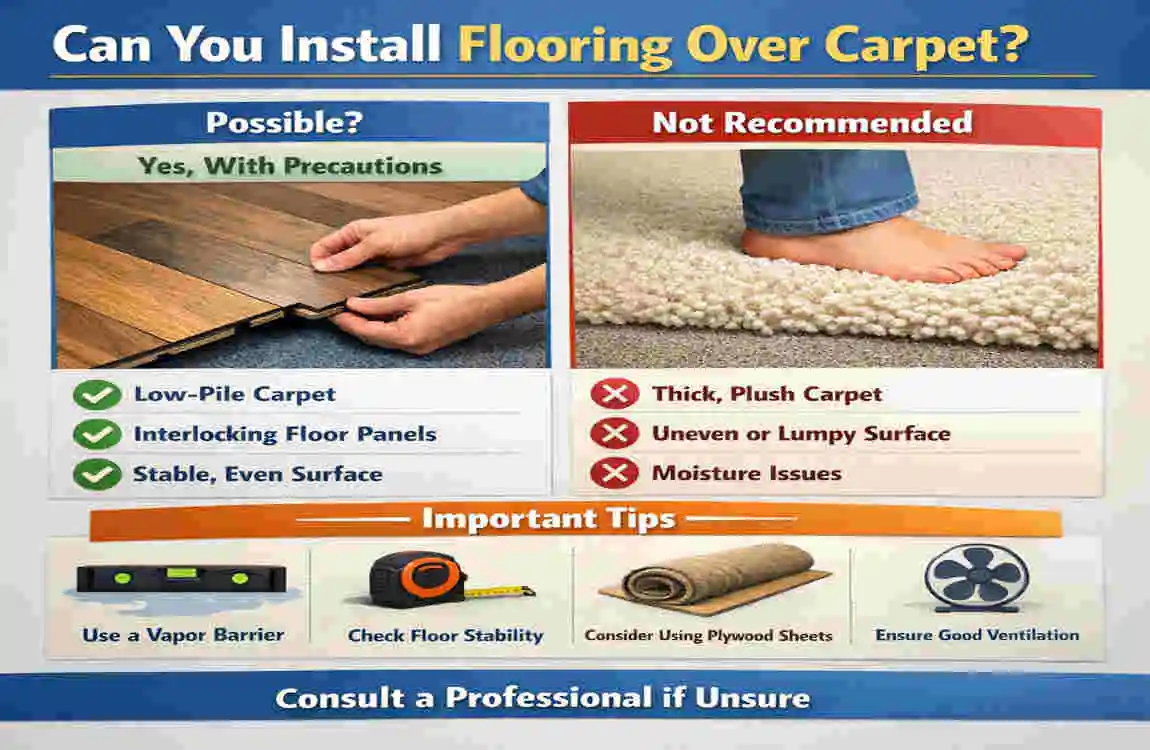
Yes, sometimes you can. But that does not mean every flooring type will work well.
Is It a Good Idea?
Installing flooring over carpet can be a good idea when you want a temporary solution, a renter-friendly update, or a budget-friendly change. It can also help when you want to refresh a room without pulling up the old carpet first.
But there are downsides too. Carpet is soft, so it can make the new floor feel uneven, unstable, or even bouncy. That can shorten the life of the flooring above it.
It works best when the carpet is low-pile, flat, dry, and in good shape. If the carpet is thick, fluffy, damaged, or damp, it is usually better to remove it first.
What Kind of Flooring Can You Put Over Carpet?
Not every flooring type is suitable. The best choices are lightweight, removable, and flexible enough for temporary use.
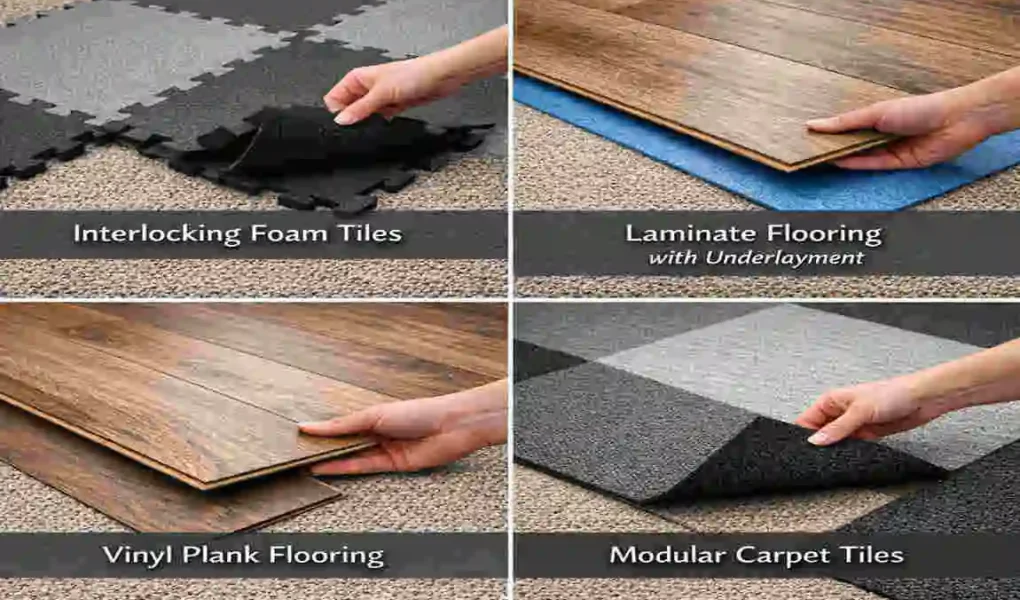
Interlocking Foam Tiles
These are one of the easiest options.
They snap together quickly and create a soft surface that works well in playrooms, home gyms, and casual spaces. They are light, simple to install, and easy to remove later.
They also feel comfortable underfoot, which makes them great if you want extra cushioning.
Carpet Tiles
Carpet tiles are another smart choice.
They are simple to lay down, and if one gets damaged, you can replace just that one piece instead of the whole floor. That makes them a practical DIY option.
They work especially well in home offices, bedrooms, or rental spaces where you want a clean look without major work.
Peel-and-Stick Carpet Tiles
If you want something affordable and easy, this is a strong choice.
These tiles are renter-friendly and temporary. You can install them without special tools, and they can be removed later with less effort than permanent flooring.
They are best for light-use areas where you want a simple visual upgrade.
Plywood with New Flooring
This method is more of a workaround than a true long-term solution.
A layer of plywood can help create a more stable surface before adding another floor. It is often used for temporary remodeling when you need more support than carpet alone can offer.
Still, it adds height and may cause door or transition issues, so measure carefully.
Floating Modular Flooring
Floating floors snap together instead of being nailed or glued down.
Some of these systems can work over low-pile carpet if the surface is firm enough. They are one of the better choices for a cleaner, more polished look.
However, the carpet underneath must be stable and not too soft, or the floor may move.
Flooring Types You Should NOT Install Over Carpet
Some materials need a very solid base. Carpet does not provide that.
Hardwood Flooring
Hardwood needs a firm, flat subfloor. Carpet can shift and compress, causing movement under the boards.
That can lead to gaps, squeaks, and long-term damage.
Laminate Flooring
Laminate also needs a stable surface.
If you place it over carpet, it may flex too much and click apart or feel weak when you walk on it.
Luxury Vinyl Plank (LVP)
LVP is popular, but it still needs a solid base.
Carpet creates too much softness and movement, which can ruin the locking system and reduce durability.
Ceramic or Porcelain Tile
Tile is heavy and brittle.
It needs a rigid subfloor, or it may crack. Carpet cannot support it properly.
Engineered Hardwood
Even though engineered wood is more flexible than solid hardwood, it still needs a firm surface. Carpet is not the right base for a lasting result.
Factors to Consider Before Installing Flooring Over Carpet
Before you start, check these important points.
Carpet Thickness
Thick carpet is the biggest problem. The softer and deeper it is, the less stable your new flooring will be.
Carpet Padding
Padding matters as much as the carpet itself. If the padding is too cushioned, the new floor may feel like it is floating.
Moisture Problems
If the carpet has damp spots, odors, or signs of mold, stop there. Covering it up will only make things worse.
Floor Stability
Walk across the room. Does it feel firm, or does it sink and bounce? A stable feel is essential.
Room Usage
Think about how the room is used. A light-use room is a much better fit than a busy hallway or kitchen.
Manufacturer Recommendations
Always check the product instructions. Some flooring products clearly say, “Do not install over carpet.” That guidance matters.
Pros and Cons of Installing Flooring Over Carpet
ProsCons
Saves removal costs Less stable surface
Faster installation May reduce flooring lifespan
Temporary solution Can void warranties
Protects original flooring Uneven walking surface
Best Rooms for Flooring Over Carpet
Some rooms are better suited for this than others.
Home Office
A home office is a good fit if you want a cleaner look without major remodeling.
Kids’ Playroom
Foam tiles work especially well here because they add comfort and safety.
Home Gym
If you want softer flooring for exercise, foam tiles can help.
Rental Property
Temporary flooring can be helpful if you want an upgrade without permanent changes.
Temporary Living Space
If you are between moves or waiting for a bigger renovation, this can be a useful short-term fix.
Rooms Where You Should Avoid It
Some rooms are not worth the risk.
- Kitchen
- Bathroom
- Laundry Room
- Entryway
- High-moisture areas
These spaces need durability, moisture resistance, and a firm foundation. Carpet underneath can cause problems fast.
How to Install Flooring Over Carpet
Here is a simple basic process.
Inspect the Carpet
Check for damage, dampness, and softness.
Clean Thoroughly
Vacuum and remove dust or debris before starting.
Check Carpet Thickness
Use low-pile carpet only if possible.
Install Underlayment if Needed
Some flooring systems need an extra layer for support.
Common Mistakes to Avoid
Here are the biggest mistakes people make:
- Installing over thick plush carpet
- Ignoring moisture issues
- Using heavy flooring materials
- Skipping manufacturer guidelines
- Not checking transitions
These mistakes can lead to a floor that feels weak, looks uneven, or fails too soon.
Cost Comparison
Flooring OptionAverage CostDIY FriendlyBest For
Foam Tiles Low Yes Home gyms
Carpet Tiles Low–Medium Yes Offices
Peel-and-Stick Tiles Low Yes Rentals
Plywood + Flooring Medium Moderate Temporary remodels
Floating Modular Flooring Medium Yes Low-pile carpet
Maintenance Tips
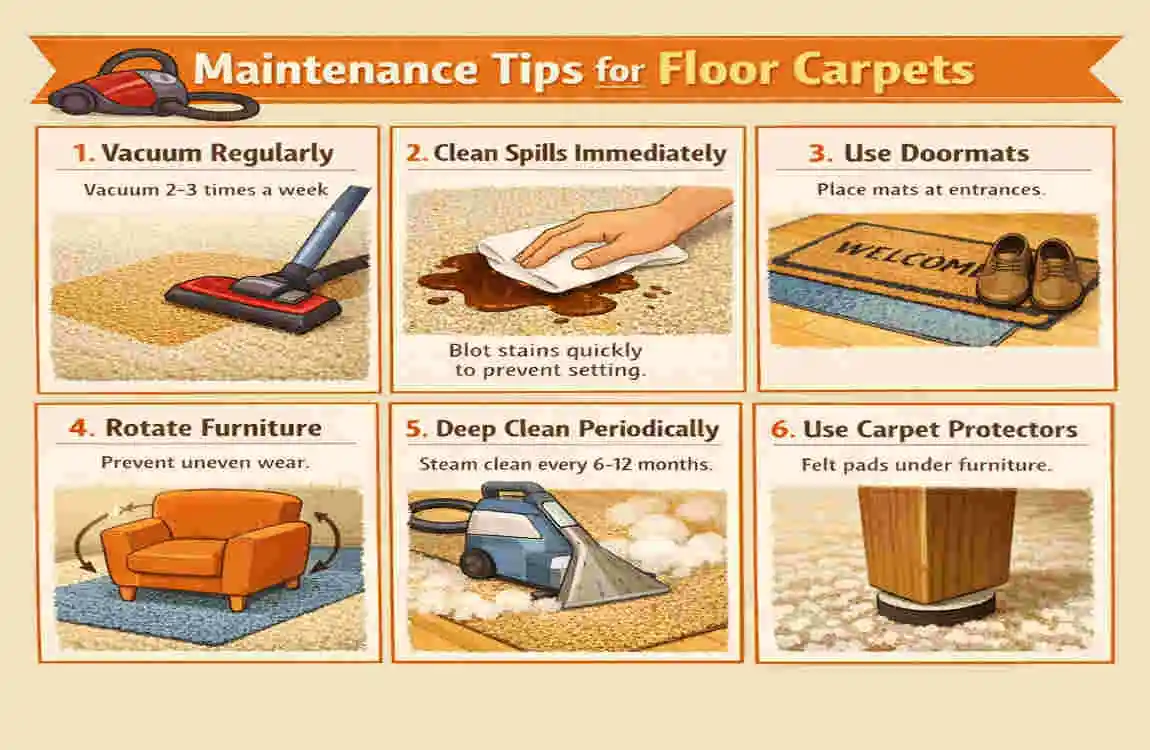
Once installed, keep the new floor in good shape.
- Vacuum regularly
- Prevent moisture buildup
- Replace damaged tiles promptly
- Avoid excessive weight
- Inspect for movement periodically
These habits help the floor last longer and stay safer.
Frequently Asked Questions (FAQ)
What kind of flooring can you put over carpet?
Interlocking foam tiles, carpet tiles, peel-and-stick carpet tiles, plywood with a floating floor, and some modular flooring systems can work over low-pile carpet.
Can you install vinyl plank flooring over carpet?
Generally, no. Vinyl plank flooring needs a firm, level subfloor.
Is it safe to put laminate flooring over carpet?
No. Laminate flooring can shift and become unstable over carpet.
Can renters install flooring over carpet?
Yes. Temporary options like foam tiles or removable carpet tiles are ideal for renters.
Does installing flooring over carpet damage the carpet?
If done correctly with temporary flooring, the carpet is usually protected and can often be restored later.
What is the best temporary flooring over carpet?
Interlocking foam tiles and carpet tiles are among the best temporary choices.
| Flooring Type | Can It Go Over Carpet? | Best For | Key Notes |
|---|---|---|---|
| Peel-and-Stick Carpet Tiles | Yes | Temporary flooring | Easy to install and remove over low-pile carpet. |
| Interlocking Foam Tiles | Yes | Home gyms, playrooms | Soft, comfortable, and protects the carpet underneath. |
| Carpet-to-Carpet Tiles | Yes | Basements, rentals | Designed to sit securely over existing carpet. |
| Interlocking Vinyl Tiles | Yes (Low-pile carpet) | Offices, utility rooms | Durable and moisture-resistant; avoid thick carpet. |
| Laminate Flooring | Sometimes | Low-pile carpet only | Requires a firm, level surface for stability. |
| Engineered Wood | Sometimes | Temporary installations | Only suitable over thin, tightly secured carpet. |
| Area Rugs | Yes | Living rooms, bedrooms | Adds style and protects worn carpet areas. |
| Rubber Floor Tiles | Yes | Gyms, workshops | Heavy-duty, slip-resistant, and easy to install. |